

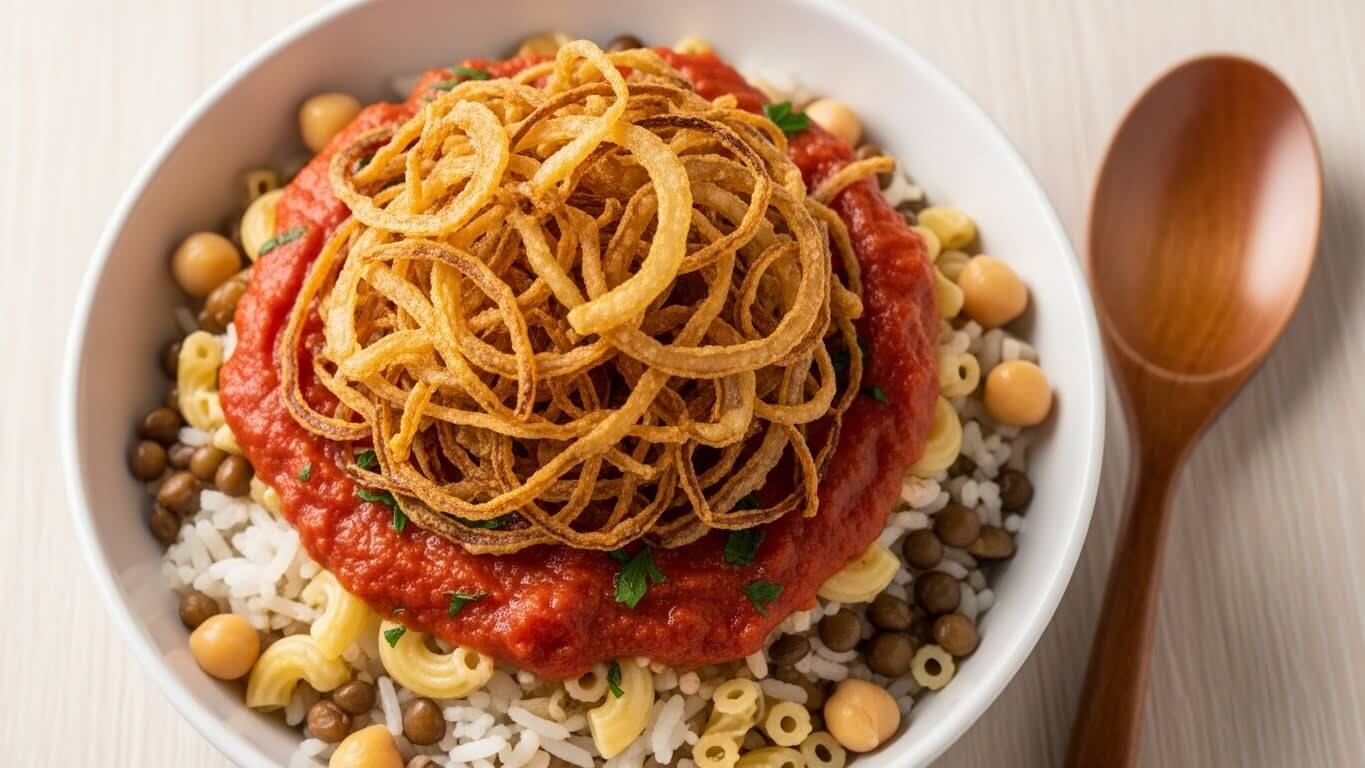
Try our easy Koshari recipe, the undisputed national dish of Egypt, a beloved, humble and unbelievably satisfying street food that is pure plant-based comfort. It’s often spelled as koshary. This dish is a delicious medley of simple and inexpensive ingredients: rice, lentils and macaroni pasta, all topped with a vibrant, tangy tomato sauce, chickpeas and a generous flourish of fried and crispy onions.
If you’ve never experienced Koshari, prepare for a revelation. It’s the ultimate one-bowl meal that delivers on texture, flavor and incredible nutritional value.
This isn’t just a generic recipe. We’re going deep on flavor and health, adapting the classic street food to fit a modern Mediterranean lifestyle perfectly. Our version is branded as a Mediterranean Diet Koshari, emphasizing its high fiber, whole-grain and plant-based protein content, making it the perfect choice for a healthy weeknight dinner.
What Is Koshari? (Egypt’s National Dish)
Koshari (or Kushari) is more than just a dish; it’s a cultural cornerstone in Egyptian cuisine. Its roots are often debated, but the most popular theory links it back to an Indian dish called khichdi, brought to Egypt by British soldiers in the 19th century. Then Egyptians adapted it, incorporating local staples like pasta (a legacy of Italian influence) and the robust, garlicky tomato sauce.
Today, Koshari is the quintessential Egyptian comfort food, sold from carts and specialized shops (Mahalat Koshari) all over the country.
At its core, Koshari combines four distinct layers:
- The Base: A blend of fluffy rice and brown or green lentils.
- The Fill: Small macaroni or other pasta shapes.
- The Topping: Tender chickpeas (often referred to as hummus).
- The Flavor: The signature Koshari Sauce (a tangy, spicy tomato-vinegar mixture).
- The Crunch: Crisp, caramelized and deep-fried onions (taqliya).
This layering of carbohydrates, protein and flavor is what makes it one of the most satisfying Egyptian dishes and a fantastic example of naturally plant-based Egyptian cuisine.
Why This Is the Best Mediterranean-Style Koshari Recipe
While the authentic street food version is delicious, our approach elevates it to be a High-Fiber Vegan Egyptian Dinner Powerhouse, perfectly aligned with the principles of the Mediterranean diet.
Here’s why this recipe will be your new favorite:
- Mediterranean Diet Framing: We highlight the dish’s core components, “lentils, chickpeas, whole grains and olive oil (when possible)” that naturally align with the Mediterranean Diet pyramid. Which makes it a true Mediterranean lentil rice dinner.
- Simplified & Simultaneous Cooking: We streamline the process, showing you how to manage the various components efficiently for an easy weeknight meal.
- Traditional Sauce Depth: Our recipe focuses on the essential spices and techniques for the rich and tangy Koshari sauce, which is the soul of the dish.
- Air-Fryer Crispy Onion Alternative: To reduce oil without sacrificing that essential crunch, we provide an oven or air-fryer method for the taqliya (crispy onions).
- Vegan Protein Optimization: By using lentils and chickpeas, we ensure this is a complete and protein-rich Egyptian vegan main, perfect for a healthy lifestyle.
If you want to learn more about related recipes, you can explore our range of Mediterranean Diet Recipes.
What Are the Ingredients for Koshari Recipe?
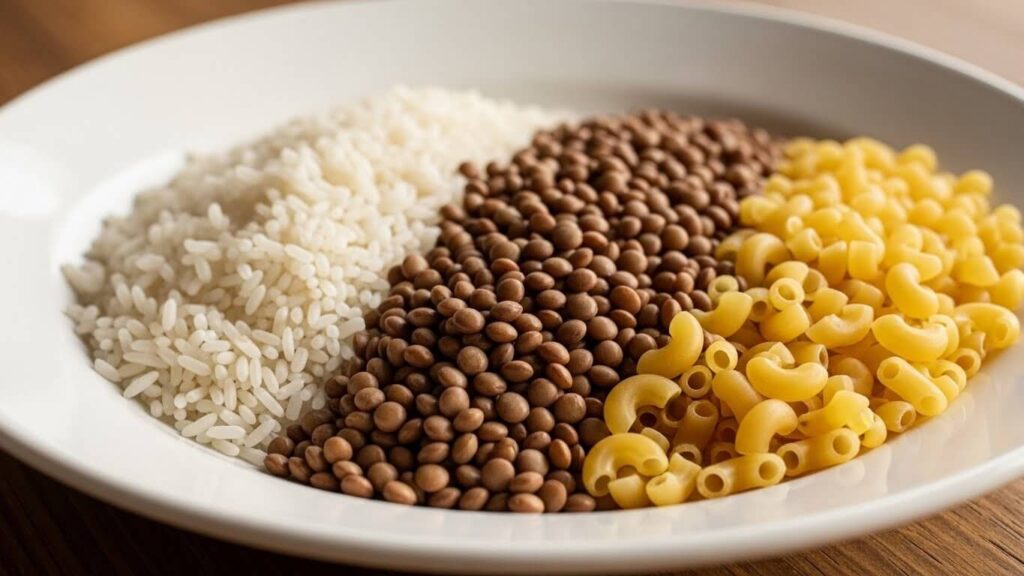
The beauty of Koshari lies in its simplicity. And here are the main components and key ingredient tips:
Rice
Use long-grain white rice (like Egyptian or Calrose) for the most authentic result. But some recipes use short-grain rice, but the fluffier and separate texture of long-grain rice works best when combined with the lentils.
Lentils
Brown or green lentils are traditional. But, they should be cooked separately until just tender, not mushy, as they will be mixed with the rice.
Pasta
Small and elbow macaroni is the standard. But you can also use ditalini or another small and tubular pasta. Or use whole wheat pasta for an extra fiber boost that is very much in line with Mediterranean diet recipes.
Chickpeas
Canned chickpeas work perfectly. You just have to rinse them well before adding them to the final dish. And they are your second source of protein, making this a true plant-based Egyptian cuisine powerhouse.
Onions
Use yellow or white onions. And the key is to slice them thinly and fry (or air-fry) them until they are dark golden and crispy. This taqliya provides the critical textural contrast.
Tomato Sauce
The sauce is based on tomato puree, enhanced with a heavy dose of garlic, vinegar and a hint of spice. This is the koshari sauce recipe component that elevates the entire dish.
What Spices Are Essential for The Perfect Koshari Recipe?
The spices in Koshari are intentionally simple, allowing the flavor of the lentils, rice and tomato to shine. The primary spices are used for the sauce, not the rice/lentil base.
- Cumin: This is the most critical spice. And it’s used in the sauce and sometimes sprinkled over the lentils and chickpeas. Also its earthy warmth defines the flavor profile.
- Coriander: Often paired with cumin in the sauce for a bright and citrusy lift.
- Chili/Cayenne Pepper (Optional but Recommended): A pinch of this is usually added to the sauce or a separate spicy chili-garlic oil (called shatta) is served on the side. And this is what adds the necessary heat.
- Bay Leaf: Used when cooking the lentils and rice to add an aromatic base layer.
This simple blend of spices makes Koshari a unique and flavorful Egyptian dish.
How to Make Koshari (Easy Step-by-Step Recipe)
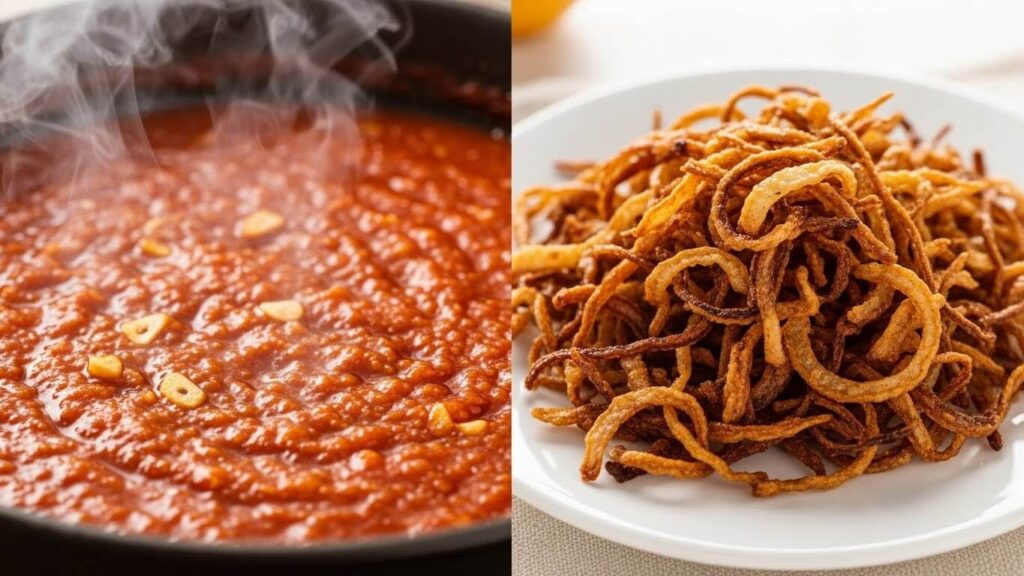
This koshari recipe easy guide breaks down the multi-component dish into manageable steps.
Step 1: Cook the Lentils and Rice
- Rinse the lentils and cook them in water until they are tender but still hold their shape (about 20-25 minutes). Then drain and set aside.
- In a separate pot, cook the rice until fluffy. Once it’s done, gently fold the cooked lentils into the rice, then season lightly with salt.
Step 2: Cook the Pasta
- Boil the macaroni pasta according to the package directions until al dente. After this, drain and toss with a tablespoon of olive oil to prevent sticking.
Step 3: Prepare the Crispy Onions (Taqliya)
- Thinly slice the onions. Then toss them with a tablespoon of flour or cornstarch (optional for extra crispiness) and a pinch of salt.
- Traditional Method: Deep fry them in a high-heat oil (like canola or peanut) until dark golden brown and crispy. Then, remove with a slotted spoon and let them drain on paper towels. (The frying oil is often reserved for the sauce to infuse flavor).
- Air-Fryer Method (Healthy Alternative): Toss the onions with 1 tablespoon of olive oil. Now, air-fry at 380°F (195°C) for 10-15 minutes, tossing halfway, until it’s golden and crunchy.
Step 4: Make the Chickpeas
- Rinse the canned chickpeas. After that, simmer them in a small pot with a splash of water, a pinch of salt and a dash of cumin for about 5 minutes. This enhances their flavor.
Traditional Koshari Sauce Recipe (Tomato, Garlic & Vinegar)
This koshari sauce recipe is the make-or-break element. It must be pungent, garlicky and tangy.
Koshari Sauce Ingredients:
- 2 tablespoons olive oil (or the reserved onion-frying oil for authenticity)
- 6-8 cloves garlic, minced
- 1 (28 oz) can crushed tomatoes or tomato puree
- 1/4 cup white vinegar (essential for the tang)
- 2 teaspoons cumin
- 1 teaspoon coriander
- 1/2 teaspoon cayenne pepper (or to taste)
- Salt and black pepper
Instructions for Koshari Sauce:
- In a saucepan, heat the oil over medium heat. Now, add the minced garlic and cook for about 30-60 seconds until fragrant (do not let it burn)!
- Immediately stir in the crushed tomatoes, cumin, coriander, salt and pepper. Then, bring it to a simmer.
- Stir in the white vinegar and cayenne pepper. Then let the sauce simmer gently for 15-20 minutes, allowing the flavors to meld and deepen. The sauce should be robust and slightly thinner than a typical pasta sauce.
How to Layer Koshari Rice, Lentils & Pasta Properly
The final presentation is key to the authentic Koshari experience. And the layers are served warm, allowing the heat to bring out the aroma of the sauce and onions.
- Base Layer: Start with a generous scoop of the rice and lentil mixture.
- Middle Layer: Add a layer of the cooked macaroni pasta over the top.
- Topping 1 (Protein): Scatter a handful of the warmed chickpeas over the pasta.
- Topping 2 (Sauce): Drench the dish with the tangy Koshari tomato sauce. Also, the diners often add extra sauce at the table.
- The Finisher: Crown the entire dish with a large and generous mound of the crunchy fried (or air-fried) crispy onions.
Serve immediately and enjoy this truly authentic Egyptian koshari recipe.
Best Koshari Recipe
Ingredients
Method
- Rinse the lentils and cook them in water until they are tender but still hold their shape (about 20-25 minutes).
- Then drain and set aside.
- In a separate pot, cook the rice until fluffy.
- Once it’s done, gently fold the cooked lentils into the rice, then season lightly with salt.
- Boil the macaroni pasta according to the package directions until al dente.
- After this, drain and toss with a tablespoon of olive oil to prevent sticking.
- Thinly slice the onions.
- Then toss them with a tablespoon of flour or cornstarch (optional for extra crispiness) and a pinch of salt.
- Traditional Method: Deep fry them in a high-heat oil (like canola or peanut) until dark golden brown and crispy. Then, remove with a slotted spoon and let them drain on paper towels. (The frying oil is often reserved for the sauce to infuse flavor).
- Air-Fryer Method (Healthy Alternative): Toss the onions with 1 tablespoon of olive oil. Now, air-fry at 380°F (195°C) for 10-15 minutes, tossing halfway, until it’s golden and crunchy.
- Rinse the canned chickpeas.
- After that, simmer them in a small pot with a splash of water, a pinch of salt and a dash of cumin for about 5 minutes.
- This enhances their flavor.
Notes
Is Koshari Healthy?
The answer is a resounding YES. Koshari is an absolute nutritional champion, especially when viewed through the lens of the Mediterranean Diet and as a high-fiber vegan dinner.
Key Health Benefits Of Koshari:
| Nutrient | Benefit in Koshari |
| Fiber Powerhouse | Loaded with lentils, chickpeas, and (optionally) whole wheat pasta. Fiber aids digestion, promotes satiety, and is excellent for heart health. |
| Complete Vegan Protein | The combination of lentils, rice and chickpeas provides a complete amino acid profile, making it a robust, naturally vegetarian and vegan source of protein. |
| Low Glycemic Load | The high fiber and protein content from the legumes slows the absorption of carbohydrates from the rice and pasta, which leads to more stable blood sugar levels. |
| Nutrient-Dense | Naturally rich in essential minerals like Iron, Folate and Magnesium. |
We recommend a per-serving breakdown to highlight your unique positioning:
| Nutrition (Per Serving Estimate) | Value |
| Calories | ~450-550 kcal (depending on oil used for onions) |
| Fiber | ~15-20 grams |
| Protein | ~20-25 grams |
Common Mistakes When Making Koshary Recipe (And How to Fix Them)
Avoiding these simple pitfalls will ensure your Egyptian koshari recipe is a success every time.
| Mistake | The Result | The Fix |
| Mushy Lentils | The dish becomes pasty and loses its layered texture. | Cook the lentils in plenty of water and stop cooking the moment they are tender. Make sure that they still have a slight bite. |
| Bland Sauce | Koshari tastes flat; the flavor doesn’t “pop.” | Do not skimp on the vinegar or the garlic. Because the sauce needs that aggressive tang to balance the carbs. Also, add a pinch of sugar to round out the acidity if needed. |
| Soggy Onions | The essential crunch is lost, making the texture uniform. | Ensure the onions are sliced very thinly and completely dry. If frying, use high heat and if air-frying, use very little oil and check frequently. |
| Skipping the Spices | The dish lacks the iconic flavor profile. | Ensure you use what spices are essential for koshari: plenty of cumin and coriander in the tomato sauce. |
Meal Prep, Storage & Freezing Tips for Koshari Recipe
Koshari is an ideal dish for meal prep as its components store beautifully and reheat well.
- Meal Prep: Cook the lentils/rice mixture, pasta and sauce separately and store them in airtight containers.
- Storage: Store the rice/lentil/pasta base in the fridge for up to 4 days. The sauce can be stored for up to 5 days. Now, keep the crispy onions completely separate in an open container or paper bag at room temperature to maintain their crunch.
- Freezing: Can I freeze koshari? Yes, the rice/lentil base and the tomato sauce freeze well for up to 3 months. You can thaw overnight in the fridge and reheat gently on the stovetop. But, do NOT freeze the pasta or the crispy onions as they will become mushy upon thawing.
Koshari vs Koshary – Correct Spelling
You may often see the dish spelled both ways.
- Koshari: This spelling is generally accepted as the primary English transliteration.
- Koshary: This is a very common alternative spelling, particularly in street food contexts and on many international menus.
What is the difference between koshari and koshary?
There is no difference in the dish itself. Both refer to the exact same beloved Egyptian lentil, rice and pasta dish.
Koshari Recipe in Arabic & Cultural Significance
In Arabic, the dish is generally spelled as كشري (pronounced kusharī).
Koshari’s cultural significance lies in its status as the great equalizer. It is an affordable, filling and immensely popular meal consumed by all economic classes. It represents Egyptian ingenuity – taking simple, humble ingredients and creating something profoundly delicious.
FAQs About Koshari Food
Is koshari vegetarian?
Yes, authentic Koshari is completely plant-based and vegan. Because it contains only grains (rice, pasta), legumes (lentils, chickpeas), onions and a tomato-vinegar sauce, making it a natural fit for vegan Mediterranean dinner plans.
Is koshari healthy?
Yes, Koshari is very healthy. Additionally, it is a fantastic source of plant-based protein, iron and extremely high in dietary fiber due to the large quantities of lentils and chickpeas. It also aligns perfectly with the whole-food emphasis of the Mediterranean Diet.
What spices are used in koshari recipe?
The primary spices used in Koshari are cumin and coriander, which are incorporated into the tangy tomato sauce. Moreover, a hint of cayenne or chili powder is often used for heat.
What are the ingredients in koshari?
The core ingredients for Koshari are: rice, lentils, small pasta (macaroni), chickpeas, thinly sliced crispy onions and a tomato sauce seasoned with garlic and vinegar.
What is the difference between koshari and koshary?
They are the same dish. “Koshari” is the most common English spelling, while “Koshary” is a frequent alternative transliteration of the Arabic name.
Can I freeze koshari?
Yes, the cooked lentil/rice base and the tomato sauce can be frozen. However, it is best to prepare the pasta and crispy onions fresh, as they will not maintain their texture after freezing and thawing.
Is koshari gluten free?
Traditional Koshari is not gluten-free because it contains wheat-based pasta. To make it gluten-free, simply substitute the traditional macaroni with an equivalent amount of gluten-free pasta (such as rice or lentil-based macaroni).