
If you are searching for an authentic, classic Lebanese kibbeh recipe that balances traditional Middle Eastern flavors with a health-conscious approach, this recipe is designed specifically for your kitchen. Kibbeh is widely recognized as one of Lebanon’s national dishes—a culinary masterpiece that embodies the rich heritage of Levantine cooking. Traditionally made with finely ground lean meat, soaked fine bulgur wheat, fresh parsley, onions, and aromatic warm spices, these classic football-shaped croquettes offer a delightful contrast of textures: a lightly crispy exterior with a deeply savory, tender interior.
While classic versions are frequently deep-fried in large quantities of oil, this recipe adapts the timeless favorite into a baked version that fits seamlessly into a modern Mediterranean Diet. By swapping deep frying for a generous brushing of extra virgin olive oil before baking in a hot oven, you retain the signature golden-brown crust and moist center while significantly reducing saturated fat. Whether served as a centerpiece for a Mediterranean dinner, packed for high-protein meal prep, or arranged on a mezze platter alongside creamy dips and crisp salads, this easy homemade Lebanese kibbeh recipe delivers ultimate Middle Eastern comfort food without compromising your healthy eating goals.
What Is Kibbeh?
Kibbeh (also spelled kibbe or kebbeh) originated in the fertile regions of the Levant, encompassing modern-day Lebanon, Syria, Jordan, and Palestine. Historically crafted by pounding fresh lean meat with bulgur wheat and stone mortars, it grew to become the ultimate symbol of Middle Eastern hospitality and celebration, solidifying its place as Lebanon’s national dish.
Across the region, kibbeh manifests in multiple regional variations:
- Lebanese Kibbeh: Known for its precise balance of herbs, ultra-fine bulgur, and warm Lebanese seven-spice blend.
- Syrian Kibbeh: Often features complex stuffing variations incorporating pomegranate molasses, walnuts, or pine nuts.
- Turkish Kibbeh (İçli Köfte): Typically features a outer shell crafted with fine bulgur and semolina, filled with spiced minced meat and onions.
Kibbeh vs. Kofta: What’s the Difference?
While both rely on spiced ground meat, Lebanese kofta recipe mixtures consist purely of minced meat, onions, and fresh herbs shaped onto skewers or patties. Kibbeh, by contrast, relies on kibbeh recipe with bulgur wheat as a crucial binding structural element, yielding a distinct, cohesive croquette texture that sets it apart from standard meatballs or kofta.
Why You’ll Love This Lebanese Kibbeh Recipe
- Authentic Flavor: Warmly seasoned with genuine Lebanese seven-spice, fresh parsley, and sweet yellow onions.
- Simple Ingredients: Made with accessible pantry staples like fine bulgur, lean meat, and extra virgin olive oil.
- Beginner Friendly: Skip the tedious labor of hollow-shell stuffing with this simplified, single-matrix croquette method that matches traditional home preparation.
- Baked Instead of Deep-Fried: Oven-baking produces a delightfully crispy exterior and tender interior without excess grease.
- Mediterranean Diet Friendly: Rich in plant-based fiber from whole-grain bulgur, lean protein, and heart-healthy olive oil.
- Meal Prep Friendly: Excellent for making ahead, freezing raw or baked, and quickly reheating throughout the week.
Ingredients Breakdown
Achieving authentic traditional Lebanese kibbeh requires understanding how each key ingredient functions within the recipe:
- Ground Beef or Lamb: Choose extra-lean ground beef (90/10 ratio) or lean ground lamb. Lean meat is critical; excessive fat renders out during cooking, causing the croquettes to lose shape or fall apart.
- Fine Bulgur Wheat (#1 Grade): Essential for binding. Fine bulgur hydrates quickly, weaving through the meat paste to provide structure and a subtle nuttiness.
- Yellow Onion: Grated finely so it melts into the meat mixture, contributing moisture and natural sweetness without leaving large disruptive chunks.
- Fresh Parsley: Finely chopped parsley adds vibrant color, fresh herbal notes, and visual contrast throughout the croquette.
- Lebanese Seven Spice: A fragrant blend typically containing allspice, cinnamon, black pepper, cumin, nutmeg, cloves, and coriander.
- Extra Virgin Olive Oil: Brushed over the top before baking to achieve a glossy sheen, golden-brown finish, and crisp outer crust.
Ingredient Substitution Tips
- Beef vs. Lamb: You can use 100% lean ground beef for a milder profile or ground lamb for traditional Middle Eastern intensity. A 50/50 blend offers an ideal balance.
- Herbs: Swap half of the parsley with fresh mint for a bright, refreshing twist.
Choosing the Right Bulgur Wheat
Selecting the correct grain size is the single most critical factor when preparing a kibbeh recipe with bulgur. Bulgur wheat comes in four standard coarse levels, numbered #1 through #4:
- Fine Bulgur (#1): The only choice for authentic kibbeh. Its microscopic granules absorb moisture rapidly, melding seamlessly with the ground meat to create a smooth, pliable paste.
- Coarse Bulgur (#2, #3, #4): Reserved for pilafs, soups, and hearty salads like tabouli. Using coarse bulgur will cause your kibbeh croquettes to crumble and split during baking.
Common Bulgur Mistakes
- Using coarse bulgur: Prevents proper binding.
- Over-soaking: Excess water turns the mix into a soggy slurry that cannot hold its oval shape.
- Not squeezing dry: Retaining water breaks down the meat protein structure.
How to Make Lebanese Kibbeh
Follow these straightforward steps to prepare perfect baked Lebanese kibbeh:
Step 1: Soak the Bulgur
Place 1 cup of fine bulgur wheat in a fine-mesh strainer and rinse under cold water. Transfer to a bowl, cover with cool water, and soak for 15 minutes. Drain thoroughly, then take handfuls of bulgur and squeeze firmly to extract all excess liquid.
Step 2: Prepare the Meat Mixture
In a large mixing bowl, combine the lean ground beef or lamb, squeezed fine bulgur, finely grated onion, chopped fresh parsley, Lebanese seven-spice, and sea salt.
Step 3: Knead Until Smooth
Thoroughly knead the mixture using your hands for 3 to 5 minutes. As you knead, the proteins in the meat combine with the hydrated fine bulgur, transforming the ingredients into a smooth, cohesive meat paste.
Step 4: Shape Football-Shaped Croquettes
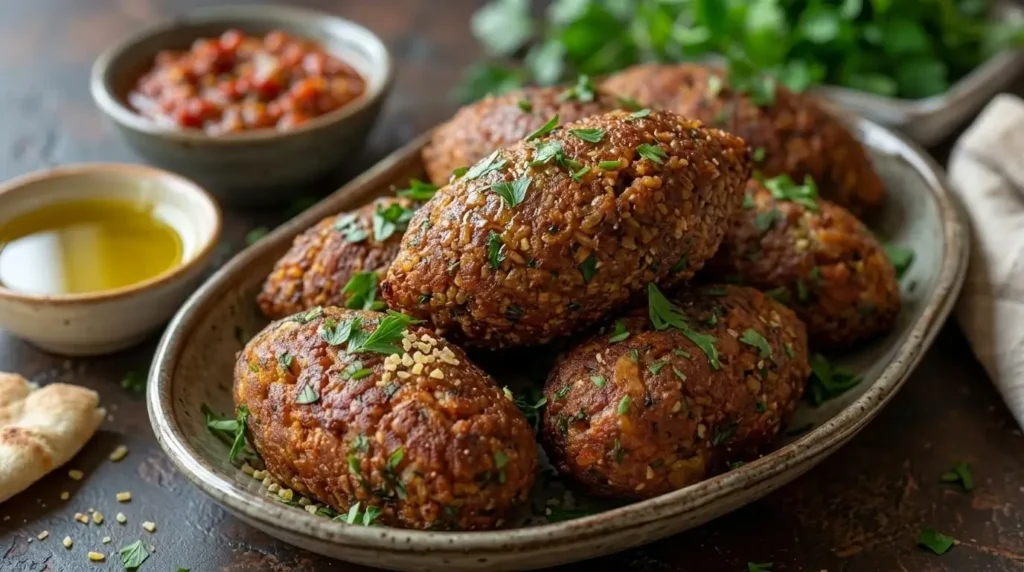
Moisten your hands with cold water to prevent sticking. Divide the mixture into equal portion balls (about 2 tablespoons each). Roll into smooth ovals, then gently taper the ends to form classic, football-shaped Lebanese meat croquettes.
Step 5: Brush with Olive Oil
Arrange the shaped croquettes on a parchment-lined baking sheet or in a rustic ceramic baking dish. Brush each piece generously with extra virgin olive oil. This step replaces traditional deep-frying, guaranteeing a healthy, crispy finish.
Step 6: Bake Until Deeply Golden
Bake in a preheated oven at 400°F (200°C) for 20 to 25 minutes, rotating the baking dish halfway through, until the croquettes develop a rich golden-brown crust and are fully cooked inside.
Step 7: Rest Before Serving
Remove from the oven and let rest for 5 minutes to allow juices to redistribute. Garnish generously with freshly chopped parsley before serving hot.
Expert Tips for Success
- Use Cold Meat: Keep your ground beef or lamb chilled until the exact moment of mixing to prevent fats from softening excessively while shaping.
- Wet Your Hands Frequently: Keeping a small bowl of ice water nearby makes shaping smooth croquettes effortless and keeps the surface slick.
- Knead Thoroughly: Do not skip kneading! Muscle proteins (myosin) need physical agitation to bind with the bulgur into a solid structure.
- Bake on Parchment: Prevents bottom scorching and preserves uniform crispiness.
- Rotate the Pan: Rotate your baking tray 180 degrees halfway through cooking to ensure even browning across all croquettes.
Common Mistakes to Avoid
- Bulgur Too Wet: Failing to squeeze excess water out of soaked bulgur will result in mushy, loose kibbeh.
- Too Much Onion Liquid: Grating onions releases heavy water; press grated onions through a paper towel before adding.
- Underseasoning: Kibbeh requires assertive spicing; do not skimp on the Lebanese 7-spice or salt.
- Croquettes Too Thick: Overly thick croquettes dry out on the surface before cooking completely through to the center.
- Skipping the Resting Time: Cutting into hot kibbeh immediately out of the oven causes stored moisture to evaporate, drying out the meat interior.
Recipe Variations
- Lamb Kibbeh: Substitute lean ground lamb for classic, authentic flavor.
- Stuffed Kibbeh (Kibbeh Ras): Form an outer hollow shell with the meat paste and fill with sautéed ground meat, pine nuts, and onions before sealing.
- Air Fryer Kibbeh: Arrange croquettes in a single layer inside your air fryer basket, spray lightly with olive oil, and cook at 380°F (190°C) for 12–14 minutes.
- Gluten-Free Considerations: Because traditional kibbeh relies on bulgur wheat (derived from whole wheat), standard kibbeh contains gluten. For a gluten-free adaptation, replace fine bulgur with fine brown rice bulgur or quinoa flakes.
What to Serve With Kibbeh
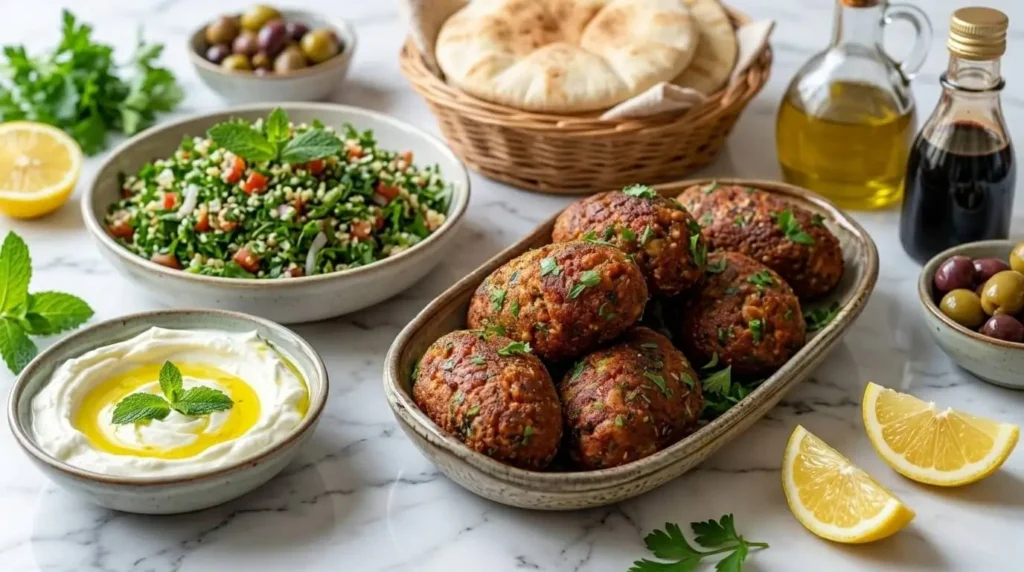
Turn your homemade authentic kibbeh recipe into a complete protein-rich Mediterranean dinner by serving it alongside vibrant side dishes:
- Classic Dips: Pair with garlic labneh, tahini sauce, or homemade hummus for dipping.
- Fresh Salads: Balance the savory spices with light, acidic options like classic Tabbouleh, Fattoush, or a crisp Italian White Bean Salad packed with lemon and olive oil.
- Hearty Mains & Sides: Complement your mezze table with options like Mediterranean Lamb and Feta Flatbread or wholesome options like Cheesy Beef and Quinoa Stuffed Bell Peppers.
- Accompaniments: Serve alongside Lebanese vermicelli rice, warm pita bread, and pickled turnips.
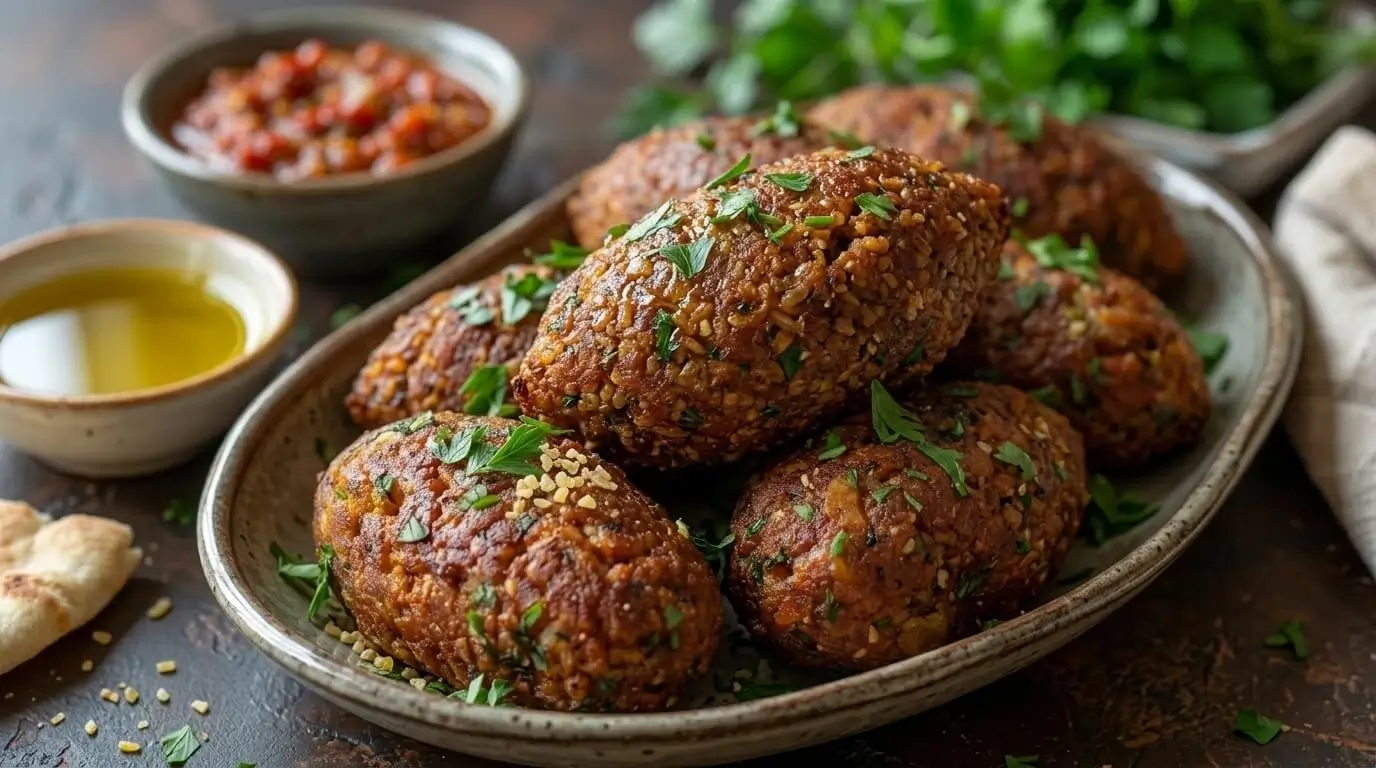
Traditional Lebanese Kibbeh Recipe (Baked Beef Kibbeh)
Ingredients
Method
- Rinse fine bulgur wheat in a fine-mesh colander. Transfer to a bowl, cover with cool water, and let soak for 15 minutes. Drain thoroughly, then squeeze handfuls of bulgur firmly to remove all excess water.
- In a large bowl, combine squeezed bulgur wheat, lean ground beef, grated yellow onion, chopped fresh parsley, Lebanese 7-spice, and sea salt.
- Knead the mixture vigorously with your hands for 3 to 5 minutes until it binds completely into a smooth, cohesive meat paste.
- Moisten your hands with cold water. Portion 2 tablespoons of mixture at a time and shape into oval, football-like croquettes with gently tapered ends.
- Arrange the shaped kibbeh croquettes in a parchment-lined ceramic baking dish or sheet pan. Brush each piece generously with extra virgin olive oil.
- Bake in a preheated oven at 400°F (200°C) for 20 to 25 minutes until cooked through and deeply browned on the exterior.
- Let rest for 5 minutes. Garnish with chopped fresh parsley before serving hot.
Notes
– Make-Ahead: Unbaked croquettes can be shaped and frozen on a tray, then stored in a freezer bag for up to 3 months. Bake straight from frozen at 400°F (200°C) for 28-30 minutes.
– Air Fryer Option: Air fry at 380°F (190°C) for 12-14 minutes, spraying lightly with olive oil before cooking.
Storage & Freezing Instructions
- Refrigerator Storage: Store cooked kibbeh in an airtight container in the fridge for up to 4 days.
- Freezer Instructions: Place unbaked or baked croquettes on a baking sheet lined with parchment paper and freeze for 2 hours until solid. Transfer to a freezer-safe bag for up to 3 months. Bake unbaked frozen kibbeh directly from frozen at 400°F (200°C) for 28–30 minutes.
- Reheating: Reheat stored kibbeh in a 350°F (175°C) oven for 8–10 minutes or in an air fryer for 4–5 minutes at 350°F (175°C) to restore crispy texture.
Frequently Asked Questions
What is Lebanese kibbeh?
Lebanese kibbeh is a traditional Middle Eastern dish crafted from a finely blended mixture of ground meat (beef or lamb), fine bulgur wheat, onions, herbs, and warm spices, shaped into croquettes or baked in trays.
Is kibbeh Lebanese?
Yes, kibbeh is recognized as a national dish of Lebanon, though regional variations exist across Syria, Turkey, Jordan, and Iraq.
What is kibbeh made of?
Traditional kibbeh is made of lean ground beef or lamb, fine bulgur wheat (#1 grade), grated onions, fresh parsley, Lebanese seven-spice blend, salt, and extra virgin olive oil.
Can kibbeh be baked?
Absoloutely. Baking kibbeh brushed with extra virgin olive oil yields a wonderfully crispy exterior while keeping the center moist, making it a healthy Mediterranean Diet-friendly alternative to deep frying.
Is kibbeh healthy?
Yes! When baked, kibbeh is a protein-rich meal loaded with dietary fiber from whole-grain bulgur wheat, healthy fats from olive oil, and essential minerals from lean meat.
Can kibbeh be frozen?
Yes, kibbeh freezes exceptionally well either baked or unbaked for up to 3 months.
Why is my kibbeh falling apart?
Kibbeh falls apart primarily due to using coarse bulgur, excessive water in the soaked bulgur/onions, using high-fat meat, or failing to knead the mixture sufficiently into a smooth paste.
Which bulgur is best?
Fine bulgur (#1 grade) is the best and only bulgur suitable for making authentic kibbeh croquettes.
Can I use beef instead of lamb?
Yes, extra-lean ground beef works perfectly and provides a mild, delicious flavor profile.
What do you serve with kibbeh?
Kibbeh is traditionally served with labneh, hummus, tabbouleh, fattoush, fresh pita bread, garlic yogurt sauce, and Mediterranean side salads.
Is kibbeh gluten free?
No, traditional kibbeh contains bulgur wheat, which is derived from whole wheat grains containing gluten.
Can kibbeh be air fried?
Yes, air fry kibbeh croquettes at 380°F (190°C) for 12 to 14 minutes after spraying lightly with extra virgin olive oil.
Final Thoughts
Making an easy Lebanese kibbeh recipe at home brings authentic Middle Eastern heritage straight to your family table. By baking these spiced meat and bulgur croquettes with extra virgin olive oil, you retain all the classic charm—a crispy, deeply golden exterior wrapped around a tender, fragrant center—while keeping your meal clean and aligned with Mediterranean diet principles. Gather your ingredients, shape your croquettes,