If you are searching for a bright, vibrant dish that captures the absolute essence of coastal Italian or Greek home cooking, look no further. This Lemon Herb Orzo with Zucchini and Peas brings together the refreshing tang of fresh citrus, the earthy comfort of tender seasonal vegetables, and the comforting bite of tiny pasta grains. It delivers the luxurious, velvety mouthfeel of a high-end risotto but with all the simplicity and speed of a modern one-pot pasta recipe.
Perfect for warm spring evenings or late summer dinners, this dish strikes the ultimate balance between light nourishment and pure comfort food. Because it relies entirely on wholesome ingredients, it fits effortlessly into a clean-eating lifestyle. This dish is naturally Mediterranean diet-friendly with extra virgin olive oil, vegetables, herbs, and moderate cheese. It requires minimal cleanup and leaves you with a centerpiece-worthy vegetarian meal the entire family will love. Whether you serve it as a standalone vegetarian orzo recipe or as a stunning side dish alongside your favorite grilled proteins, this recipe is guaranteed to find a permanent spot in your weekly dinner rotation. Let’s dive into why this quick weeknight dinner deserves a place on your table tonight.
Why You’ll Love This Lemon Herb Orzo with Zucchini and Peas
- One Pan Magic: Everything—including the dry pasta—cooks together in a single deep skillet. This means the starch from the orzo stays right in the pan, creating a rich texture while keeping cleanup down to a single pot.
- Ready in 30 Minutes: From chopping the vegetables to your very first bite, this easy orzo dinner comes together in less time than it takes to order takeout.
- True Mediterranean-Inspired Flavors: The combination of cold-pressed olive oil, fresh citrus juices, and aromatic herbs brings the taste of the Mediterranean coast right into your kitchen.
- Family Friendly Appeal: Kids love the small, easy-to-eat shape of orzo pasta, while parents appreciate the hidden abundance of nutritious green vegetables packed into every spoonful.
- A Wholesome Vegetarian Option: It functions perfectly as a satisfying meatless Monday staple or a standalone plant-forward dinner.
- Creamy Without Cream: Thanks to standard starch-release cooking methods, you get a luxurious, glossy coating without using a single drop of heavy dairy or cream.
- Highly Budget Friendly: The core components consist of affordable pantry staples like dried pasta, frozen peas, and basic seasonal produce.
- Fresh and Vibrant Ingredients: No heavy canned sauces or processed fillers here; this dish relies completely on bright, crisp, real-food ingredients.
- Great for Smart Meal Prep: This healthy orzo recipe holds up incredibly well in the fridge, making your weekday lunches something to actually look forward to.
- Completely Beginner Friendly: The steps are straightforward, intuitive, and highly forgiving, ensuring culinary success for cooks of all skill levels.
What Makes This Recipe Mediterranean Diet Friendly?
Adhering to a traditional Mediterranean eating pattern isn’t about rigid restrictions; it’s about celebrating real, unrefined ingredients. This Mediterranean orzo recipe is a prime example of how simple adjustments can elevate a dish to align perfectly with these centuries-old nutritional principles without altering its beautiful, vibrant appearance.
First and foremost, this recipe prioritizes healthy monounsaturated fats by increasing the use of 100% extra virgin olive oil to 1½ tablespoons. This foundational oil provides a rich base of heart-healthy fats and antioxidants. The dish is heavily built around seasonal, whole-food ingredients like fresh green zucchini and sweet peas, ensuring a high fiber content and an array of essential micronutrients. Rather than masking the food under heavy cream or processed sodium, we use a low-sodium vegetable broth and amplify the natural flavors using a dynamic duo of fresh chopped parsley and fresh mint.
The cheese component is kept strictly moderate at a ¼ cup of authentic, nutrient-dense Parmigiano Reggiano rather than generic, pre-packaged varieties. This traditional choice delivers maximum umami impact with a smaller portion. While this remains an exceptional standalone spring orzo recipe, you can easily round out the meal by adding clean, lean proteins. Feel free to pair the dish with chickpeas, grilled fish, or grilled chicken to create a hearty, balanced plate that keeps the visual identity of the dish perfectly intact.
Ingredient Notes
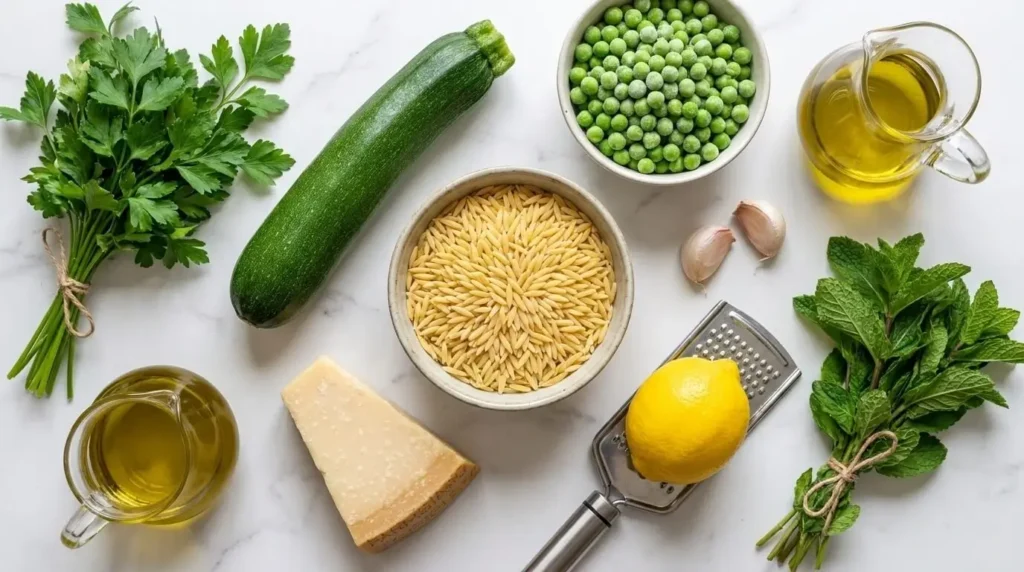
Orzo
Despite its rice-like shape, orzo is 100% pasta made from durum wheat semolina. The primary difference between orzo and rice lies in how they behave during cooking; orzo releases just enough surface starch to create a silky, glossy coating while retaining a distinctly al dente, satisfying chew that rice simply cannot replicate.
Zucchini
When choosing the best zucchini for your lemon zucchini orzo, look for small to medium-sized gourds that feel heavy for their size and have smooth, unblemished skin. Smaller zucchini have fewer seeds and a lower water content, allowing them to brown beautifully and hold their shape without turning mushy in the pan.
Sweet Peas
You can use either fresh or frozen sweet green peas for this recipe. If using frozen peas, there is absolutely no need to thaw them beforehand; their small size allows them to cook through and turn bright green within the final two minutes of pan simmering.
Lemon
Freshness is paramount here. Always use real lemons rather than bottled juice. The real magic lies in using both the aromatic lemon zest—which contains essential oils that cut through the pasta’s starch—and the freshly squeezed juice for that essential, bright pop of clean acidity.
Parmesan
Skip the green shaker bottle and reach for real Parmigiano Reggiano. Freshly grated cheese from a block contains no anti-clumping wood pulp fillers, meaning it will melt flawlessly into the residual heat of the pasta, creating an ultra-smooth, velvety finish.
Herbs
Instead of choosing between them, using fresh Italian parsley and fresh mint together creates a complex, authentic flavor profile. For a fun seasonal twist, you can also experiment with a pinch of fresh dill to provide a bright, anise-like undertone.
Olive Oil
Using high-quality, cold-pressed extra virgin olive oil is critical. It serves as both your cooking fat and your finishing element, imparting a peppery, fruity depth that acts as a natural flavor enhancer across the entire dish.
Equipment You’ll Need
- Deep Skillet or Wide Sauté Pan: Provides ample surface area to sauté vegetables comfortably while leaving enough depth to simmer the broth and pasta together.
- Wooden Spoon: Ideal for scraping up those delicious, caramelized bits from the bottom of your skillet without scratching the pan.
- Fine Grater or Microplane: Essential for achieving a fine, pillowy grate on your Parmigiano Reggiano and lifting away the fragrant lemon zest without hitting the bitter white pith.
- Citrus Juicer: Helps extract every single drop of fresh juice while keeping troublesome seeds out of your dinner.
- Measuring Cups and Spoons: Essential for maintaining the perfect liquid-to-pasta ratio for a flawless cook.
How to Make Lemon Herb Orzo with Zucchini and Peas
Step 1 – Sauté the Zucchini
Heat your extra virgin olive oil in your deep skillet over medium heat. Once the oil shimmers, add your halved and thinly sliced half-moon zucchini pieces. Sauté them undisturbed for 4–5 minutes. You are looking for the zucchini to develop a slight caramelization on the edges while remaining vibrant green. Once they are beautifully golden and slightly softened, gently remove them from the pan and set them aside to preserve their texture.
Step 2 – Toast the Garlic and Orzo
Drop your finely grated or minced garlic cloves and the dry, uncooked orzo directly into the remaining warm oil in the pan. Stir constantly for about 1 minute. Watch as the pasta pearls pick up a light, glossy coating of oil and turn a pale golden hue. This crucial toasting step unlocks a rich, deeply comforting aroma and helps the grains maintain their structure during the upcoming simmer.
Step 3 – Simmer Until Tender
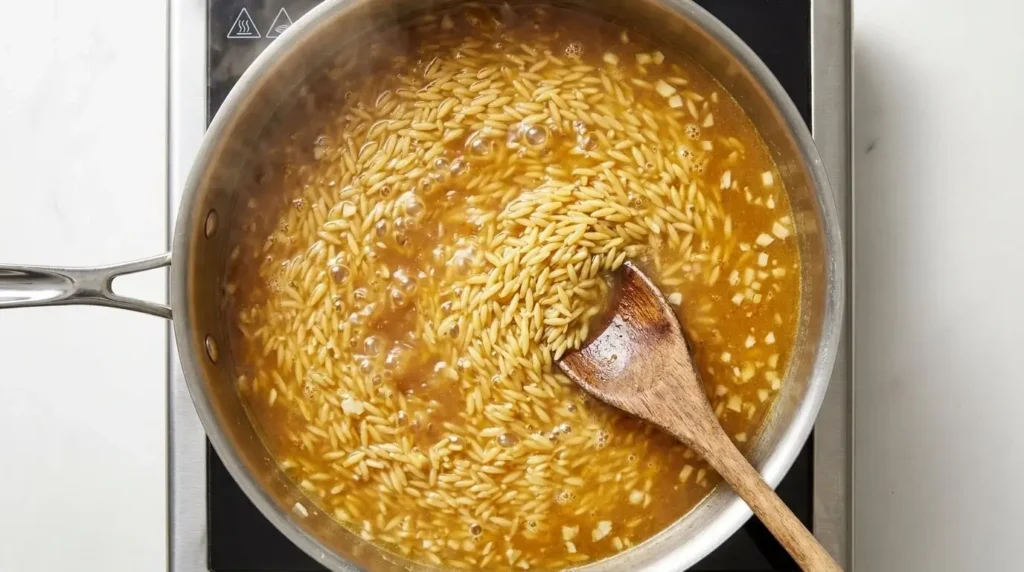
Slowly pour your low-sodium vegetable broth into the skillet, stirring gently to scrape up any browned bits stuck to the bottom of the pan. Bring the liquid up to a gentle boil. As soon as it bubbles, reduce the heat to medium-low, cover the pan with a tight lid, and let it simmer for 8–10 minutes. Make it a point to stir the mixture occasionally to keep the starchy orzo grains moving and prevent them from sticking to the bottom.
Step 4 – Fold in the Peas and Zucchini
Once the orzo is tender and has naturally absorbed the vast majority of the savory broth, remove the lid. Slide your bright green sweet peas and your cooked zucchini back into the skillet. Stir gently to distribute the vegetables evenly. Let everything cook uncovered for a final 2 minutes over low heat, allowing the peas to warm through completely and turn a stunning, vibrant green.
Step 5 – Finish with Lemon, Herbs, and Parmesan
Take the skillet completely off the heating element. Stir in your fresh lemon juice, aromatic lemon zest, finely grated Parmigiano Reggiano, and your finely chopped fresh parsley and mint. Give everything a thorough toss as the cheese melts gently into the residual heat, forming an incredibly smooth coating. Taste the dish, season with a pinch of salt and cracked black pepper, and finish with a light drizzle of fresh extra virgin olive oil just before serving.
Expert Tips for Perfect One-Pot Orzo
- Toast the Orzo First: Never skip the toasting step! Coating the dry pasta in warm oil before adding liquid creates a protective layer that controls starch release, yielding a deeper flavor and preventing the grains from turning into a gummy mass.
- Stir Regularly: Because this is a one-pot meal, the starch remains in the pan. Give it a gentle stir every couple of minutes during the simmer phase to keep the bottom from catching.
- Protect Your Zucchini: Zucchini turns mushy quickly. By searing it first, removing it, and folding it back in at the absolute end, you ensure it stays crisp-tender and visually striking.
- Add Citrus at the End: Cooking lemon juice over high heat destroys its bright flavor and can introduce bitter notes. Always fold your zest and juice in after removing the skillet from the heat source.
- Prioritize Fresh Herbs: Dried herbs cannot compete with the punch of fresh Italian parsley and mint. Chop them right before adding them to keep their oils intact.
- Grate Your Own Cheese: Pre-shredded cheeses are coated in starches that prevent them from melting cleanly. A microplane-grated cheese dissolves instantly into the pasta, creating that coveted “creamy without cream” texture.
- Keep Extra Broth on Hand: Depending on your stove’s heat, your pasta may absorb liquid faster than expected. If the pan looks dry before the orzo is al dente, simply splash in an extra ¼ cup of warm broth.
- The Final Drizzle: A tiny pour of uncooked extra virgin olive oil at the very end adds a luxurious, velvety finish and a wonderful raw aroma that ties the whole dish together.
Easy Variations
If you want to switch things up based on what is currently growing in your garden or sitting in your refrigerator, this flexible one-pot pasta recipe adapts beautifully:
- Green Boost: Toss in a handful of baby spinach or chopped tender asparagus spears along with the peas.
- Mediterranean Classics: Stir in marinated artichoke hearts or top your finished bowl with crumbled, salty feta cheese.
- Herb Substitutions: Swap the mint for fresh chopped basil or a hint of aromatic dill.
- Plant-Based Protein: Fold in a can of rinsed, drained chickpeas or tender cannellini beans during the final simmer.
- Seafood or Poultry: Top your plate with succulent grilled shrimp, grilled chicken breasts, or a beautiful piece of flaked salmon.
- Gluten-Free Alternative: Use your favorite high-quality gluten-free orzo option, monitoring the cooking time slightly as starch levels may vary.
What to Serve with Lemon Herb Orzo with Zucchini and Peas
This versatile dish shines brightly on its own, but it can also be paired with a variety of delicious accompaniments to create an unforgettable Mediterranean feast.
If you want to keep the meal light, fresh, and completely vegetarian, consider pairing it with a crisp side option like our Tzatziki Chickpea Salad, which provides an incredible crunch and a boost of plant-based protein. For a hearty family dinner, this orzo acts as the absolute perfect bed for a succulent protein like our Baked Lemon-Garlic Cod with Butter Sauce. The buttery, citrus-infused pan juices from the fish melt seamlessly into the glossy herb pasta.
If you prefer poultry, it coordinates beautifully with our Garlic Herb Roasted Chicken and Vegetables, offering a rustic, deeply savory contrast to the bright zest of the lemon and mint. You can also serve it alongside warm whole-grain pita bread, a dollop of traditional tzatziki, or a simple bowl of marinated Kalamata olives.
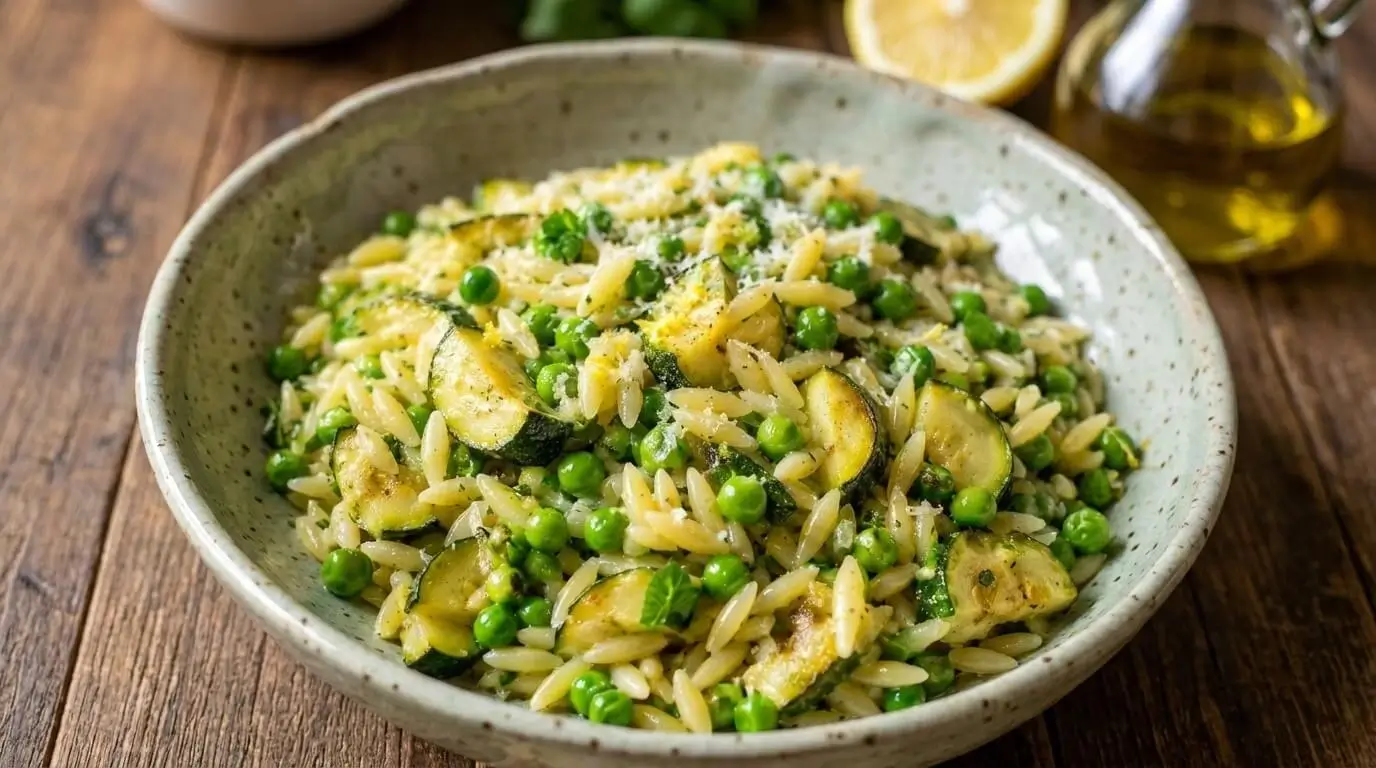
Ingredients
Method
- Heat 1.5 tablespoons of extra virgin olive oil in a deep skillet or wide sauté pan over medium heat. Add the sliced zucchini half-moons and cook for 4–5 minutes until they are slightly softened and sport a light, golden caramelization. Carefully transfer the zucchini to a side plate and set aside.
- Turn down the heat slightly. Add the minced garlic and dry orzo directly to the remaining oil in the skillet. Stir constantly for 1 minute until the garlic is intensely fragrant and the orzo is glossy and lightly toasted.
- Pour in the low-sodium vegetable broth and stir gently, scraping up any delicious browned bits from the pan. Bring the mixture to a boil. Reduce heat to medium-low, cover with a tight lid, and let it simmer gently for 8–10 minutes, stirring occasionally so the pasta doesn’t stick.
- Once the orzo is tender and has absorbed almost all the broth, uncover and stir in the sweet green peas and the cooked zucchini. Cook uncovered for 2 minutes over low heat until the peas are heated through and vibrant green.
- Remove the pan from the heat source completely. Fold in the fresh lemon juice, lemon zest, grated Parmigiano Reggiano, and chopped fresh herbs. Stir well as the cheese melts into the residual heat to create a silky glaze. Season with salt and pepper to taste, and finish with a light drizzle of extra virgin olive oil before plating.
Notes
– Always use a fresh block of Parmigiano Reggiano; pre-shredded cheese contains anti-caking agents that disrupt the smooth emulsion.
– If your stove runs hot and the pan looks dry before 8 minutes, add an extra splash of warm broth.
– Optional addition: Pair this dish with clean proteins like chickpeas, grilled chicken, or grilled fish to turn it into a hearty main.
Storage and Reheating
Refrigeration
Store any leftovers in an airtight glass container in your refrigerator for up to 3–4 days. The flavors will actually continue to meld and deepen overnight, making day-two lunches absolutely spectacular.
Freezing
While you can technically freeze this dish for up to a month, please note that the delicate texture of both the zucchini and the orzo pasta will soften significantly upon thawing. For the absolute best culinary experience, we highly recommend enjoying this dish fresh or refrigerated.
Reheating
As the dish cools, the orzo will naturally continue to drink up the remaining moisture, causing it to thicken. To restore its original glossy, velvety glory, reheat your leftovers in a small saucepan over medium-low heat with a splash of fresh vegetable broth or water, stirring gently until heated through. If using a microwave, place the orzo in a microwave-safe bowl, add a tiny splash of water, cover with a damp paper towel, and heat in 30-second intervals.
Frequently Asked Questions
Can I use frozen peas?
Yes, absolutely! Frozen sweet peas are frozen at peak freshness and work perfectly. Do not thaw them ahead of time; simply toss them straight into the hot skillet during the final two minutes of cooking.
Is orzo a pasta or rice?
Orzo is 100% pasta. While it is shaped like a large grain of rice, it is crafted from semolina flour and behaves exactly like traditional Italian pasta when cooked.
Can I make this vegan?
Completely. To make a magnificent vegan version, simply omit the Parmigiano Reggiano altogether or swap it out for your favorite high-quality nutritional yeast or aged plant-based cheese alternative.
Can I use chicken broth?
Yes. If you aren’t strict about keeping the dish vegetarian, utilizing a low-sodium chicken broth adds an incredibly deep, savory undertone to the pasta base.
How do I keep orzo from sticking?
The secret lies in the initial toast. Searing the dry pasta in extra virgin olive oil before adding liquid cooks the surface starches, while an occasional stir during the simmer keeps the grains separated.
Can I make it ahead?
While it tastes best straight out of the skillet when the starch is perfectly emulsified, you can easily make it ahead for meal prep. Just be sure to flash-reheat it with an extra splash of broth to revive the signature sauce.
What herbs taste best?
The classic combination of fresh Italian flat-leaf parsley and fresh mint yields the most complex, bright, and authentic Mediterranean profile.
Can I add protein?
Definitely! It pairs naturally with clean proteins like grilled shrimp, seared chicken breast, flaked white fish, or simple canned chickpeas.
Can I use whole wheat orzo?
Yes, whole wheat orzo works wonderfully and offers an extra boost of dietary fiber and a nuttier base flavor. Keep an eye on your liquid levels, as whole wheat varieties occasionally require a splash more broth.
Why is my orzo dry?
If your heat is set too high during the simmering phase, the broth will evaporate before the pasta plumps up completely. Always keep it at a low simmer and add a touch of extra broth if needed.
More Mediterranean Recipes You’ll Love
- Greek Lemon Rice: A bright, citrusy side dish packed with fresh garlic and wild herbs.
- Mediterranean Chickpea Salad: A colorful, no-cook salad loaded with crisp cucumbers, tomatoes, and zesty vinaigrette.
- Garlic Lemon Roasted Potatoes: Crispy, golden potato wedges infused with Greek oregano and fresh lemon juice.
- Mediterranean Pasta Salad: The perfect summer gathering dish featuring feta, olives, and roasted vegetables.