
When you crave a true seafood masterpiece, nothing compares to authentic Maryland Garlic Butter Crab Cakes. Built on a foundation of sweet, delicate jumbo lump crab meat, these thick, generously sized crab cakes are lightly bound with just enough panko or cracker crumbs to keep them intact without diluting the sweet taste of the crab. Seasoned with iconic Old Bay, fragrant garlic, lemon juice, and fresh parsley, each mound is finished with a drizzle of melted butter and extra-virgin olive oil before being baked until golden brown and sizzling.
Unlike heavy diner patties packed with excess breading, this recipe celebrates crab-forward flavor with absolute minimal filler. It honors classic Chesapeake Bay culinary traditions while adding a rich, aromatic garlic-butter twist. While classic Marylanders might keep garlic and butter for the side, this garlic-butter variation elevates every single bite into an unforgettable gourmet meal.
Why You’ll Love These Maryland Garlic Butter Crab Cakes
Whether you are hosting a weekend dinner party or preparing an elevated seafood dinner at home, these Maryland Garlic Butter Crab Cakes deliver pure culinary perfection. Here is why this dish will quickly become a favorite in your recipe rotation:
- Loaded with Jumbo Lump Crab: Every bite offers large, succulent pieces of sweet crab rather than finely shredded meat.
- Minimal Filler: Bound with just a touch of mayo, egg, and crumbs so the natural flavor of the seafood shines through.
- Thick and Impressive Shape: Formed into rounded, domed mounds that look as incredible as they taste.
- Golden-Brown Baked Exterior: High-temperature baking produces a delightful sizzle without messy deep frying.
- Bright Garlic and Lemon Notes: Freshly grated garlic and lemon zest brighten the rich, buttery profile.
- Signature Old Bay Kick: Delivers that undeniable, cozy Chesapeake flavor balance.
- Effortless Preparation: Quick to mix, simple to shape, and baked in under 15 minutes.
Using simple techniques for baked Maryland crab cakes, you get maximum crispiness on the outside while preserving juicy tenderness inside.
What Makes These Crab Cakes Maryland-Style?
In traditional Chesapeake cuisine, the golden rule of crab cake making is simple: let the crab meat take center stage. Authentic Maryland style crab cakes rely on high-quality blue crab meat, a very light hand with binding ingredients, and signature Chesapeake Bay seasoning.
Key characteristics of a Maryland-style foundation include:
- Seafood Priority: The crab meat is always the primary ingredient, never an afterthought buried under breading.
- Minimal Binders: Egg, mayonnaise, and crushed saltine crackers or panko are added sparingly to hold the lumps together.
- Jumbo Lump Preference: Large, tender chunks of crab meat are preserved during mixing rather than shredded.
- Chesapeake Seasoning: Old Bay seasoning provides the primary warm, savory blend of celery salt, pepper, and spices.
- Gentle Handling: Ingredients are folded delicately with a spatula so the crab structures remain visibly intact.
- Tall, Mounded Shape: Cakes are shaped into thick, compact domes rather than compressed into flat patties.
While there is no single “authentic” Maryland recipe—as coastal home cooks and seafood shacks across the region each boast their own secret ratios—our version takes that classic foundation and enhances it with fresh garlic and a buttery extra-virgin olive oil glaze. It combines coastal tradition with aromatic garlic-butter goodness.
Ingredients You’ll Need
Creating stellar jumbo lump crab cakes requires top-notch ingredients. Gathering quality components ensures your crab cakes stay moist, flavorful, and structurally sound.
Crab
- 1 lb fresh jumbo lump crab meat: Inspect the crab meat carefully by picking through it gently to remove any stray shell fragments. Drain away any excess liquid in a fine strainer, taking care not to shred or smash the sweet lumps. Jumbo lump creates those high-end, restaurant-style visible pieces that make these cakes so impressive. If you love fresh seafood preparations, you might also enjoy our light, refreshing Crab Salad Recipe.
Binder
- 1 large egg
- 3 tbsp mayonnaise
- 1 tsp Dijon mustard
- 1 tsp Worcestershire sauce
This wet mixture acts as the glue. The combination of egg and mayonnaise keeps the interior moist, while Dijon and Worcestershire provide a subtle depth of savory flavor without overwhelming the crab.
Seasoning and Flavor
- 1 tbsp Old Bay seasoning (plus extra for dusting)
- 2 small garlic cloves (finely minced or grated)
- 1 tbsp fresh lemon juice
- 2 tbsp fresh parsley (finely chopped)
Fresh garlic brings an inviting aroma, while lemon juice cuts through the rich seafood, and chopped parsley adds color and herbal brightness.
Filler
- 1/3 cup panko or crushed saltine crackers: We use a strict 1/3 cup to ensure the mixture holds together just enough to bake, preventing dense, doughy cakes.
Finishing Fat
- 1 tbsp melted butter
- 1 tbsp extra-virgin olive oil
Combining rich butter with extra-virgin olive oil creates a fragrant finish that helps the exterior bake into a glistening, golden-brown crust.
How to Make Maryland Garlic Butter Crab Cakes
Follow these clear, step-by-step instructions to achieve perfectly shaped, golden-baked crab cakes every time.
1. Prepare the crab meat
Gently spread the fresh jumbo lump crab meat across a baking sheet or wide plate. Pick through the pieces with your fingers to check for small shell fragments or cartilage. Strain away any accumulated juice. Work gently so the individual jumbo lumps remain intact.
2. Make the seasoned binder
In a medium mixing bowl, whisk together the egg, mayonnaise, Dijon mustard, Worcestershire sauce, Old Bay seasoning, fresh lemon juice, minced garlic, and finely chopped parsley until completely smooth and uniform. Whisking these liquid ingredients first guarantees the seasonings spread evenly throughout the mixture without needing to overmix the crab later.
3. Add the filler
Add the 1/3 cup of panko breadcrumbs or crushed saltine crackers to the liquid binder. Stir lightly with a spoon or spatula until the crumbs absorb the liquid. Using only a minimal amount of crumbs ensures the mixture holds shape while remaining crab-forward.
4. Fold in the crab
Add the prepared jumbo lump crab meat to the bowl. Switch to a flexible rubber spatula and gently fold the crab meat into the binder. Sweep along the bottom of the bowl and fold upward carefully. Do not stir vigorously or beat the mixture. Preserving large, solid chunks of crab meat is essential for achieving tall, majestic crab cakes.
5. Shape the crab cakes
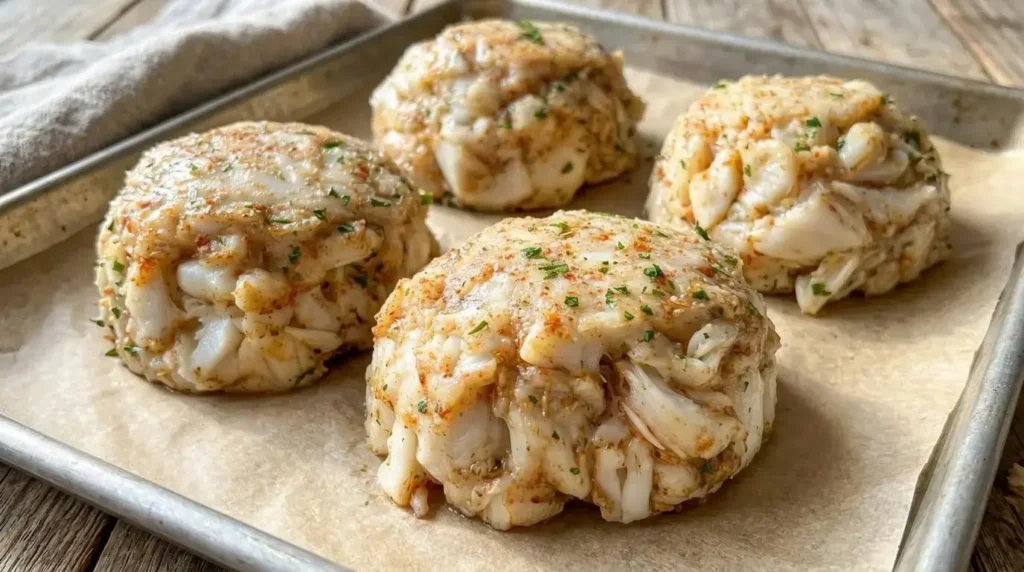
Divide the crab mixture evenly into 4 equal portions. Using your hands, gently press each portion into a thick, compact, rounded mound. Avoid flattening them into thin, flat diner patties; they should look tall, domed, and full of visible crab lumps around the sides.
6. Chill for 30 minutes
Place the shaped crab mounds onto a parchment-lined plate or small tray. Cover loosely with plastic wrap and transfer to the refrigerator for at least 30 minutes. Chilling firms up the fat in the mayonnaise and butter, resting the binders so the cakes maintain their shape without breaking apart in the hot oven.
7. Bake until golden
Preheat your oven to 450°F (230°C) and line a baking sheet with parchment paper. Carefully transfer the chilled crab cakes onto the baking sheet using a wide spatula. Stir together the melted butter and extra-virgin olive oil, then drizzle evenly over the top of each mound. Finish with a light dusting of Old Bay seasoning. Bake for 12 to 15 minutes, until the tops turn deeply golden brown and the edges are sizzling.
8. Garnish and serve
Remove the baking sheet from the oven and allow the crab cakes to rest for 2 to 3 minutes. Sprinkle with chopped fresh parsley and serve immediately alongside fresh lemon wedges.
How to Keep Crab Cakes From Falling Apart
One of the most common frustration points when making crab cakes with little filler is structural collapse. Because this recipe prioritizes crab over breadcrumbs, extra care during preparation is key.
Follow these proven steps to keep your crab cakes intact:
- Restrict the filler: Never add extra breadcrumbs out of habit; excess crumbs make cakes heavy and dry, while too few cause falling. The 1/3 cup ratio is precise.
- Avoid overmixing: Stirring too hard breaks the crab into tiny bits that lose cohesion. Always fold gently.
- Handle jumbo lump with care: Keep the lumps large, as they lock together better when bound.
- Form thick mounds: High, domed mounds have a lower surface-area-to-volume ratio than thin patties, making them far less prone to cracking.
- Chill religiously: Never skip the 30-minute refrigeration step. Cold binders lock the shape in place.
- Use parchment paper: Baking on parchment prevents sticking, allowing you to lift the cakes effortlessly.
- Do not flip: Baking at 450°F cooks the crab cakes evenly from top to bottom without requiring you to flip them over halfway through.
Baking vs. Frying Maryland Crab Cakes
While pan-frying in butter or oil is a traditional preparation method, baking offers distinct advantages for low-filler crab cakes.
| Feature | High-Heat Baking (450°F) | Pan-Frying |
| Handling Required | Minimal (no flipping) | High (flipping risks structural breakage) |
| Shape Retention | Excellent for tall, domed mounds | Better suited for flatter patties |
| Mess & Effort | Low hands-on effort, no oil splatter | Requires active stovetop monitoring |
| Flavor & Texture | Delicate, golden-brown crust with moist interior | Extra crispy exterior crust |
| Dietary Profile | Lighter, olive oil and butter finish | Absorbs more frying fat |
Baking at high heat cooks the crab cakes quickly, crisping the exterior with the garlic-butter drizzle while keeping the center tender and moist.
Tips for the Best Maryland Garlic Butter Crab Cakes
- Source Quality Seafood: Purchase fresh refrigerated jumbo lump crab meat from a reputable fishmonger whenever possible.
- Keep Everything Cold: Cold crab meat and chilled binder form tighter mounds that hold together during baking.
- Use Fresh Lemon: Always squeeze fresh lemon juice right before serving to brighten the butter and Old Bay notes.
- Grate the Garlic Fine: Grate garlic on a microplane so it melts seamlessly into the mayo binder without leaving harsh raw garlic chunks.
- Do Not Overbake: Jumbo lump crab meat comes pre-cooked; you only need to heat the cake through and brown the top layer.
- Let Them Rest: Allow the baked cakes to sit on the warm tray for 2 minutes before transferring them to plates.
What to Serve With Maryland Crab Cakes
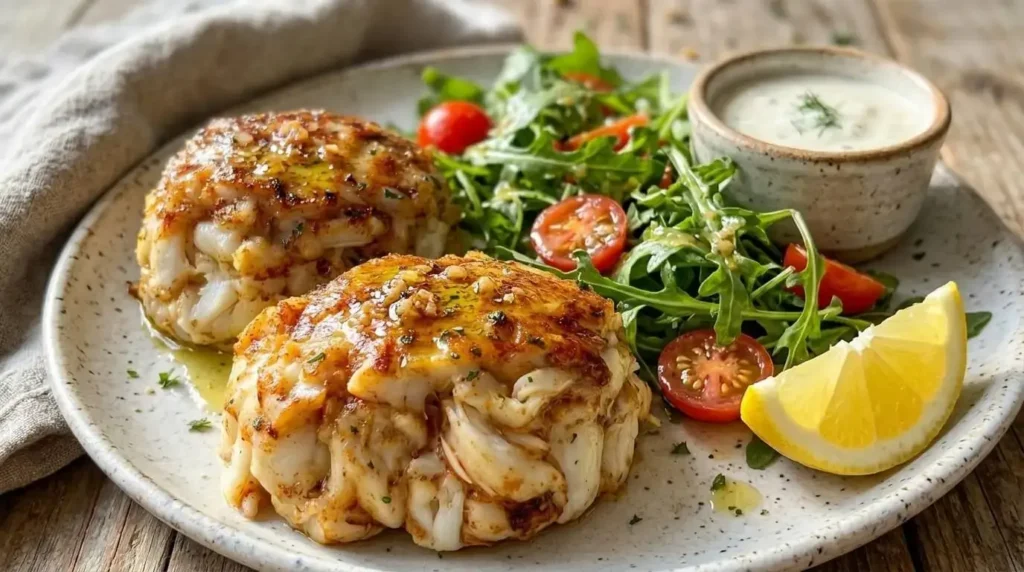
Pairing these savory, buttery crab cakes with fresh, bright side dishes creates a beautifully balanced meal. Mediterranean-inspired salads and citrus-forward vegetables cut through the rich crab and garlic butter effortlessly.
Consider serving your crab cakes alongside:
- Crisp Green Salads: A lemony arugula salad with shaved parmesan, or a refreshing Greek Quinoa Salad Recipe packed with cucumbers, tomatoes, and herbs.
- Roasted Vegetables: Grilled asparagus spears, roasted zucchini slices, or garlic-marinated tender broccoli.
- Citrus & Potato Sides: Lemon-herb roasted potatoes, warm grain bowls, or simple sliced garden tomatoes drizzled with extra-virgin olive oil.
- Dipping Sauces: Serve with lemon-garlic Greek yogurt sauce, garlic aioli, or classic tartar sauce on the side.
Can I Make These Crab Cakes Ahead of Time?
Yes! These crab cakes are ideal for advance meal preparation. You can mix the binder, fold in the crab, and shape the mounds up to 24 hours in advance.
Place the shaped crab cakes on a parchment-lined tray, cover tightly with plastic wrap, and store them in the refrigerator. In fact, resting overnight allows the binders to fully set, making the cakes even sturdier when placed into the oven. Simply drizzle with the melted butter and extra-virgin olive oil mixture right before baking.
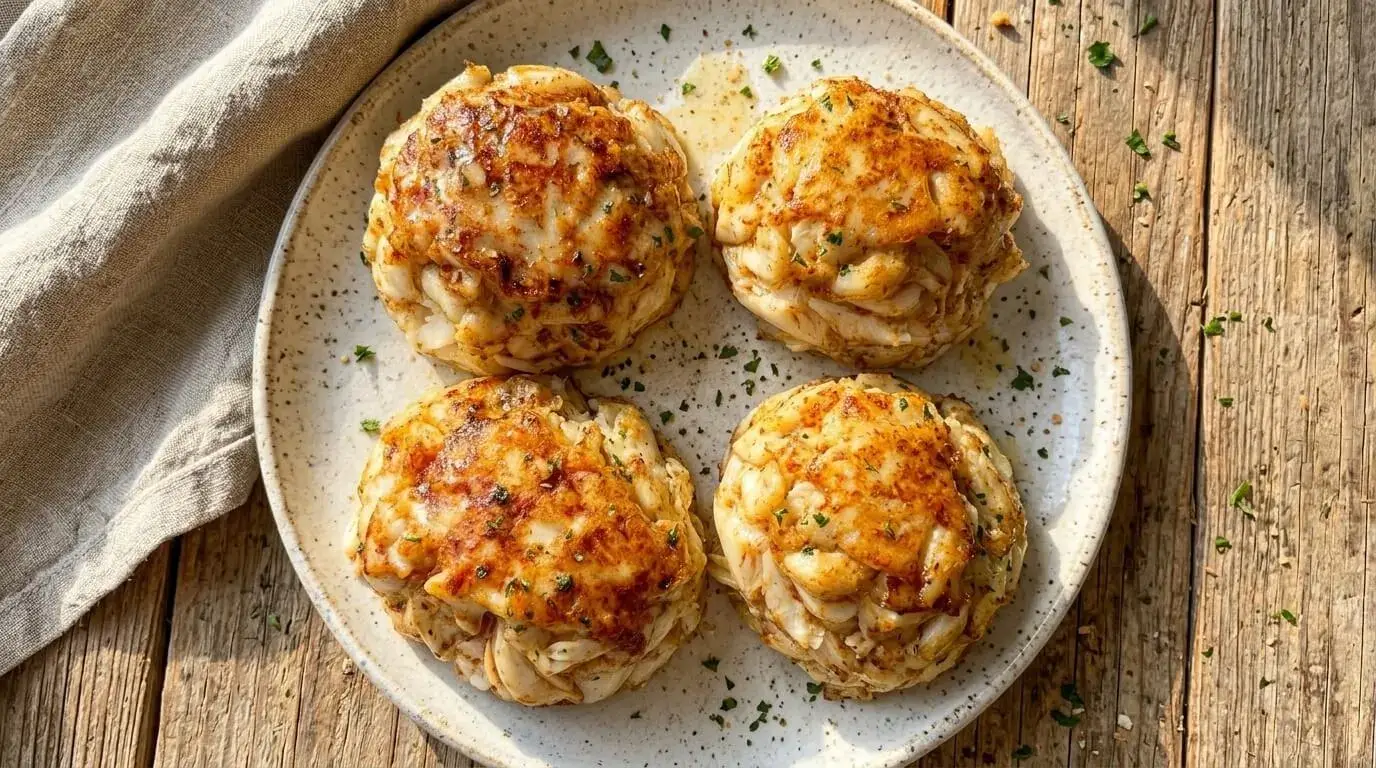
Maryland Garlic Butter Crab Cakes
Ingredients
Method
- Pick through the fresh jumbo lump crab meat to ensure all shell fragments are removed. Drain any excess moisture without breaking up the lumps.
- In a medium mixing bowl, whisk together the egg, mayonnaise, Dijon mustard, Worcestershire sauce, Old Bay seasoning, fresh lemon juice, finely minced garlic, and chopped parsley until smooth.
- Add the 1/3 cup panko or crushed saltines to the wet binder and stir until evenly combined.
- Add the jumbo lump crab meat to the bowl. Using a flexible rubber spatula, gently fold the crab into the binder without breaking up the large lumps.
- Divide the mixture into 4 equal portions and shape gently into tall, thick, rounded mounds. Do not flatten into thin patties.
- Place the crab cakes on a parchment-lined plate, cover loosely, and refrigerate for 30 minutes to firm up.
- Preheat your oven to 450°F (230°C). Line a baking sheet with parchment paper and transfer the chilled crab cakes onto the sheet.
- Mix the melted butter and extra-virgin olive oil together, then drizzle evenly over the crab cakes. Dust lightly with extra Old Bay.
- Bake for 12 to 15 minutes until the tops are deeply golden brown and sizzling.
- Garnish with fresh parsley and serve hot with lemon wedges.
Notes
– Do not flip the crab cakes during baking; high oven heat browns the tops evenly while keeping the centers juicy.
How to Store and Reheat Crab Cakes
Refrigerator
Store leftover cooked crab cakes in an airtight container in the refrigerator for up to 2 days.
Reheating
To preserve the golden exterior and moist interior, reheat cooked crab cakes in a preheated oven at 350°F (175°C) for 8 to 10 minutes until warmed through. Alternatively, an air fryer set to 350°F for 3 to 5 minutes works exceptionally well. Avoid microwaving, as it can render the crab rubbery and soggy.
Freezing
Unbaked crab cakes can be frozen on a parchment-lined sheet until solid, then wrapped individually in plastic wrap and stored in a freezer-safe bag for up to 1 month. Thaw overnight in the refrigerator before baking as directed.
Frequently Asked Questions
What makes a crab cake Maryland style?
Maryland-style crab cakes prioritize high crab meat content with very low binder filler. They rely on sweet lump crab, Old Bay seasoning, and minimal breading to keep the focus entirely on the seafood.
What kind of crab meat is best for Maryland crab cakes?
Fresh jumbo lump crab meat is the top choice because of its sweet flavor and large, unbroken pieces. Pasturized lump or backfin crab meat can also be used, though pieces will be slightly smaller.
How do you keep crab cakes from falling apart?
Keep filler low, fold ingredients gently without crushing the crab, and chill the shaped mounds in the refrigerator for at least 30 minutes before baking.
Is it better to bake or fry Maryland crab cakes?
Baking at high heat (450°F) is ideal for thick, low-filler crab cakes because it eliminates the need to flip them in a hot skillet, preserving their tall shape and preventing breakage.
Can I use canned crab meat?
Fresh refrigerated lump crab meat produces the best results. If using canned pasteurized crab meat, drain and pat it dry thoroughly before gently folding into the binder.
Can I make crab cakes without breadcrumbs?
Yes. You can substitute panko or saltines with almond flour, crushed pork-free gluten-free crackers, or extra parmesan cheese to bind the mixture gently.
Can I freeze Maryland crab cakes?
Yes. Shape the cakes and freeze them raw on a lined baking tray until solid. Wrap tightly and freeze for up to 30 days. Thaw completely in the fridge before baking.
What sauce goes best with crab cakes?
A light lemon-garlic Greek yogurt dip, garlic aioli, or classic Chesapeake tartar sauce pairs wonderfully with these rich, savory crab cakes.
Final Serving Note
These Maryland Garlic Butter Crab Cakes prove that you don’t need heavy fillers to make an unforgettable seafood dinner. By pairing sweet jumbo lump crab with classic Old Bay, fresh minced garlic, bright lemon, and a golden butter glaze, you get a restaurant-quality meal right from your oven. Serve them hot with a fresh green salad and extra lemon wedges for an extraordinary dining experience!