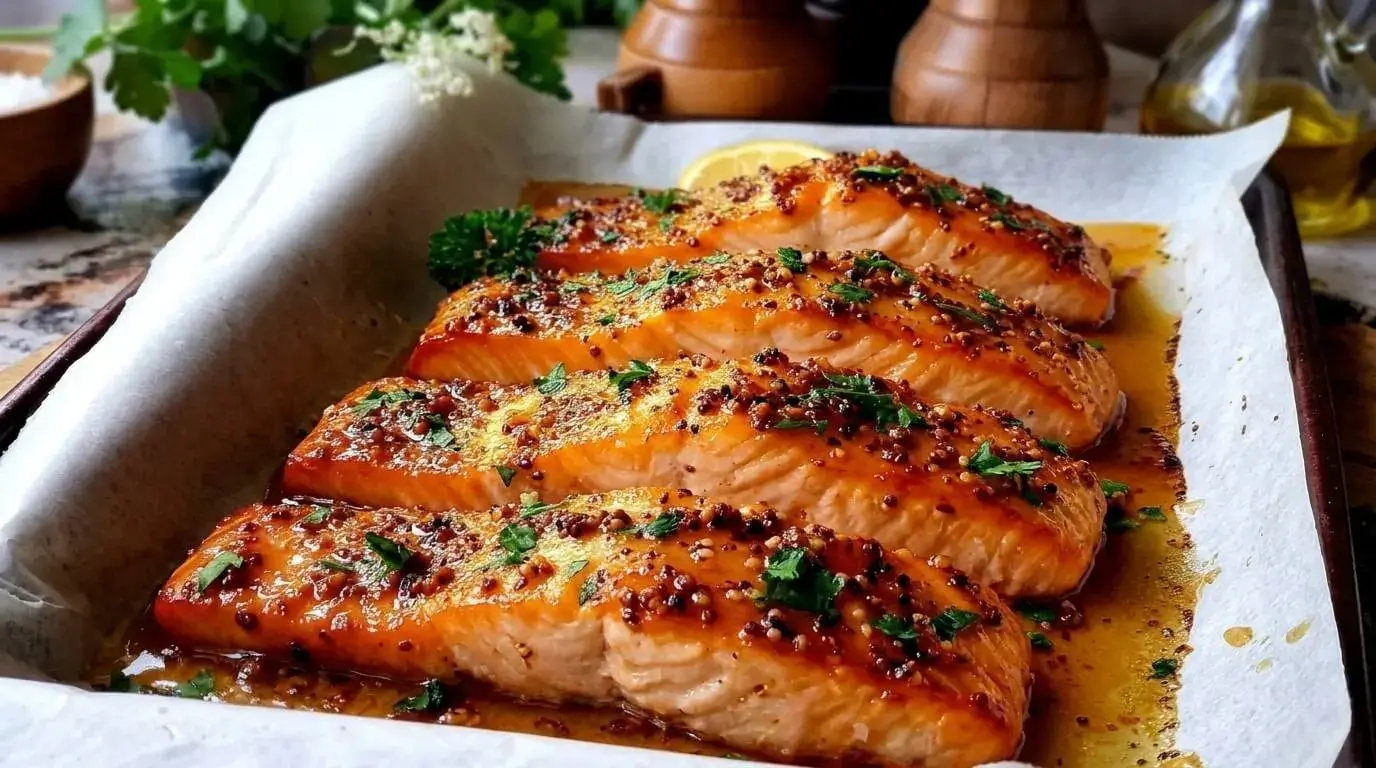
Imagine pulling a hot baking tray straight from the oven, carrying four thick salmon fillets bathed in an amber-golden glaze. The surface features a sparkling, caramelized crust dotted with textured whole-grain mustard seeds, finished with a scatter of fresh green parsley and a bright slice of lemon tucked alongside. This mustard glazed salmon delivers high-end restaurant presentation directly to your kitchen table in under 20 minutes.
Many popular glazed salmon recipes rely heavily on packed brown sugar or dark corn syrups to build a sweet, sticky coating. While tasty, these refined sugars cause blood sugar spikes and deviate from clean, heart-healthy eating habits. If you follow a healthy salmon recipes mediterranean diet approach, heavily sweetened glazes feel counterproductive.
This Mediterranean conversion offers a refined alternative. By swapping processed brown sugars for raw Mediterranean honey and pairing it with robust whole-grain mustard and extra virgin olive oil, you create a naturally sweet, sticky, and glossy glaze. This method yields a sugar free caramelized salmon experience free from refined cane sugar, retaining all the rich visual appeal and depth of flavor you expect from a gourmet glaze.
Whether you are looking for a 20 minute sheet pan salmon for busy weeknights or a impressive protein for weekend hosting, this recipe delivers maximum nutrition with minimal effort.
III. The Mediterranean Conversion: Making it Healthy (Without Losing the Gloss)
Why Swapping Brown Sugar is Crucial
The Mediterranean lifestyle prioritizes unrefined, nutrient-dense ingredients that support heart health and maintain steady energy levels. Traditional glazes often use 1/4 cup or more of brown sugar per serving. Replacing processed sugars with whole-food natural sweeteners aligns your dinner with long-term wellness goals while avoiding artificial ingredients.
The Magic of Mediterranean Honey
To achieve a sticky, glossy coating without brown sugar, pure Mediterranean honey serves as the ideal natural sweetener. High-quality varieties—such as Greek Thyme honey or Orange Blossom honey—contain natural sugars (fructose and glucose) alongside aromatic botanical notes. When baked at high heat, honey caramelizes into a glossy coating that clings to the fish, producing a rich color under the broiler.
+-------------------------------------------------------------------+
|               THE MEDITERRANEAN conversion FORMULA                |
+-------------------------------------------------------------------+
|  Standard Glaze                 Mediterranean Upgrade             |
|  ----------------               -------------------               |
|  Brown Sugar            --->    Raw Mediterranean Honey           |
|  Vegetable / Canola Oil --->    Extra Virgin Olive Oil (EVOO)     |
|  Smooth Yellow Mustard  --->    Textured Whole Grain Mustard      |
|  Bottled Juice          --->    Fresh Squeezed Lemon Juice        |
+-------------------------------------------------------------------+
Visual Confirmation (The Whole Grain Edge)
The visual appeal of this dish comes from the mustard choice. Using exclusively smooth Dijon mustard creates a flat, thin sauce. Incorporating coarse whole-grain mustard adds textured mustard seeds suspended within the amber honey coating. These seeds pop in your mouth and create an inviting, artisanal crust across the salmon.
EVOO vs. Conventional Oils
Replacing canola or soy oil with cold-pressed Extra Virgin Olive Oil (EVOO) adds healthy monounsaturated fats and polyphenols to the glaze. EVOO binds the honey, garlic, and mustard into an emulsion that coats the fish smoothly during baking.
IV. Key Ingredient Deep Dive (Sourcing and Flavor Profiles)
Salmon
Selecting high-quality fish is foundational to Mediterranean cooking.
- Wild-Caught (King, Sockeye, Coho): Offers a firm texture, deep coral color, and robust natural flavor loaded with anti-inflammatory Omega-3 fatty acids.
- Organic Farm-Raised: Delivers a milder flavor and higher fat content that keeps the flesh tender during high-heat cooking.
- Pro Tip: Choose center-cut, skin-on fillets of uniform thickness (around 1.5 inches) to ensure even cooking across the pan.
The Whole-Grain Mustard
Whole-grain mustard contains intact or partially crushed mustard seeds soaked in vinegar and water. It provides a sharp, tangy bite that cuts through the richness of oily fish like salmon. This ingredient is key to making an authentic easy baked salmon with whole grain mustard.
Mediterranean Honey
Look for raw, single-origin honey. Greek Thyme honey adds floral, herbal undertones, while Orange Blossom honey introduces subtle citrus notes. These varieties enhance the natural sweetness of the glaze while caramelizing evenly under heat.
Lemon
Always use freshly squeezed lemon juice. Bottled lemon juice lacks bright acidity and can introduce a harsh, metallic aftertaste. Fresh citrus juice balances the sweetness of the honey glaze.
Fresh Garlic & Parsley
- Garlic: Finely minced fresh garlic provides an aromatic base that cuts through the sweet honey notes.
- Parsley: Fresh flat-leaf Italian parsley added right after baking brings color contrast and a clean finish.
V. Step-by-Step Instructions & Sensory Details
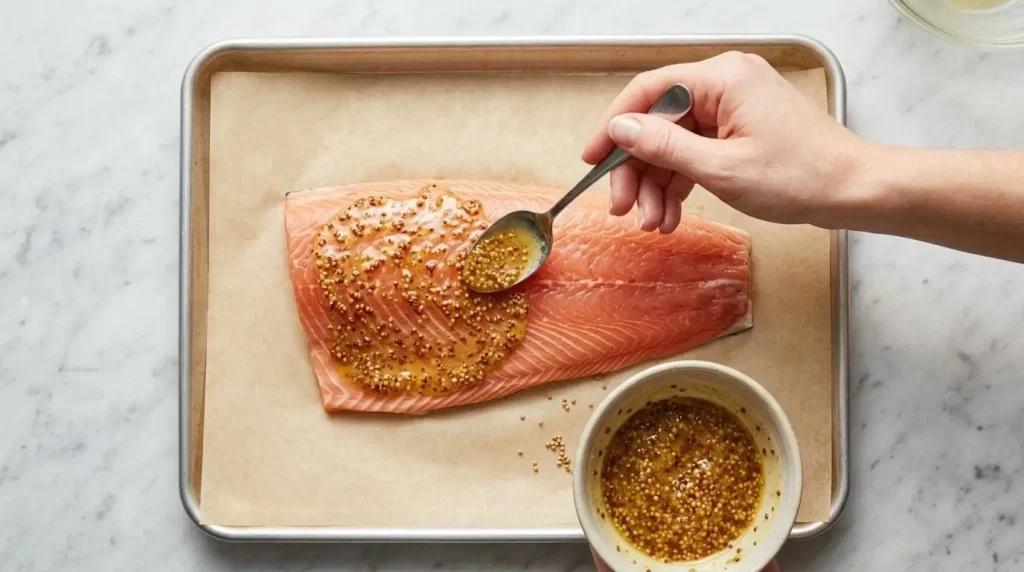
1. Prep the Oven & Pan
Preheat your oven to 400°F (200°C). Line a large, rimmed baking sheet with unbleached parchment paper. Parchment paper prevents the honey glaze from burning on the metal pan and makes cleanup easy.
2. Season the Salmon
Remove four 6-ounce salmon fillets from the refrigerator 10 minutes prior to cooking to bring them closer to room temperature. Thoroughly pat each fillet dry with paper towels; removing surface moisture helps the oil-and-honey glaze adhere securely to the fish. Arrange fillets skin-side down on the parchment paper, leaving 2 inches between pieces. Lightly sprinkle the tops with sea salt and cracked black pepper.
3. Creating the Glaze Texture
In a small glass bowl, combine:
- 2 tablespoons Mediterranean honey
- 2 tablespoons whole grain mustard
- 2 tablespoons Extra Virgin Olive Oil
- 1 tablespoon fresh lemon juice
- 3 minced garlic cloves
Whisk vigorously for 30 seconds until emulsified. The glaze should look thick, amber-hued, and visibly flecked with whole mustard seeds.
       [ Whisk Glaze Ingredients ]
                   │
                   ▼
     [ Pat Salmon Dry & Season S/P ]
                   │
                   ▼
  [ Spoon & Spread Glaze Over Fillets ]
                   │
                   ▼
     [ Bake @ 400°F for 12–15 Min ]
                   │
                   ▼
 [ Broil 1–2 Min for Caramelized Crust ]
4. Mastering the Application
Spoon equal amounts of glaze over each fillet. Use the back of a spoon to spread the glaze across the top surface, letting a small amount drip down the sides. Ensure the mustard seeds are evenly spread across the top of each piece.
5. Essential Baking & Finishing Technique
- Baking Phase (12–15 minutes): Place the baking sheet on the center rack of your preheated 400°F oven. Bake until the salmon becomes opaque on the edges and flakes gently when pressed with a fork.
- The Broil Step (1–2 minutes): Switch the oven setting to BROIL (HI). Keep a close eye on the pan. The natural sugars in the honey will bubble, darken slightly, and transform into a shiny glaze across the mustard seeds. Remove the tray as soon as small golden bubbles cover the surface.
VI. Tips for Perfectly Cooked, Flaky Salmon
+-----------------------------------------------------------------------+
|                    DONENESS & TEMPERATURE GUIDE                       |
+-----------------------------------------------------------------------+
| Doneness Level   | Internal Temp | Visual & Culinary Texture          |
| ---------------- | ------------- | ---------------------------------- |
| Medium-Rare      | 125°F–130°F   | Deep pink center, soft flake       |
| Medium (Ideal)   | 135°F–140°F   | Opaque center, tender & moist      |
| Well-Done        | 145°F+        | Fully pale pink, firm, drier grain |
+-----------------------------------------------------------------------+
- Checking Doneness: Use an instant-read digital meat thermometer inserted horizontally into the thickest part of the fillet. Pull the salmon out when it reads between 135°F and 140°F. Carryover cooking will bring it to the FDA recommended 145°F while resting.
- Avoid Overcooking: Overcooked salmon pushes out white albumin proteins and becomes dry. Cooking just until opaque ensures juicy, flaky fillets.
- Let It Rest: Allow the salmon to sit on the warm baking tray for 3 minutes before serving. This rest allows the internal juices to redistribute evenly throughout the fish.
VII. Variations and Dietary Adjustments
- Air Fryer Method: Line your air fryer basket with perforated parchment paper. Place coated fillets in a single layer and cook at 380°F (190°C) for 8 to 10 minutes. The circulating heat caramelizes the honey glaze quickly without requiring a separate broil cycle.
- Keto Variation: Swap the Mediterranean honey for a zero-calorie monk fruit brown sugar replacement or liquid stevia drops. Combine with smooth Dijon and whole-grain mustard to make a keto-friendly baked dijon mustard glazed salmon.
- Herb Twist: Stir 1 teaspoon of minced fresh dill, chopped tarragon, or crushed wild oregano into the glaze before spreading it onto the fish.
VIII. What to Serve With Mediterranean Mustard Salmon
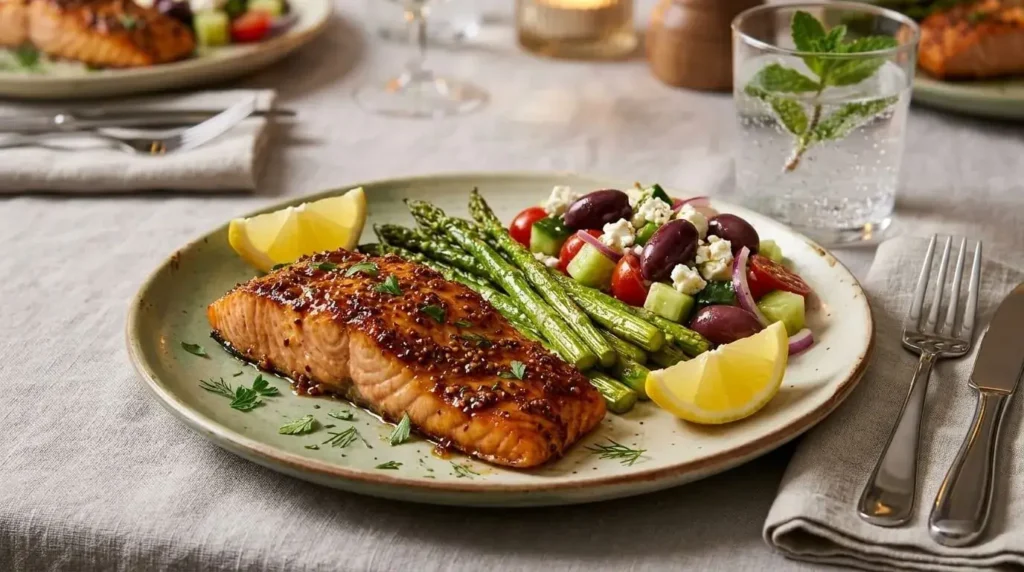
Create a complete meal by pairing this salmon with complementary Mediterranean side dishes:
- Roasted Vegetables: Pair with a tray of roasted vegetables like our tender Roasted Asparagus and Carrots.
- Fresh Salads: Serve alongside a fresh, crisp salad like our authentic Greek Chopped Feta Salad tossed with cucumbers, kalamata olives, and olive oil.
- Hearty Grains & Potatoes: Complement the rich fish with warm, seasoned side options like our savory Roasted Mediterranean Potatoes with Feta and Tomatoes.
+---------------------------------------------------------------------+
|                     RECOMMENDED MEAL COMBINATIONS                   |
+---------------------------------------------------------------------+
| Protein         | Primary Side           | Secondary Side           |
| --------------- | ---------------------- | ------------------------ |
| Mustard Glazed  | Roasted Asparagus      | Greek Chopped Feta Salad |
| Salmon Fillet   | & Carrots              | or Mediterranean Potatoes|
+---------------------------------------------------------------------+
Refreshing Non-Alcoholic Pairings
Skip alcoholic drinks and pair this meal with light, refreshing beverages that complement the mustard glaze:
- Sparkling Lemon-Mint Water: Cold sparkling mineral water poured over fresh mint leaves and lemon wedges.
- Iced Hibiscus Tea: Unsweetened herbal hibiscus tea brewed with a cinnamon stick for a tart flavor profile.
- Cucumber Rosemary Spritzer: Muddled fresh cucumber slices and a rosemary sprig topped with club soda.
Mustard Glazed Salmon
Ingredients
Method
- Preheat your oven to 400°F (200°C). Line a rimmed baking sheet with parchment paper for easy cleanup.
- Pat the salmon fillets completely dry on all sides using paper towels. Arrange them skin-side down on the prepared baking sheet with space between each piece.
- Lightly season the top of each fillet with salt and freshly ground black pepper.
- In a small bowl, whisk together the Mediterranean honey, whole grain mustard, Extra Virgin Olive Oil, fresh lemon juice, and minced garlic until fully combined into a thick glaze.
- Spoon the glaze mixture evenly over each salmon fillet. Use the back of a spoon to spread it across the entire top surface so the whole grain mustard seeds are evenly distributed.
- Place the tray on the center rack of the oven and bake for 12 to 14 minutes, until the salmon turns opaque and begins to flake easily with a fork.
- Switch the oven to BROIL for the final 1 to 2 minutes, watching carefully until the honey glaze turns bubbly, glossy, and caramelized.
- Remove from the oven, garnish with fresh chopped parsley, and serve immediately with fresh lemon wedges.
Notes
- Doneness Check: Internal temperature in the thickest section should reach 135°F–140°F before resting.
- Sugar-Free / Keto Option: Replace honey with an equal amount of monkfruit liquid sweetener or low-carb sweetener.
XII. Complementary Recipe Images Prompts & Metadata
IX. FAQs (Addressing PAA & SEO Queries)
What is the best type of mustard for salmon glaze?
Whole-grain mustard is ideal because its intact mustard seeds add visual appeal and a pleasant texture. You can also mix equal parts whole-grain mustard and smooth Dijon mustard to balance tanginess and coating thickness in a honey mustard glaze for salmon.
How long do you cook salmon at 400°F?
At 400°F (200°C), standard 6-ounce salmon fillets take between 12 and 15 minutes to bake. Cooking times vary depending on fillet thickness. Finish with a 1 to 2 minute broil to caramelize the top glaze.
Is mustard glazed salmon healthy?
Yes. This recipe uses pure raw honey, extra virgin olive oil, garlic, and whole grain mustard instead of refined sugars or butter. It provides lean protein, healthy fats, and Omega-3 fatty acids.
Can I make this with maple syrup instead of honey?
Yes. Pure maple syrup can replace honey in a 1:1 ratio. Maple syrup offers a slightly darker, earthy sweetness that caramelizes under the broiler much like honey.
X. Call to Action & Conclusion
This mustard glazed salmon demonstrates that healthy, Mediterranean-inspired cooking can be quick, simple, and visually impressive. By replacing refined brown sugars with natural raw honey, cold-pressed olive oil, and textured whole-grain mustard, you get a quick sheet-pan dinner in under 20 minutes.
Give this recipe a try for your next weeknight dinner! If you enjoy it, please leave a 5-star rating and a comment below sharing your favorite side dishes to pair with it.