If you are looking for a true “power salad” that satisfies like a main course while nourishing your body from the inside out, you have landed in the exact right place. This warm Roasted Mediterranean Creamy Tahini Lentil Salad Recipe is designed to be the crown jewel of your plant-forward menu. Packed with plant-based protein, vibrant whole food ingredients, and comforting warmth, it offers a rich balance of textures and flavors that redefine what a healthy meal can be.
Whether you are already committed to a Mediterranean diet salad routine or simply searching for a warm roasted lentil salad to elevate your weekday lunches, this dish checks every single box. It combines tender, earthy lentils with caramelized oven-roasted cauliflower florets, sweet bell peppers, crisp cherry tomatoes, and fresh greens. The entire bowl is anchored by a luscious, velvety dollop of garlic-lemon tahini sauce that makes every bite feel decadent, satisfying, and deeply comforting.
Why this Recipe Works
The secret to why this Roasted Mediterranean Creamy Tahini Lentil Salad Recipe excels lies in its masterful interplay of opposing textures and contrasting temperatures.
- Flavor and Texture Contrast: The foundation of the salad relies on the contrast between soft, caramelized roasted vegetables and earthy, al dente lentils. High-heat roasting transforms humble cauliflower and bell peppers, drawing out their natural sugars and endowing them with smoky, charred edges.
- Luxurious Tahini Dressing: Instead of a thin, watery vinaigrette that pools at the bottom of the bowl, this recipe utilizes a rich, velvety tahini sauce. The nuttiness of crushed sesame seeds paired with bright lemon juice and garlic creates a velvety coating that binds the ingredients together, making the salad feel heavy and nourishing without being weighed down by heavy dairy cream.
- Ultimate Meal Versatility: This dish excels across all meal occasions. It is robust enough to stand on its own as a complete plant-based dinner, sturdy enough to serve as a side dish for grilled proteins, and resilient enough to hold up during weekly meal prep without wilting into a soggy mass.
The Best Lentils for Mediterranean Salad (And Why)
Selecting the correct pulse is the single most critical decision when constructing a hearty grain or pulse salad.
What kind of lentils are best for a Mediterranean lentil salad?
For this specific recipe, French Green Lentils (Puy lentils) or Black Beluga lentils are unequivocally the best choices. French green and black lentils possess a thick outer skin that allows them to hold their firm, al dente shape perfectly after boiling. When tossed alongside warm roasted vegetables and folded with fresh greens, they retain their distinct spherical structure rather than collapsing. Brown lentils can also work as a secondary alternative if cooked carefully, provided they are monitored to prevent over-boiling.
Why you must avoid red lentils: Under no circumstances should you use red or yellow split lentils for this salad. Red lentils lack the outer seed coat required to hold structure; they break down quickly during simmering, turning into a creamy puree or porridge. While red lentils are ideal for comforting stews and curries, using them here will ruin the distinct texture of your bowl.
How to Roast Mediterranean Vegetables to Perfection
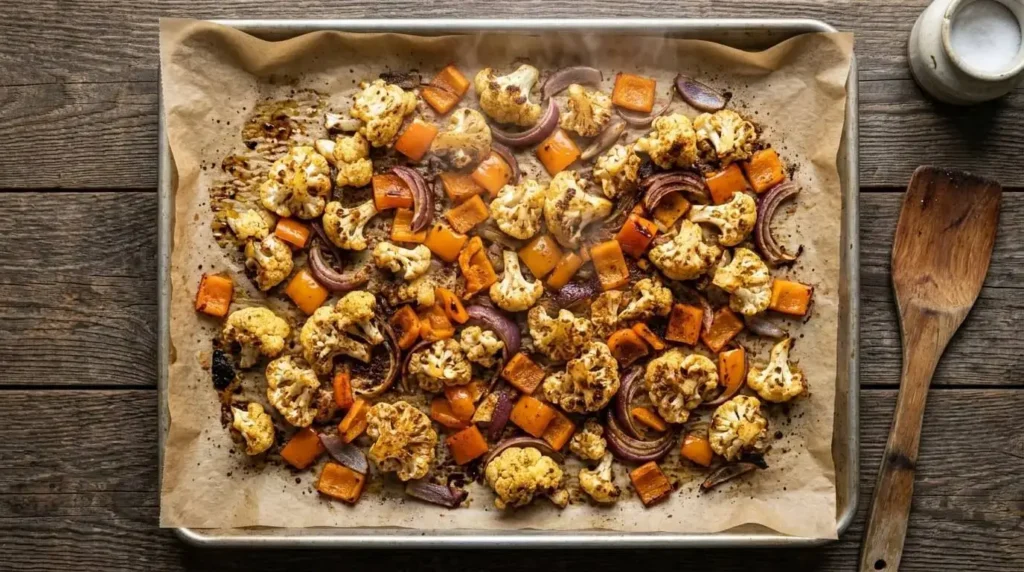
Roasting vegetables is an essential technique for bringing authentic Mediterranean depth into your kitchen. For this recipe, we focus on a trio of complementary vegetables: sweet cauliflower florets, bright orange or red bell peppers, and sharp red onion.
1. Spice and Oil Coating
Cut your cauliflower into small, bite-sized florets so they cook evenly alongside diced bell peppers. In a large mixing bowl, toss the cut vegetables with high-quality extra virgin olive oil, ground cumin, smoked paprika, sea salt, and freshly cracked black pepper. The cumin adds an earthy warmth, while the paprika introduces a subtle smokiness that mimics wood-fired cooking.
2. The Single-Layer Rule
Spread the seasoned vegetables across a large, parchment-lined baking sheet. The key to deep caramelization is ensuring the vegetables sit in a single, uncrowded layer. If you overlap or overcrowd the tray, the trapped moisture will cause the vegetables to steam rather than roast, resulting in a soft, pale texture instead of crisp-tender bites with caramelized edges.
3. High-Heat Charring
Roast in a preheated oven at 400°F (200°C) for 25 to 30 minutes, flipping once halfway through. Look for golden-brown tops and distinct, charred edges on the cauliflower florets. These caramelized edges provide complex, savory notes that elevate the entire salad.
Cracking the Code: The Creamy Tahini Dressing
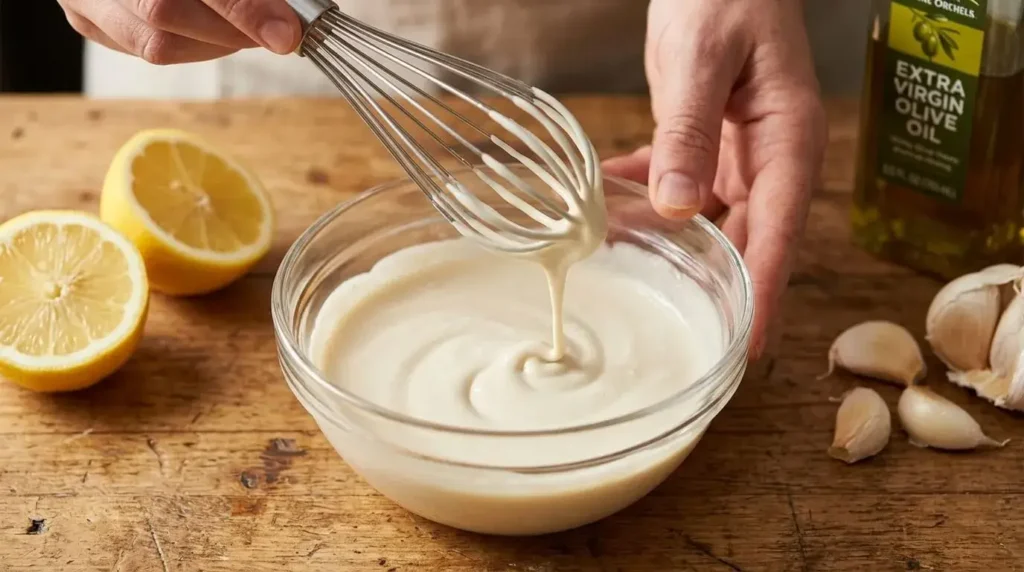
A great salad requires an exceptional dressing, and this velvety tahini drizzle acts as the unifying element for all the roasted and fresh components in the bowl.
High-Quality Ingredients
To achieve a silky, restaurant-quality dressing, begin with high-quality tahini (pure ground sesame paste). Combine it with freshly squeezed lemon juice, minced fresh garlic, a touch of extra virgin olive oil (or maple syrup for subtle balance), and a generous pinch of sea salt.
Why does tahini seize when making dressing and how do I fix it?
It is extremely common for home cooks to panic when whisking tahini with liquid: as soon as you add lemon juice or vinegar, the smooth sesame paste suddenly thickens, turns grainy, and seizes into a chalky, paste-like lump.
The Science and The Quick Fix: Tahini contains high amounts of protein and dry particles suspended in sesame oil. When a small amount of water-based liquid (like lemon juice) is added, those dry particles grab onto the moisture and clump together—a process called seizing.
To fix seized tahini dressing:
- Do not throw it away.
- Gradually pour in warm or ice-cold water, one tablespoon at a time, while whisking vigorously.
- As you whisk, the emulsion will break open and absorb the liquid. Within seconds, the thick paste will transform into a creamy, pourable, snow-white dressing. Adjust with additional warm water until you reach your desired dolloping consistency.
Top Tips for Visual Presentation
Food is eaten first with the eyes, and presenting this salad thoughtfully will transform an everyday meal into a centerpiece.
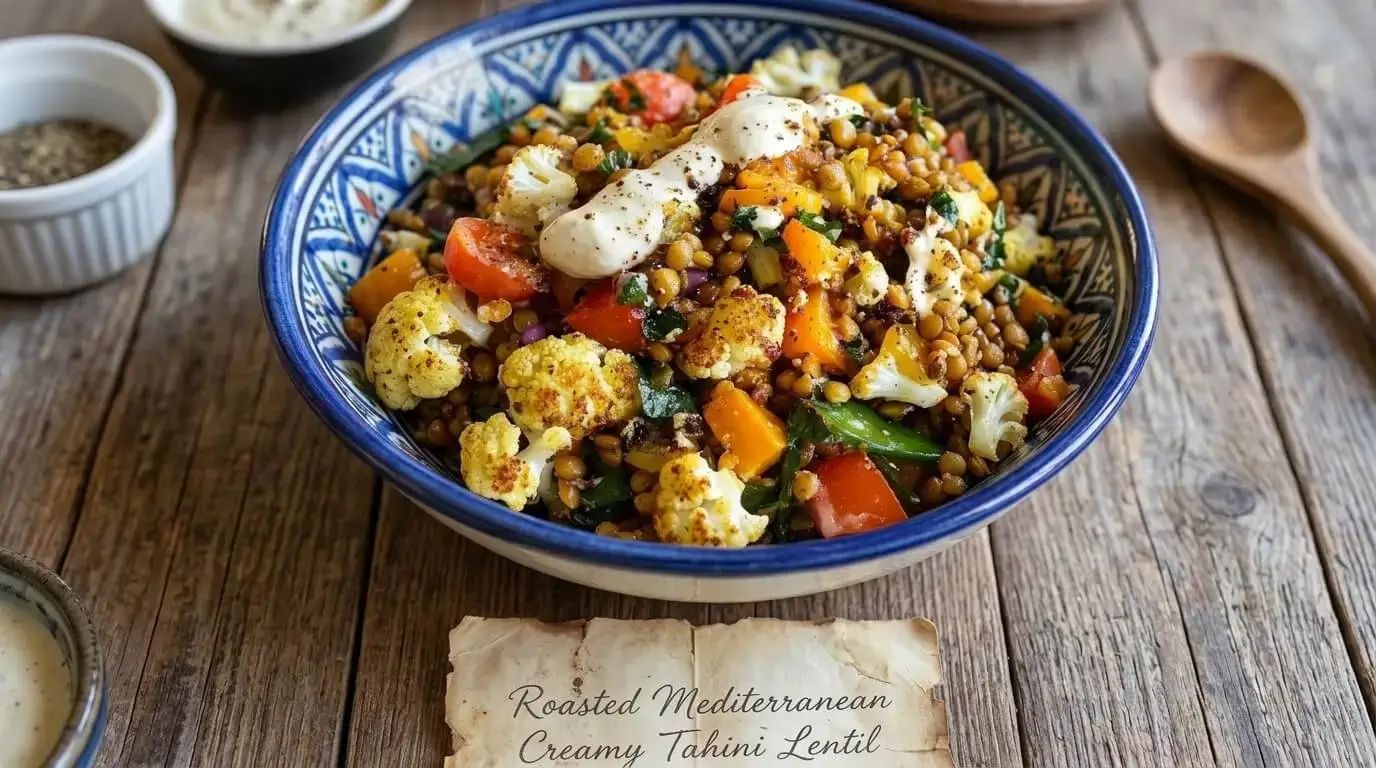
To recreate the exact visual presentation pictured above:
- Build your foundation by combining the cooked lentils and warm roasted cauliflower and peppers inside a wide, patterned ceramic bowl.
- Carefully nestle bright red halved cherry tomatoes and vibrant green chopped kale or spinach throughout the top surface so the colors pop against the warm tones.
- Rather than tossing the entire salad in the dressing, spoon a generous, thick central dollop of the smooth creamy tahini right across the top layer.
- Finish with a dusting of coarse cracked black pepper and smoked paprika over the white tahini dollop for striking color contrast.
Roasted Mediterranean Creamy Tahini Lentil Salad Recipe
Ingredients
Method
- Preheat your oven to 400°F (200°C). Toss your cauliflower florets and diced bell peppers in a large bowl with 2 tablespoons of olive oil, cumin, paprika, salt, and pepper. Spread them in a single layer on a parchment-lined baking sheet and roast for 25 to 30 minutes, turning once halfway through, until edges are beautifully tender and charred.
- While the vegetables roast, add your rinsed lentils to a saucepan with 2½ cups of water. Bring to a boil, then lower the heat to a simmer. Cover and cook for about 15–20 minutes until tender but still retaining an al dente bite. Drain off any remaining liquid and let them cool slightly.
- In a small bowl, whisk together the tahini, lemon juice, minced garlic, olive oil, salt, and pepper. The mixture will initially seize and turn thick. Gradually whisk in warm water, one tablespoon at a time, until the sauce transforms into a completely smooth, pourable, creamy consistency.
- In a large decorative serving bowl, combine your warm lentils, roasted cauliflower, and roasted bell peppers. Toss in the fresh halved cherry tomatoes, finely chopped red onion, and greens. Pour the creamy tahini dressing over the top or dollop it right in the center as pictured. Dust with an extra pinch of paprika or cracked black pepper and serve immediately.
Notes
• Crunch Factor: Add toasted pine nuts or pumpkin seeds right before serving for extra texture.
================================================================================
Meal Prep and Storage Guide
Can I make this creamy tahini lentil salad ahead for meal prep?
Yes! This dish is exceptionally meal-prep friendly because both cooked lentils and roasted root vegetables retain their texture and flavor when stored in the refrigerator.
Meal Prep Strategy:
- Storage: Store the cooked lentils and roasted vegetables together in airtight glass containers for up to 4–5 days. Keep the fresh ingredients (cherry tomatoes and greens) in a separate container, and store the creamy tahini dressing in a small glass jar at room temperature or in the fridge.
- Reheating & Assembly: Eat this salad cold or slightly warm. If you prefer it warm, gently heat the lentils and roasted vegetables in a skillet or microwave for 45 seconds. Then, fold in the fresh greens and tomatoes, and finish with a generous dollop of the tahini dressing right before serving.
Healthy Mediterranean Serving Suggestions
This versatile bowl functions wonderfully as a standalone meal, but it also anchors a larger Mediterranean spread.
- Side Bread: Pair it with warm, toasted whole-wheat pita bread or pita chips to scoop up every drop of the garlic tahini sauce.
- Added Protein: If you are feeding a crowd with varied dietary preferences, serve this salad alongside grilled chicken skewers, such as our Garlic Herb Roasted Chicken and Vegetables, or roasted lamb kebabs.
- Meze Feast: For a complete feast, present this dish together with refreshing sides like a Greek Chopped Feta Salad recipe or a chilled Tzatziki Chickpea Salad.
This satisfying Roasted Mediterranean Creamy Tahini Lentil Salad Recipe delivers the perfect blend of warm caramelized flavor, plant-based nutrition, and velvety richness. Give this recipe a try this week, and discover just how delicious and filling a wholesome Mediterranean salad can truly be!
Frequently Asked Questions
What kind of lentils are best for a Mediterranean lentil salad?
French Green (Puy) lentils or Black Beluga lentils are the absolute best choice. They possess a firm outer skin that allows them to hold their al dente shape after boiling without turning mushy. Brown lentils can also work if you watch them closely during cooking. Avoid red or yellow split lentils, as they break down rapidly and turn into a porridge-like consistency.
Why does tahini seize when making dressing, and how do I fix it?
Tahini seizes into a thick, chalky lump because its dry sesame particles rapidly absorb small amounts of water-based liquids like lemon juice or vinegar. To fix it instantly, simply whisk in warm or ice-cold water, one tablespoon at a time. As you whisk, the emulsion will break open and transform into a silky, pourable sauce.
Can I make this creamy tahini lentil salad ahead for meal prep?
Absoutely. Store the cooked lentils and roasted vegetables together in an airtight container in the refrigerator for up to 4 to 5 days. Keep the fresh cherry tomatoes, greens, and tahini dressing in separate containers, then toss everything together right before serving so the fresh elements stay crisp.
Should this salad be served warm or cold?
It is delicious at any temperature! Serving it warm emphasizes the caramelized depth of the roasted cauliflower and bell peppers, while serving it chilled makes for a refreshing, hearty meal-prep lunch.
Is this recipe vegan and gluten-free?
Yes! This dish is naturally 100% vegan, dairy-free, gluten-free, and high in fiber and plant-based protein.
What proteins pair best with this Mediterranean lentil salad?
While this bowl is hearty enough to serve as a standalone plant-based main course, it also makes a stellar side dish. It pairs exceptionally well with grilled chicken skewers, lemon-garlic baked cod, lamb kebabs, or seared halloumi cheese.
Would you like the corresponding JSON-LD FAQ Schema code to paste into your WordPress header for SEO, or are you all set?