When you want to impress dinner guests or simply treat yourself to a restaurant-quality meal at home, presentation and balance are everything. This striking appetizer looks like it stepped straight off the menu of an upscale Mediterranean bistro, yet it is beautifully uncomplicated to prepare in your own kitchen. The magic of this dish lies in its masterful interplay of contrasting temperatures, textures, and flavors.
Every single bite delivers a deliberate combination of caramelized sweet potatoes, deeply earthy roasted beets, velvety-creamy burrata cheese, and a vibrant, herbaceous walnut sage pesto. It is a show-stopping dish that honors the core principles of Mediterranean eating by celebrating whole, nutrient-dense ingredients. Whether you are hosting an elegant holiday gathering or looking for a colorful addition to your weekend mezze spread, this Mediterranean diet-friendly recipe is naturally gluten-free and guaranteed to turn heads.
Why You’ll Love This Recipe
- Mediterranean Diet Friendly: Packed with wholesome plant-based foundations, heart-healthy fats, and unrefined ingredients that nourish your body while satisfying your palate.
- Naturally Gluten-Free: Perfect for inclusive entertaining, this dish relies entirely on root vegetables and whole foods rather than grain-based crostini bases.
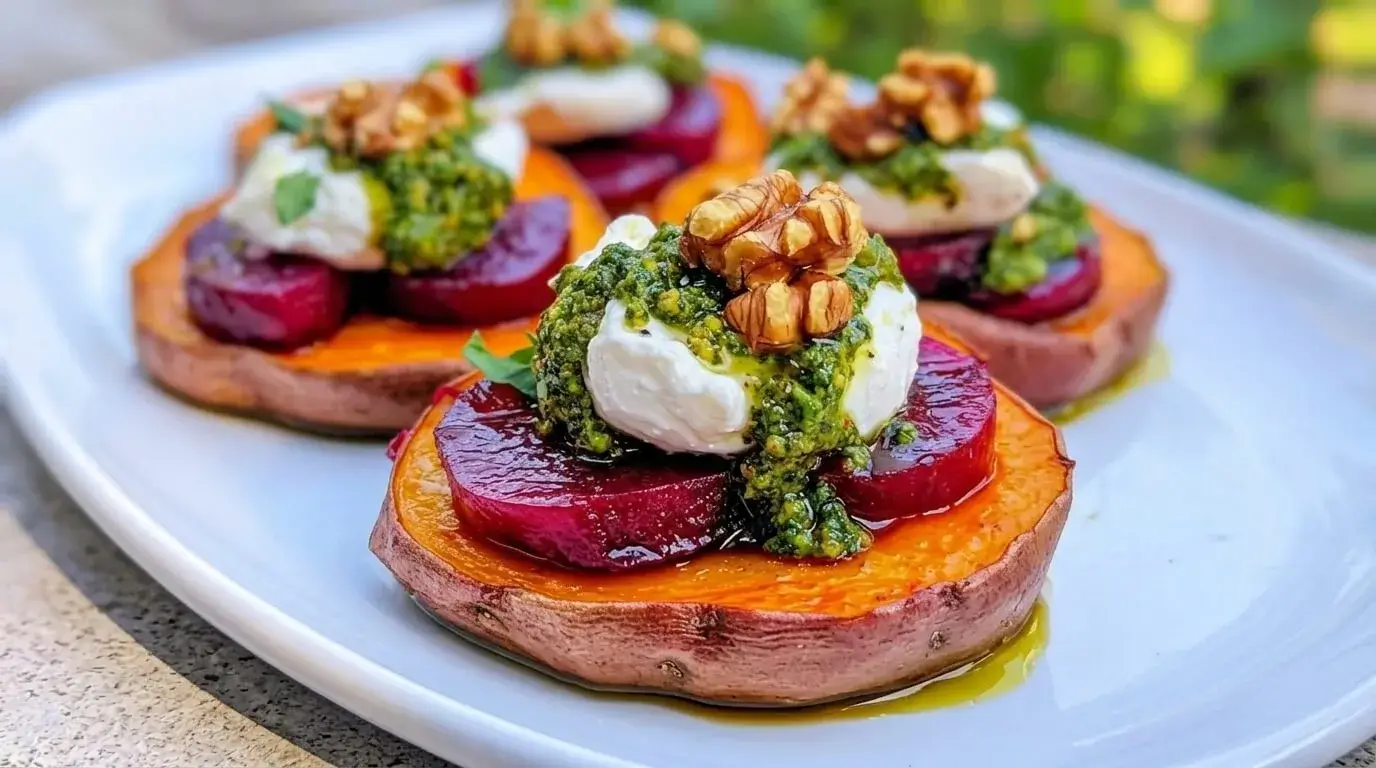
- Beautiful Presentation: The vibrant contrast between the golden orange sweet potatoes, deep crimson beets, stark white burrata, and vivid green pesto creates a stunning visual centerpiece.
- Perfect for Holidays and Gatherings: It is sophisticated enough for Thanksgiving or Christmas, yet simple enough to scale up for larger crowds.
- Easy to Prepare Ahead of Time: You can roast the vegetables and blend the pesto hours or days in advance, leaving you with just a quick assembly job before serving.
- Sweet, Savory, Creamy, and Crunchy in Every Bite: A true culinary home run that hits every sensory note simultaneously.
What Makes This Recipe Mediterranean Diet Friendly?
The Mediterranean lifestyle is far more than a set of dietary rules; it is an appreciation for fresh, minimally processed foods that are naturally rich in flavor. If you love experimenting with these vibrant profiles, you might also enjoy our crispy, layered Flatbread with Brie Cranberries Toasted Walnuts and Hot Honey, which utilizes similar wholesome elements. This specific appetizer showcases those principles perfectly:
- Extra Virgin Olive Oil as the Primary Fat: Instead of butter, we use antioxidant-rich extra virgin olive oil to roast our root vegetables and form the luxurious base of our sage pesto.
- Vegetables as the Foundation: Rather than relying on refined flour or bread as the vehicle for the cheese, nutrient-packed sweet potato and beet rounds serve as the delicious, fiber-rich base.
- Walnuts Providing Heart-Healthy Fats: Walnuts are prized in Mediterranean cooking for their high concentration of omega-3 fatty acids, providing both structural crunch and excellent nutritional value.
- Moderate Use of Cheese: Rather than overwhelming the dish with heavy dairy, a thoughtful portion of premium burrata cheese adds a touch of luxury without excess.
- Fresh Herbs for Natural Flavor: The intense aroma and warm depth of fresh sage leaves minimize the need for heavy sodium or artificial flavor enhancers.
- Minimal Processed Ingredients: From farm to table, this dish preserves the integrity of each ingredient in its purest, most recognizable form.
Ingredient Notes
Sweet Potatoes
Sweet potatoes act as the foundational canvas for this recipe. Cutting them into uniform, half-inch thick rounds allows the edges to caramelize beautifully under high heat while keeping the centers tender and sweet. The natural sugars in the potatoes concentrate during roasting, creating a sweet and savory base that supports the heavier toppings. If you find yourself with extra sweet potatoes, check out our guide on making a spectacular Hasselback Sweet Potato for your next meal.
Roasted Beets
Beets provide an essential earthy counterpoint to the sweetness of the potatoes. Their dense texture and deep, ruby-red hue add incredible visual and architectural depth to each round. Roasting them concentrates their earthy sweetness, ensuring they complement rather than overpower the delicate cheese.
Burrata Cheese
Burrata is the ultimate touch of luxury here. This Italian cheese features an outer shell of firm mozzarella hiding an inner core filled with fresh stracciatella and cream. When torn open and placed over the warm beet and sweet potato layers, the creamy center oozes slightly, binding the components together into a rich, cohesive bite.
Walnut Sage Pesto
While traditional Genovese pesto relies on basil and pine nuts, this variation uses fresh sage and toasted walnuts. Sage offers an unmistakable, cozy warmth that pairs exquisitely with root vegetables. The walnuts introduce a rich, buttery undertone and a rustic texture that elevates this pesto into something truly unforgettable.
Ingredients You’ll Need
For the Sweet Potato Base & Beets
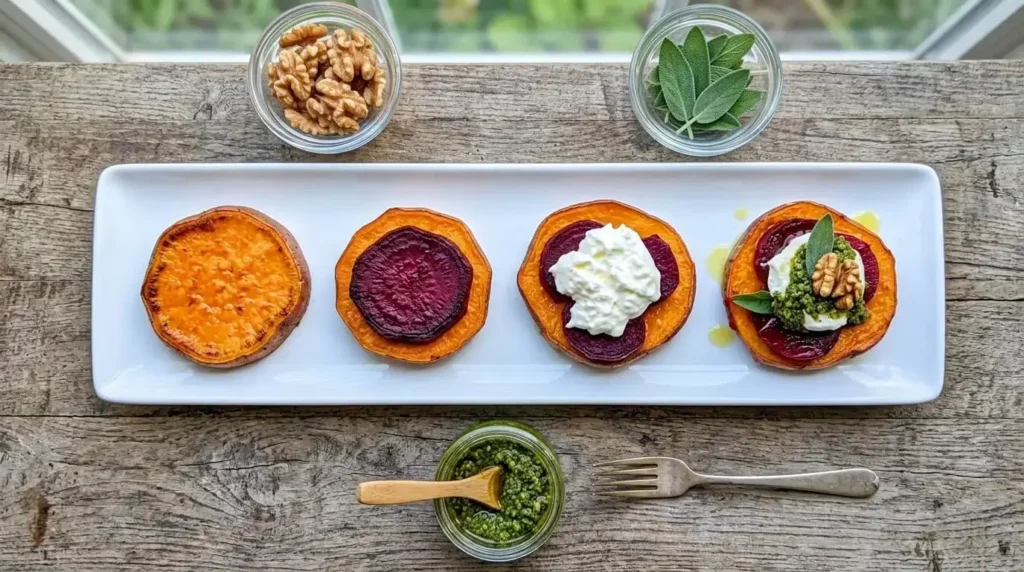
- 2 large sweet potatoes, washed, scrubbed, and sliced into 1/2-inch thick rounds
- 2 medium beets, peeled and cut into 1/4-inch thick rounds (matching the diameter of the sweet potatoes as closely as possible)
- 3 tablespoons extra virgin olive oil, divided
- 1 tablespoon honey or maple syrup (optional, for enhanced caramelization)
- Sea salt and freshly cracked black pepper, to taste
For the Walnut Sage Pesto
- 1/2 cup walnuts, gently toasted
- 1 cup fresh sage leaves (can be blended with fresh flat-leaf parsley or basil for a brighter color)
- 1/2 cup Parmigiano-Reggiano cheese, freshly grated
- 1 medium clove garlic, peeled and smashed
- 1/2 cup extra virgin olive oil
- 1 tablespoon fresh lemon juice
- Pinch of salt, to taste
For the Garnish
- 1/4 cup chopped walnuts, toasted
- A light drizzle of extra virgin olive oil or high-quality honey
- Fresh microgreens or baby basil leaves (optional)
How to Make Roasted Sweet Potato Rounds with Burrata, Beets and Walnut
Step 1: Roast the Sweet Potatoes
Preheat your oven to 400°F (200°C). Line a large, sturdy baking sheet with parchment paper. Arrange the sweet potato rounds in a single layer, ensuring they do not overlap. Drizzle with 1.5 tablespoons of extra virgin olive oil and the optional honey or maple syrup. Season generously with sea salt and black pepper. Toss the rounds to coat completely, then arrange them flat. Roast for 20 to 25 minutes, flipping halfway through, until the edges are golden brown, caramelized, and the centers are completely tender when pierced with a fork.
Step 2: Roast the Beets
On a separate lined baking sheet, arrange your sliced beet rounds. Drizzle with the remaining 1.5 tablespoons of olive oil and season with salt and pepper. Because beets take slightly longer to cook and their vibrant red juices can stain the sweet potatoes, keeping them separate is crucial. Roast at 400°F (200°C) for 25 to 30 minutes until tender and slightly wrinkled at the edges. Remove from the oven and let them cool slightly.
Step 3: Make the Walnut Sage Pesto
While your root vegetables are roasting, prepare the pesto. In a small, dry skillet over medium heat, toast the walnuts for 3 to 5 minutes until they are fragrant and lightly golden; set aside to cool. In the bowl of a food processor, combine the toasted walnuts, fresh sage leaves, grated Parmigiano-Reggiano, garlic, and lemon juice. Pulse several times until a coarse paste forms. With the motor running on low, slowly drizzle in the extra virgin olive oil in a steady stream until the pesto is emulsified but still retains a rustic texture. Taste and adjust seasoning with a pinch of salt if needed.
Step 4: Assemble the Appetizer
Grab a large white serving platter to make the colors pop. Lay down the warm, caramelized sweet potato rounds as your foundation. Place one roasted beet round directly on top of each sweet potato circle. Carefully tear your fresh room-temperature burrata cheese into bite-sized clumps, placing a generous portion over each beet. Spoon a vibrant dollop of the walnut sage pesto directly over the burrata cheese. Top each assembled round with a scattering of the reserved toasted walnut pieces for that essential structural crunch.
Step 5: Finish and Serve
To complete this culinary masterpiece, give the entire platter a delicate final drizzle of premium extra virgin olive oil or a tiny whisper of honey. Garnish with fresh microgreens or a tiny sage leaf if desired. Serve immediately while the roasted bases are warm and the burrata is soft and creamy.
Expert Tips for Success
- Roast Vegetables Separately: Beets bleed intense red juices. Roasting them on a separate sheet pan prevents your beautiful golden sweet potatoes from turning entirely purple.
- Use Room-Temperature Burrata: Pull your burrata cheese out of the refrigerator roughly 30 minutes before assembling. Cold cheese will chill your roasted vegetables too rapidly and mask the delicate flavors of the cream.
- Toast the Walnuts Before Blending: Do not skip toasting your nuts! Heating them coaxes out their essential oils, deepening the nutty profile and removing any bitter, raw notes.
- Don’t Overcrowd the Baking Sheet: Give your vegetable rounds space. If they are crammed together, they will steam instead of roasting, meaning you lose out on those deliciously caramelized edges.
- Assemble Shortly Before Serving: For the ultimate contrast of warm vegetables and cool, creamy cheese, assemble the dish within 15 to 20 minutes of serving.
Variations and Substitutions
- Basil Instead of Sage: If sage feels a bit too warm or wintry for your taste, switch to fresh sweet basil for a brighter, more classic summer pesto profile.
- Goat Cheese Instead of Burrata: If you cannot source premium burrata, a log of soft, tangy chèvre goat cheese or whipped feta makes an excellent, tangy substitute.
- Pecans Instead of Walnuts: Raw or toasted pecans offer a slightly sweeter flavor profile that pairs wonderfully with both sweet potatoes and beets.
- Vegan Adaptations: Swap the burrata for a high-quality almond-based dairy alternative or avocado slices, and substitute nutritional yeast for the Parmesan cheese in the pesto.
- Maple Syrup Instead of Honey: For a deeper, woodsy sweetness to drizzle over your sweet potato rounds, organic maple syrup works beautifully.
What to Serve with This Mediterranean Appetizer
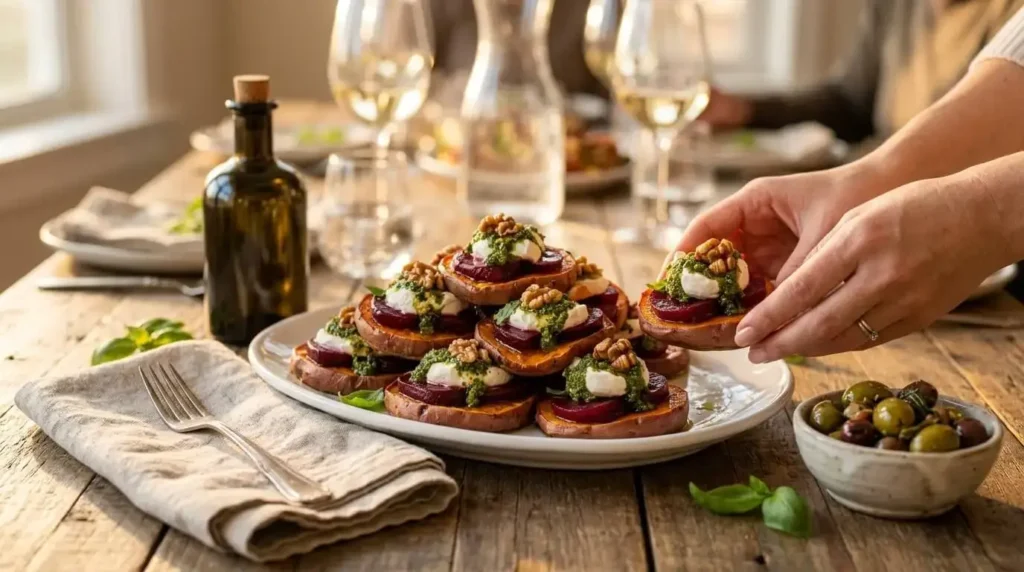
This dish makes a magnificent standalone starter, but it shines brightest when paired with a wider Mediterranean menu. It fits naturally alongside a colorful variety of mezze platters, featuring hummus, marinated olives, and warm pita bread.
If you are looking to build a complete dinner menu around these flavors, consider serving it alongside a light, bright pasta or a comforting vegetable bake. For inspiration on pairing this with a hearty main dish, take a look at our comforting Root Vegetable Gratin with Sweet Potatoes, Parsnips and Beets, which echoes these spectacular earthy notes. It also pairs perfectly with grilled chicken breast, roasted white fish, or robust lentil salads. For festive holiday spreads, it anchors the table beautifully next to crusty whole-grain sourdough bread.
Roasted Sweet Potato Rounds with Burrata, Beets and Walnut
Ingredients
Method
- Preheat your oven to 400°F (200°C) and line two separate baking sheets with parchment paper.
- Arrange sweet potato rounds on the first baking sheet. Drizzle with 1.5 tablespoons olive oil and optional honey. Season with salt and pepper. Bake for 20-25 minutes, flipping halfway, until golden and caramelized.
- Place beet slices on the second baking sheet. Drizzle with the remaining 1.5 tablespoons olive oil, season with salt and pepper, and roast for 25-30 minutes until tender.
- In a food processor, pulse toasted walnuts, sage, Parmesan, garlic, and lemon juice into a coarse paste. Slowly stream in the olive oil with the motor running until completely emulsified. Season with a pinch of salt.
- Arrange warm sweet potato rounds on a serving platter. Place a roasted beet round on top of each. Tear the fresh burrata into chunks and place over the beets.
- Spoon a generous dollop of walnut sage pesto over the cheese. Scatter chopped toasted walnuts over the top, finish with a light drizzle of olive oil, and serve immediately.
Notes
- Storage: Keep components separate in airtight containers in the fridge for up to 3 days. Reheat vegetables before assembling.
- Pro Tip: Bring the burrata cheese to room temperature before tearing to maximize its creamy texture.
Make-Ahead Instructions
You can easily prep the individual elements of this recipe ahead of time to minimize stress on the day of your event:
- The Veggies: Roast the sweet potato and beet rounds up to 2 days in advance. Keep them stored in separate airtight containers in the refrigerator.
- The Pesto: Prepare the walnut sage pesto up to 3 days in advance. Store it in a small jar, pouring a thin layer of olive oil over the top surface to prevent oxidation and discoloration. Keep refrigerated until ready to use.
Storage and Reheating
If you happen to have leftover individual components, store them in airtight containers in the fridge for up to 3 days.
To reheat, arrange the sweet potato and beet rounds on a baking sheet and warm them in a 350°F (175°C) oven for 8 to 10 minutes until heated through. We do not recommend reheating fully assembled rounds, as the burrata cheese will melt entirely into a watery liquid and lose its signature texture. Always store the components separately if you anticipate leftovers!
Frequently Asked Questions
Can I make this recipe ahead of time?
Yes! You can roast the sweet potatoes and beets, as well as blend the pesto, 1 to 2 days in advance. Store them separately in the refrigerator. When ready to serve, briefly warm the roasted vegetable rounds in the oven before topping them with your room-temperature burrata and pesto.
What can I substitute for burrata?
Fresh mozzarella cheese (specifically Mozzarella di Bufala) or a high-quality, creamy goat cheese log are the best substitutes. They offer a similar soft texture and mild flavor profile that balances the earthy veggies.
Can I use pre-cooked beets?
Absolutely. If you want to save time, purchase vacuum-packed, pre-cooked steamed beets from the grocery store. Simply slice them into rounds and warm them slightly before assembling. Avoid using pickled canned beets, as the vinegar profile will clash with the delicate burrata.
Is this recipe gluten-free?
Yes, this recipe is naturally 100% gluten-free. It uses nutrient-dense sweet potato slices as the base rather than bread or pastry crostini, making it an excellent option for guests with gluten sensitivities.
Can I serve it cold?
While it can be served chilled, this appetizer tastes best when the sweet potatoes and beets are warm or at room temperature. The contrast between the warm root vegetables and the cool, creamy cheese is what makes the dish truly spectacular.
What does burrata pair well with?
Burrata pairs brilliantly with extra virgin olive oil, fresh herbs (like sage, basil, and thyme), acid sources like lemon juice or balsamic vinegar, and sweet elements like honey, roasted root vegetables, and ripe tomatoes.
Can I freeze walnut sage pesto?
Yes! You can freeze the pesto in an airtight container or an ice cube tray for up to 3 months. Leave the cheese out of the pesto if you plan to freeze it long-term, then stir the freshly grated Parmesan in after thawing.
Is this recipe suitable for the Mediterranean diet?
Yes, it aligns beautifully with Mediterranean diet guidelines. It emphasizes whole plant foods (sweet potatoes, beets, walnuts, sage, garlic) and heart-healthy fats (extra virgin olive oil) while keeping dairy use moderate.
Final Thoughts
The beauty of cooking lies in your ability to transform humble, everyday ingredients into something profoundly elegant. By taking simple root vegetables and combining them with premium cheese and a fresh, artisanal herb sauce, you create an appetizer that is far greater than the sum of its parts.
This recipe for Roasted Sweet Potato Rounds with Burrata, Beets and Walnut strikes the ultimate balance between casual comfort and festive celebration. Try it for your next family gathering, holiday party, or date night in, and savor the rich, multi-textured, Mediterranean-inspired flavors that unfold with every single bite