If you are looking for a vibrant, nutrient-dense dinner that brings together rich caramelized flavors and effortless preparation, this Roasted Vegetable Pasta Primavera Recipe is guaranteed to become a regular in your meal rotation. Traditional pasta primavera often relies on lightly sautéed spring vegetables, but high-heat oven roasting transforms humble produce into sweet, tender morsels with lightly charred edges.
Rooted in Mediterranean culinary traditions, this dish swaps heavy cream and butter for heart-healthy extra virgin olive oil, fragrant garlic, and fresh herbs. The natural juices released from blistered cherry tomatoes and roasted zucchini create a silky, weightless sauce that coats every tube of penne pasta. Perfect for busy weeknights yet sophisticated enough for weekend dinner parties, this healthy pasta primavera delivers maximum flavor with minimal kitchen cleanup.
Why You’ll Love This Roasted Vegetable Pasta Primavera Recipe
- Quick and Easy: Requires just 15 minutes of prep work and cooks in under 20 minutes.
- 100% Mediterranean Diet Friendly: Built on a foundation of extra virgin olive oil, fresh produce, garlic, and whole grains.
- One Sheet Pan Roasting: Cooking the vegetables on a single baking sheet concentrates their natural sugars while keeping washing up to a minimum.
- Family Friendly & Customizable: Loved by adults and kids alike, making it an effortless way to serve multiple servings of vegetables in one meal.
- Great for Meal Prep and Leftovers: Holds its texture beautifully in the refrigerator for weekday lunches without getting soggy.
What Is Pasta Primavera?
Pasta primavera is an iconic Italian-American creation originally popularized in the 1970s. The classic version typically features tender-crisp spring vegetables like peas, asparagus, and broccoli sautéed gently in a butter or cream sauce.
While classic primavera is delicious, upgrading to an oven-roasted vegetable pasta method completely elevates the dish. Oven roasting triggers the Maillard reaction—a chemical reaction between amino acids and reducing sugars—which caramelizes the edges of the zucchini, red onions, and bell peppers. This intense savory-sweet depth completely eliminates the need for heavy cream, delivering a much lighter, authentically Mediterranean flavor profile.
Ingredients You’ll Need
Pasta
- Penne Pasta: Short pasta tubes with ridges (penne rigate) trap the olive oil and roasted vegetable juices perfectly.
Vegetables
- Zucchini: Cut into half-moons for even caramelization.
- Cherry Tomatoes: Kept whole so they burst and release sweet acidity during roasting.
- Red Bell Pepper: Cut into thick strips for texture and sweetness.
- Red Onion: Cut into thick wedges so they soften without burning.
Seasonings
- Extra Virgin Olive Oil: The primary Mediterranean cooking fat that binds the dish together.
- Fresh Garlic: Finely minced and sautéed briefly to infuse the finishing oil.
- Dried Italian Seasoning: A classic blend of oregano, thyme, basil, and rosemary.
- Crushed Red Pepper Flakes: Adds a gentle, warm background heat (optional).
- Salt and Freshly Cracked Black Pepper: To draw out moisture and highlight natural flavors.
Cheese
- Parmesan or Pecorino Romano: Freshly grated cheese adds an essential salty, nutty finish.
Fresh Herbs
- Fresh Basil: Cut into chiffonade ribbons or torn, added at the very end for bright aroma.
Ingredient Notes and Substitutions
- Whole Wheat Pasta: Substitute traditional penne with whole wheat penne to boost dietary fiber and complex carbohydrates.
- Gluten-Free Pasta: Use your favorite chickpea, brown rice, or cassava penne. Be sure to cook it just until al dente to prevent crumbling.
- Cheese Variations: Swap Parmesan for salty Pecorino Romano, or sprinkle crumbled feta cheese over the top for a tangy Greek twist.
- Additional Vegetables: Eggplant, yellow summer squash, asparagus spears, and baby portobello mushrooms roast exceptionally well with this mix.
- Vegan Option: Omit the cheese or replace it with 2 tablespoons of nutritional yeast or your favorite plant-based Parmesan alternative.
How to Make Roasted Vegetable Pasta Primavera
Step 1: Roast the Vegetables
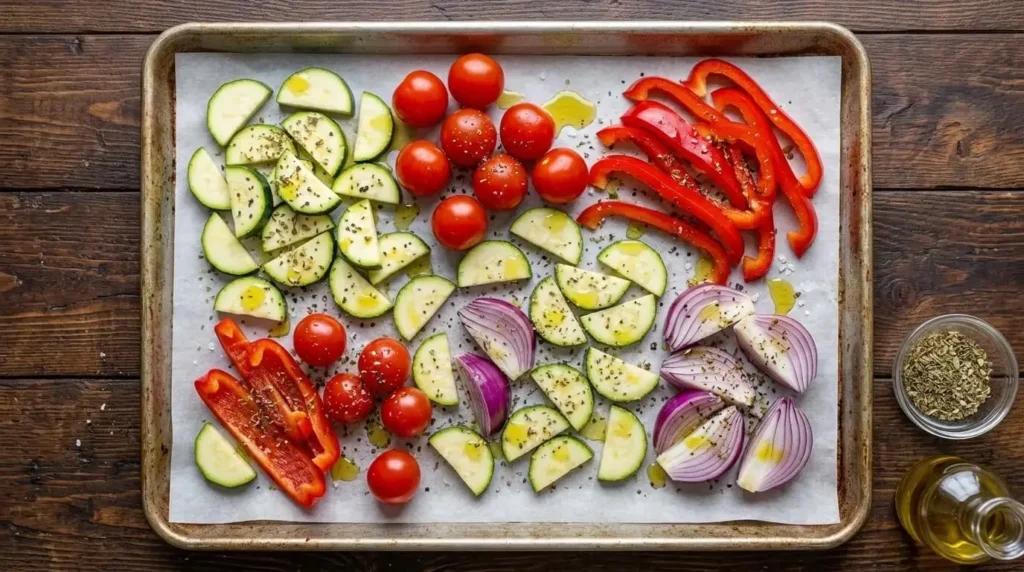
Preheat your oven to 400°F (200°C). On a large rimmed sheet pan, toss the whole cherry tomatoes, zucchini half-moons, red bell pepper strips, and red onion wedges with 2 tablespoons of extra virgin olive oil, dried Italian seasoning, salt, and black pepper. Spread them out into a single, uncrowded layer. Roast for 15–20 minutes until tender and charred at the edges.
Step 2: Cook the Pasta
While the vegetables are in the oven, bring a large pot of generously salted water to a boil. Add the penne pasta and cook according to package instructions until just al dente. Right before draining, carefully ladle out and reserve ½ cup of starchy pasta water. Drain the pasta.
Step 3: Prepare the Garlic Oil
Return the empty pasta pot to the stovetop over medium-low heat. Add the remaining 1 tablespoon of extra virgin olive oil, minced garlic, and red pepper flakes. Sauté gently for about 1 minute until highly fragrant, taking care not to brown or burn the garlic.
Step 4: Toss Together
Remove the pot from the heat source. Add the cooked penne and the warm roasted vegetables, scraping every drop of caramelized juices from the baking sheet into the pot.
Step 5: Finish with Cheese and Herbs
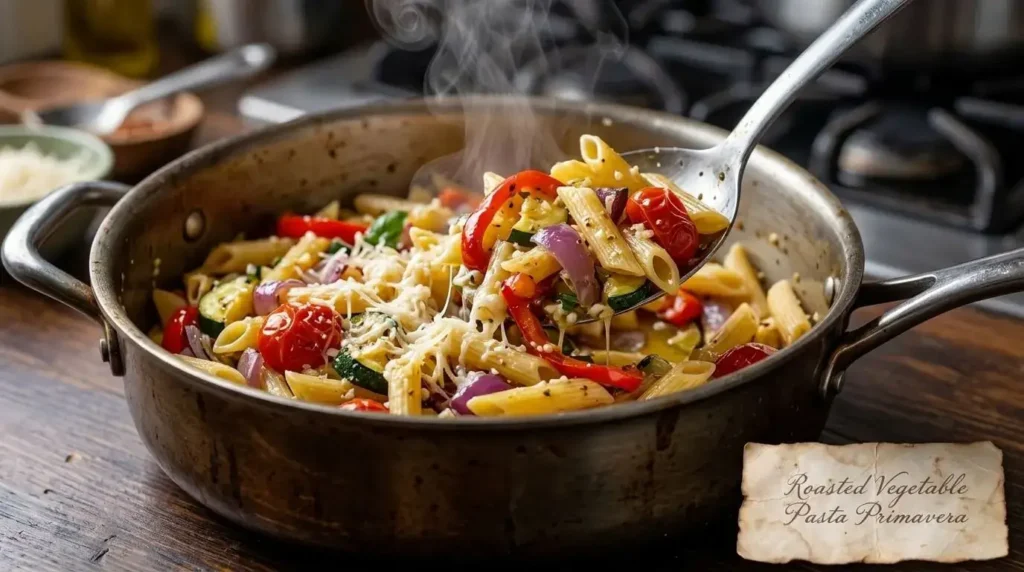
Pour in half of the grated Parmesan cheese and a small splash (2–3 tablespoons) of the reserved warm pasta water. Toss gently; the starch from the water and olive oil will emulsify into a light, glossy sheen that coats every piece of pasta. Garnish generously with remaining cheese and fresh basil before serving.
Expert Tips for the Best Pasta Primavera
- Roast in a Single Layer: Avoid crowding the baking sheet. If the vegetables are piled on top of each other, they will steam rather than caramelize. Use two baking sheets if necessary.
- Never Skip Reserving Pasta Water: The starchy cooking water is the secret ingredient that binds the olive oil, cheese, and vegetable juices into a silky sauce without adding heavy cream.
- Grate Your Cheese Fresh: Pre-shredded packaged cheeses contain anti-caking agents that prevent them from melting smoothly into the warm pasta.
- Add Fresh Basil Last: Fresh herbs lose their vibrant color and delicate essential oils when exposed to intense oven heat. Always fold basil in right before serving.
Best Vegetables for Pasta Primavera
Part of the charm of this Roasted Vegetable Pasta Primavera Recipe is its versatility across seasons. When selecting produce, combine dense, slow-roasting options with quick-bursting vegetables:
- Zucchini and Summer Squash: Sweet, mild, and absorb garlic flavors easily.
- Cherry or Grape Tomatoes: Their high water content creates a natural sauce as they burst.
- Red, Yellow, or Green Bell Peppers: Add vibrant color, vitamin C, and crunch.
- Red Onions: Turn delightfully sweet when roasted at high temperatures.
- Broccoli and Cauliflower Florets: Develop nuttiness when their edges crisp in the oven.
- Asparagus: Ideal for spring variations; cut into 2-inch pieces.
- Mushrooms: Cremini or button mushrooms add savory umami depth.
- Carrots: Slice very thinly so they tenderize in the same timeframe as softer vegetables.
Mediterranean Diet Benefits
Embracing a Mediterranean lifestyle means prioritizing whole, nutrient-dense ingredients that support cardiovascular and digestive health:
- Heart-Healthy Fats: Extra virgin olive oil provides healthy monounsaturated fats and powerful polyphenols.
- High-Fiber Plant Content: Combining colorful produce with options like whole-grain pasta supports gut health and sustained energy. For another fiber-packed meal, try our plant-focused garlic olive oil broccoli chickpea pasta.
- Rich in Antioxidants: Lycopene from cooked tomatoes and vitamin C from roasted peppers help protect body cells from oxidative stress.
- Balanced Nutrition: Delivers a complete, satisfying meal without rely on heavy saturated fats from processed meats or rich cream sauces.
Variations
- Protein Boost: Add grilled chicken breast, sautéed garlic shrimp, or a can of rinsed chickpeas/white navy beans to double the protein content.
- Seasonal Vegetable Swap: Use butternut squash and kale in autumn, or asparagus and tender peas in early spring.
- Cheese Upgrade: Stir in dollops of fresh ricotta or creamy goat cheese right before serving.
- Spicy Calabrian Version: Increase crushed red pepper flakes or add 1 teaspoon of minced Calabrian chili paste to the garlic oil.
- Zesty Lemon Twist: Finish the dish with 1 teaspoon of freshly grated lemon zest and a squeeze of fresh lemon juice for added brightness.
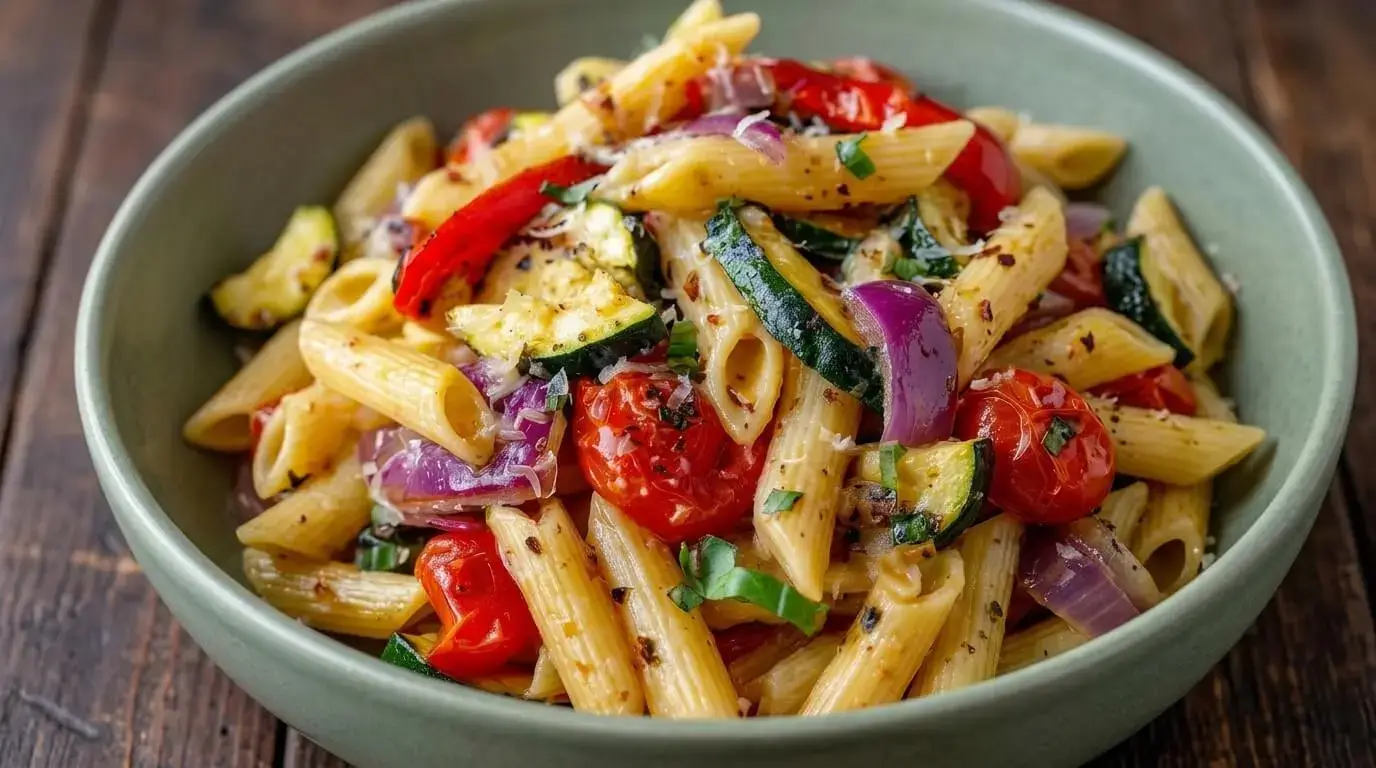
Roasted Vegetable Pasta Primavera
Ingredients
Method
- Preheat oven to 400°F (200°C). Toss whole cherry tomatoes, zucchini half-moons, red bell pepper strips, and red onion wedges with 2 tbsp extra virgin olive oil, Italian seasoning, salt, and pepper on a baking sheet. Spread in a single layer and roast for 15-20 minutes until tender and caramelized around the edges.
- Bring a large pot of salted water to a boil. Cook penne until al dente. Reserve 1/2 cup of starchy pasta water, then drain pasta.
- In the empty pasta pot, heat remaining 1 tbsp olive oil over medium-low heat. Sauté minced garlic and red pepper flakes for 1 minute until fragrant.
- Turn off heat. Dump cooked penne, warm roasted vegetables, and baking sheet juices directly into the garlic oil.
- Add half the grated cheese and a splash of reserved pasta water. Toss gently to create a light glossy sauce. Top with remaining cheese and fresh basil before serving.
Notes
– Always reserve starchy pasta water to bind the olive oil sauce.
– For extra plant-based protein, fold in a can of rinsed chickpeas or white navy beans. NUTRITION (Per Serving):
– Calories: 385 kcal
– Carbohydrates: 56g
– Protein: 12g
– Fat: 13g
– Saturated Fat: 3g
– Sodium: 320mg
– Fiber: 5g
– Sugar: 5g
What to Serve with Pasta Primavera
This vegetable pasta dish functions beautifully as a standalone meal, but pairs seamlessly with classic Mediterranean sides:
- Fresh Salads: Serve alongside a crisp Greek salad or a refreshing cucumber-feta salad.
- Warm Crusty Bread: Use whole-grain garlic bread or artisan focaccia to mop up the extra garlic-infused olive oil at the bottom of the bowl.
- Light Starters: Start your meal with a bowl of lentil soup or a side of savory Mediterranean sautéed zucchini.
- Summer Outdoor Pairings: If hosting a buffet or picnic, you can also serve this alongside a chilled Mediterranean roasted vegetable pasta salad.
Storage and Reheating
- Refrigerator Storage: Store cooled leftovers in an airtight glass container in the fridge for up to 4–5 days.
- Freezer Instructions: While cooked pasta and sauce can be frozen for up to 2 months, high-moisture vegetables like zucchini and tomatoes may become soft upon thawing. For best texture, enjoy fresh or refrigerated.
- Meal Prep Tip: Roast double the quantity of vegetables on Sunday. Reheat them throughout the week with fresh pasta or grain bowls.
- Reheating: Warm leftovers in a skillet over medium-low heat with a splash of water or olive oil for 3–5 minutes until heated through. Alternatively, microwave on high in 45-second intervals.
Frequently Asked Questions
Can I roast vegetables ahead of time?
Yes! You can roast the vegetables up to 2 days in advance. Keep them stored in an airtight container in the refrigerator, then toss them directly into the warm garlic oil and hot pasta to reheat.
Can I use frozen vegetables?
Fresh vegetables are strongly recommended for roasting because frozen vegetables release excess moisture, resulting in steaming rather than caramelizing. If using frozen, thaw thoroughly and pat dry before roasting.
What pasta works best for this recipe?
Short, ridged shapes like penne rigate, fusilli, rotini, or rigatoni work best because their grooves hold the garlic oil and small bits of roasted vegetables.
Can I make it vegan?
Absolutly. Omit the Parmesan cheese or substitute it with 2 tablespoons of nutritional yeast or plant-based grated cheese.
Can I add chicken to this pasta?
Yes, sliced grilled chicken breast or pan-seared chicken cutlets pair perfectly with the garlic and roasted vegetable profile.
Why reserve pasta water?
Pasta water contains dissolved starches that help bind the extra virgin olive oil and pan juices into a light sauce that clings to the noodles rather than pooling at the bottom of the bowl.
Can I use different vegetables?
Yes, feel free to use whatever seasonal produce you have on hand, such as yellow squash, mushrooms, asparagus, or cauliflower florets.
How do I keep vegetables from becoming soggy?
Ensure your oven is fully preheated to 400°F (200°C), avoid overcrowding the baking sheet, and cut vegetables into uniform pieces so they roast evenly.