Finding a dinner that balances restaurant-quality elegance with weeknight convenience can often feel like a challenge. Enter this spectacular Sheet Pan Garlic Butter Cheese-Crusted Salmon, a complete one-pan dinner designed to bring vibrant, health-conscious Mediterranean flavors straight to your family table. This easy salmon dinner features thick, succulent salmon fillets brushed with a rich garlic butter salmon glaze, topped with a golden, bubbly cheese crusted salmon topping, and roasted alongside crispy baby potatoes and tender, blistered asparagus.
If you love the ease of a sheet pan salmon dinner, this recipe will quickly become a staple in your meal rotation. It offers unparalleled one-pan convenience with minimal cleanup, making it perfect for busy weeknights when time is short but you still want a wholesome, family-friendly meal. By combining high-quality seafood with classic Mediterranean salmon recipe elements like extra virgin olive oil, fresh lemon, and aromatic herbs, you get a beautifully balanced dinner that satisfies both your comfort food cravings and your nutritional goals. Let’s dive into why this dish works so well and how you can recreate this glossy, golden masterpiece at home.
Why You’ll Love This Sheet Pan Garlic Butter Cheese-Crusted Salmon
- One-Pan Convenience: The entire meal—protein, starches, and greens—cooks on a single baking sheet, meaning you spend less time scrubbing pots and more time enjoying your evening.
- Ready in About 40 Minutes: From prep to plate, this flavorful dinner comes together in less than three-quarters of an hour, making it an excellent weeknight-ready option.
- High in Protein: Salmon provides an exceptional source of high-quality protein to keep you full and satisfied. If you are looking for more protein-packed inspiration, check out our Mediterranean High-Protein Chicken Cottage Cheese Bowl.
- Rich in Omega-3 Fatty Acids: Heart-healthy fats from the fish support brain and cardiovascular wellness.
- Mediterranean Diet Friendly: It emphasizes whole foods, lean protein, healthy oils, and fresh vegetables while keeping processed ingredients to a minimum.
- Crispy Roasted Potatoes: Pre-roasting the baby yellow potatoes ensures they develop beautifully caramelized, crispy edges.
- Tender Asparagus: The asparagus spears are roasted until just tender with a delightful slight blistering.
- Creamy Cheese Crust: A thick, quarter-inch blanket of melted cheese locks in the salmon’s natural moisture.
- Garlic Butter Flavor in Every Bite: The emulsified glaze coats the fish and creates a luxurious, glossy, restaurant-style pool of pan juices.
- Perfect for Entertaining: The stunning visual presentation makes it look like an upscale bistro dish, perfect for hosting guests.
- Beginner-Friendly: Simple steps, clear techniques, and accessible ingredients ensure success even for novice home cooks.
What Makes This Recipe Mediterranean Diet Friendly?
While cheese and butter might seem indulgent, the core philosophy of the Mediterranean diet emphasizes balance, moderation, and the use of whole food components.
- Salmon: This fatty fish is an absolute cornerstone of Mediterranean eating, highly celebrated for its rich load of essential omega-3 fatty acids.
- Extra Virgin Olive Oil: Used generously to coat the vegetables and enrich the glaze, providing monounsaturated fats that are excellent for heart health.
- Garlic and Herbs: Classic Mediterranean aromatics like garlic and Italian seasoning provide an abundance of deep flavor without relying on excess sodium.
- Fresh Vegetables: The inclusion of a full bunch of fresh asparagus delivers essential vitamins, minerals, and dietary fiber.
- Potatoes as a Whole Food Carbohydrate: Keeping the skin on baby yellow potatoes preserves their nutritional value, offering a clean, unrefined source of energy.
- Strategic Cheese Usage: Instead of overloading the dish, the cheese is used as a flavorful, functional topping to trap moisture and enhance texture rather than serving as the main event.
- Balanced Profile: Every serving naturally hits the ideal macro triad: clean protein, complex carbohydrates, and high-quality fats.
Ingredients You’ll Need
Salmon
- Thick Center-Cut Salmon Fillets: Look for fillets that are roughly 1.5 to 2 inches thick. Center-cut portions ensure uniform cooking across all pieces.
- Skin-On Recommended: Keeping the skin on acts as a protective barrier against the hot sheet pan, keeping the fish exceptionally juicy.
- Fresh vs. Frozen: Fresh is wonderful, but high-quality frozen salmon that has been completely thawed in the refrigerator overnight works beautifully.
Garlic Butter Glaze
- Extra Virgin Olive Oil: Adds fruity complexity and helps raise the smoke point of the glaze.
- Butter: Provides that undeniable rich, velvety mouthfeel.
- Garlic: Freshly minced cloves deliver a sharp, aromatic bite.
- Lemon Juice & Zest: Cuts through the richness of the butter and cheese with bright, refreshing acidity.
- Italian Seasoning: A classic dried herb blend (oregano, thyme, rosemary, basil) that infuses a rustic depth.
- Salt & Pepper: Essential building blocks to elevate all the underlying flavors.
Cheese Crust
- Whole-Milk Mozzarella: Chosen specifically for its superior, gooey meltability and beautiful stretch.
- Freshly Grated Parmesan: Delivers a sharp, salty punch of umami flavor and facilitates a gorgeous, deeply browned crust under the broiler.
Vegetables
- Baby Potatoes: Small yellow or Yukon Gold potatoes halved to ensure they crisp up uniformly.
- Fresh Asparagus: Bright green spears with the woody ends snapped or trimmed off.
- Olive Oil, Salt, and Pepper: Simple seasonings to let the natural sweetness of the roasted veggies shine.
Fresh Herbs
- Parsley: Finely chopped and showered over the dish right before serving for a brilliant pop of color and freshness.
Ingredient Substitutions
If you don’t have every specific ingredient on hand, you can easily customize this sheet pan dinner with these fantastic alternatives:
- Vegetable Swaps: Swap asparagus for crisp green beans, broccoli florets, or trimmed Brussels sprouts.
- Potato Variations: Replace yellow baby potatoes with diced sweet potatoes or cubed Yukon Gold potatoes. For another excellent potato-centric meal, try our comforting Lebanese-style Baked Garlic-Lemon Chicken with Potatoes.
- Cheese Alternatives: Instead of mozzarella and Parmesan, try Gruyere, Provolone, or Pecorino Romano for a slightly different flavor profile.
- Herb Changes: Experiment with fresh dill, oregano, or thyme to add a unique herbaceous twist to the fish.
How to Make Sheet Pan Garlic Butter Cheese-Crusted Salmon
Step 1: Roast Potatoes First
Preheat your oven to 400°F (200°C). Because dense root vegetables take significantly longer to tenderize and crisp up than delicate seafood, you must roast the halved baby potatoes first. Toss them in olive oil, salt, and pepper, arrange them on a rimmed baking sheet, and roast for 15 minutes.
Step 2: Prepare Garlic Butter Glaze
While the potatoes are getting a head start, melt your unsalted butter in a small bowl. Whisk in the extra virgin olive oil, minced garlic, fresh lemon juice, lemon zest, Italian seasoning, salt, and black pepper. Emulsifying the butter with olive oil prevents the butter from burning too quickly in the oven.
Step 3: Pat Salmon Dry
Moisture is the ultimate enemy of a good sear and a perfect cheese crust. Use paper towels to pat the salmon fillets completely dry on all sides. Removing surface moisture ensures the garlic butter glaze adheres tightly to the flesh instead of sliding off into the pan.
Step 4: Arrange Everything on the Sheet Pan
Carefully remove the hot baking sheet from the oven. Slide the partially roasted potatoes to the top edge of the pan. Lay down your trimmed asparagus spears along the bottom, and nestle your dried salmon fillets right in the center, ensuring adequate spacing between each component so they roast instead of steam.
Step 5: Brush Garlic Butter Generously
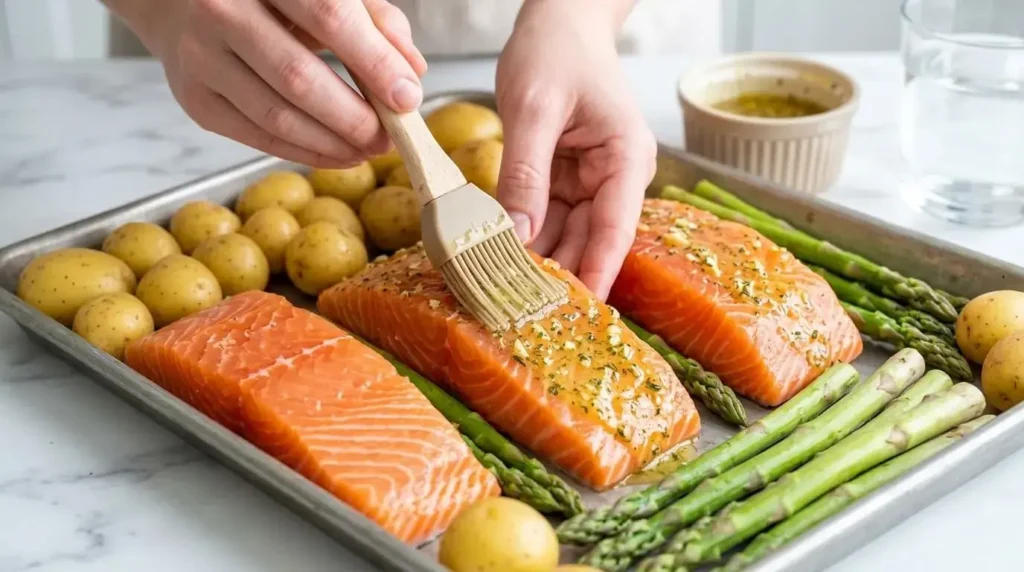
Using a pastry brush, generously coat the top and sides of each salmon fillet with your prepared garlic butter glaze. Drizzle any remaining glaze or a touch of olive oil, salt, and pepper over the asparagus spears.
Step 6: Bake
Return the sheet pan to the oven and bake at 400°F (200°C) for 10 to 12 minutes. Salmon cooks relatively quickly, and this initial bake ensures the fish is cooked nearly all the way through before the cheese topping is applied.
Step 7: Top with Cheese
Slide the pan out once more. Carefully pile a thick blend of shredded mozzarella and freshly grated Parmesan tightly on top of each salmon fillet, aiming for a uniform layer about a quarter-inch thick.
Step 8: Broil Until Bubbly
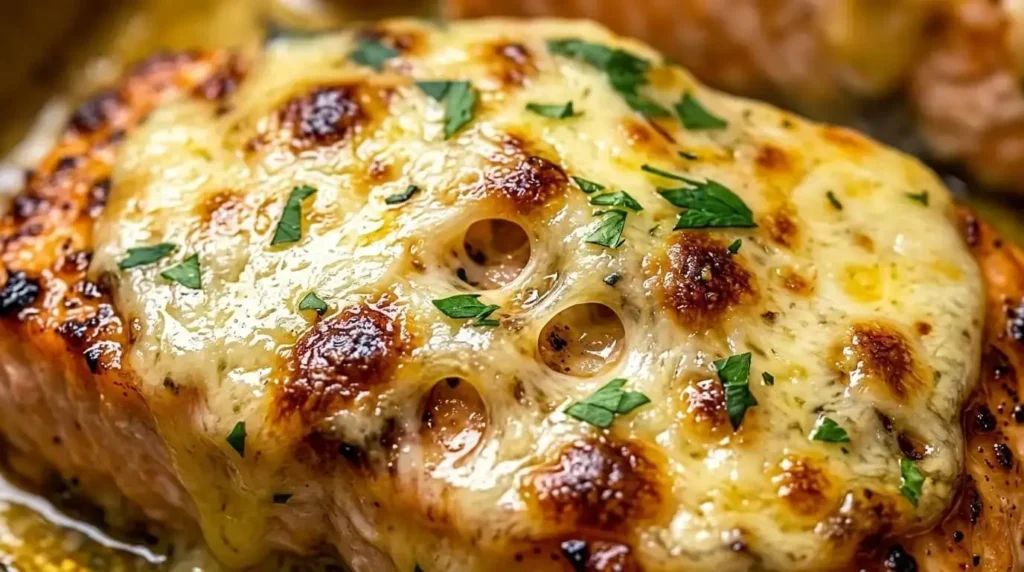
Switch your oven settings from bake to broil. Position the sheet pan on the top oven rack and broil for 2 to 3 minutes. Watch the oven like a hawk during this step; cheese can transition from perfectly golden to burned in a matter of seconds. Remove when the cheese is melted, bubbling, and beautifully spotted with deep golden-brown patches.
Step 9: Finish with Parsley and Lemon
Garnish the entire sheet pan immediately with a generous sprinkle of finely chopped fresh parsley and an extra squeeze of fresh lemon juice over the glossy pan juices.
Tips for Perfect Garlic Butter Salmon
- Don’t Overcook the Salmon: Remember that the fish will continue to cook under the intense heat of the broiler. Pull it out of the baking phase when it is just slightly underdone.
- Dry the Fillets Thoroughly: Skipping this step results in soggy fish and a diluted glaze.
- Roast Potatoes First: Skipping the head start for the potatoes will leave you with perfectly cooked salmon but rock-hard starches.
- Use Freshly Grated Parmesan: Pre-packaged grated cheese contains anti-caking agents that prevent a smooth, cohesive melt.
- Broil Only a Few Minutes: Stay by the oven door to ensure the cheese turns golden-brown without scorching.
- Use Center-Cut Fillets: They possess an even thickness, preventing thin tail pieces from drying out.
- Let Salmon Rest Briefly: Allow the dish to sit for 3 to 5 minutes before serving to let the juices redistribute throughout the fish.
- Add Lemon After Baking: A splash of fresh lemon juice right at the end revives the flavors with bright, clean acidity.
- Use a Heavy Sheet Pan: A sturdy, warp-resistant rimmed baking sheet distributes heat evenly and prevents juices from spilling into your oven.
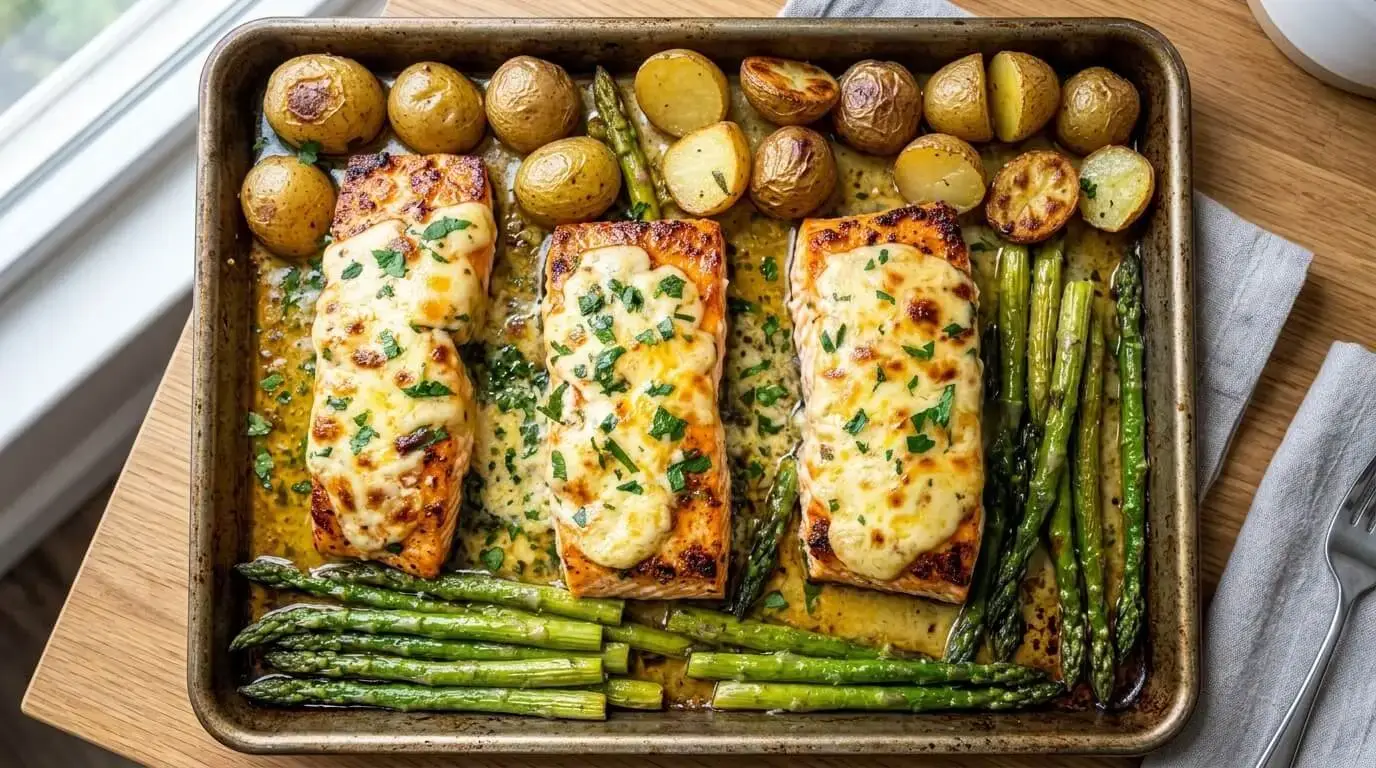
Sheet Pan Garlic Butter Cheese-Crusted Salmon
Ingredients
Method
- Preheat the oven to 400°F (200°C).
- Toss the halved baby yellow potatoes with a tablespoon of olive oil, salt, and pepper. Arrange them on one side of a large rimmed baking sheet and roast for 15 minutes to give them a head start.
- While the potatoes roast, prepare the glaze by whisking together the melted unsalted butter, 2 tablespoons of extra virgin olive oil, minced garlic, lemon juice, lemon zest, Italian seasoning, salt, and black pepper in a small bowl until fully emulsified.
- Use paper towels to pat the salmon fillets completely dry on all sides to ensure the glaze sticks and the cheese browns perfectly.
- Carefully remove the hot sheet pan from the oven. Slide the potatoes to the top edge. Arrange the trimmed asparagus spears along the bottom side, and place the dried salmon fillets right in the center of the pan.
- Drizzle the asparagus spears lightly with olive oil, salt, and pepper.
- Use a pastry brush to apply the garlic butter glaze generously over the top and sides of each salmon fillet.
- Place the sheet pan back in the oven and bake at 400°F (200°C) for 10 to 12 minutes until the salmon is nearly cooked through.
- Take the pan out and carefully pile a thick, even blend of the shredded mozzarella and grated Parmesan cheese on top of each fillet (about a 1/4-inch layer).
- Turn your oven to Broil and place the baking sheet on the top rack. Broil for 2 to 3 minutes, watching closely, until the cheese topping turns completely melted, bubbly, and beautifully spotted with golden-brown patches.
- Remove from the oven, garnish immediately with fresh chopped parsley, and serve alongside the accumulated glossy pan juices.
Notes
* For absolute best results, grate your own Parmesan from a block rather than buying pre-grated varieties.
* Leftovers reheat beautifully in a 325°F (165°C) oven for about 8-10 minutes. Avoid the microwave to keep the cheese and fish textures intact.
What to Serve with Garlic Butter Cheese-Crusted Salmon
This sheet pan meal is technically an all-in-one dinner, but if you want to expand the spread, consider these great additions:
- Salads: A crisp Greek salad or a refreshing cucumber tomato salad makes an excellent contrast to the rich cheese crust. Alternatively, pair it with our cool, tangy Yogurt Cucumber Salad Recipe.
- Grains: Serve alongside a bed of fluffy Mediterranean quinoa, brown rice, or low-carb cauliflower rice.
- Extra Veggies: Add side dishes of roasted broccoli or garlic green beans.
- Bread: A warm loaf of crusty whole-grain bread is ideal for mopping up the delicious garlic butter pan juices left on the plate.
Storage & Reheating
- Refrigerator: Store any leftovers in an airtight container for up to 3 days.
- Freezer: While you can freeze the cooked salmon fillets alone for up to a month, it is not recommended to freeze the roasted vegetables as they lose their pleasant texture upon thawing.
- Reheating: To prevent the salmon from drying out and turning rubbery, reheat your leftovers in the oven at 325°F (165°C) until warmed through. Avoid using the microwave if possible, as it degrades the delicate texture of both the fish and the cheese crust.
Frequently Asked Questions
Can I use frozen salmon?
Yes, absolutely. Just ensure the fillets are entirely thawed in the refrigerator overnight and thoroughly dried with paper towels before cooking.
Do I need to remove the skin?
It is highly recommended to leave the skin on during cooking. It protects the salmon flesh from overheating against the pan and keeps it wonderfully juicy. The skin can be easily slipped off right before eating if desired.
Can I make this ahead of time?
You can prep the garlic butter glaze and chop the vegetables a few hours in advance, but for the best texture, assemble and bake the dish right before you plan to serve it.
What cheese melts best on salmon?
Whole-milk low-moisture mozzarella offers the best gooey, blanket-like melt, while Parmesan adds incredible golden color and savory flavor depth.
Why roast potatoes first?
Potatoes are incredibly dense and require at least 25 to 30 minutes of roasting to become tender, whereas salmon and asparagus cook in roughly 10 to 12 minutes. Pre-roasting ensures everything finishes at the exact same moment.
How do I know salmon is fully cooked?
The flesh will transition from translucent to an opaque pink and will flake easily with a fork. An internal meat thermometer should read between 125°F and 145°F depending on your preferred doneness.
Can I use different vegetables?
Yes! Broccoli florets, green beans, halved Brussels sprouts, and zucchini slices all make excellent alternative green additions to the pan.
Can I make this without butter?
While butter provides a signature rich flavor profile, you can substitute it entirely with extra virgin olive oil for a lighter, dairy-free alternative glaze.
Is this recipe Mediterranean diet friendly?
Yes. It highlights lean, omega-3-rich seafood, heart-healthy olive oil, fiber-packed fresh vegetables, and uses cheese and butter mindfully as flavor accentuations.
Can I cook it without broiling?
You can, but the cheese will not achieve those signature caramelized, golden-brown spots. If your oven doesn’t have a broiler, simply leave the pan on the top rack at 400°F for an extra 3 to 4 minutes until the cheese is melted and bubbly.
Expert Tips
- Choosing Salmon: Opt for thick, vibrant center-cut fillets rather than thin tail sections to ensure the fish stays moist beneath the cheese blanket.
- The Importance of Internal Temperature: For a perfectly juicy medium doneness, aim for an internal temperature of 125°F–130°F (52°C–54°C). If you prefer to strictly follow USDA guidance, cook until it reaches 145°F (63°C).
- Avoid Overcrowding the Pan: Spread the components out across the sheet pan. If the vegetables are piled on top of each other, they will release steam and become mushy instead of achieving roasted, caramelized edges.
- Grate Your Own Cheese: Buying a block of Parmesan and grating it yourself ensures superior melting performance and flavor compared to pre-shredded alternatives.
Recipe Variations
- Mediterranean Herb Salmon: Mix chopped fresh kalamata olives, capers, and dried oregano directly into the garlic butter glaze.
- Spinach & Feta Version: Layer a handful of sautéed spinach and crumbled feta cheese beneath the mozzarella crust.
- Sun-Dried Tomato Version: Finely mince sun-dried tomatoes and stir them into the glaze for an intense, sweet-tart flavor pop.
- Pesto Cheese-Crusted Salmon: Spread a thin layer of traditional basil pesto over the fish fillets before adding the cheese topping.
- Lemon Herb Salmon: Amplify the citrus profile by doubling the lemon zest and adding fresh minced dill and thyme.
- Dijon Garlic Salmon: Whisk a teaspoon of stone-ground Dijon mustard into the garlic butter glaze for a tangy, sharp kick.
- Spicy Chili Garlic Salmon: Add a pinch of red pepper flakes or a dash of hot sauce to the glaze for a warming heat.
Nutrition Highlights
- High-Quality Protein: Promotes muscle maintenance and keeps your satiety levels high.
- Omega-3 Fatty Acids: Offers excellent protection for cardiovascular health and decreases cellular inflammation.
- Healthy Fats from Olive Oil: Provides a rich source of oleic acid, a monounsaturated fat celebrated for heart health.
- Fiber-Rich Carbs: Asparagus and skin-on baby yellow potatoes provide excellent digestive support and stable energy levels.
- Calcium Boost: The combination of mozzarella and Parmesan delivers an excellent dose of dietary calcium.
Final Thoughts
This Sheet Pan Garlic Butter Cheese-Crusted Salmon proves that healthy, Mediterranean-inspired cooking doesn’t have to be complicated or time-consuming. Featuring crispy roasted potatoes, perfectly blistered asparagus, a glossy, restaurant-style garlic butter glaze, and a beautiful quarter-inch golden cheese blanket, this easy one-pan dinner is simple enough for standard weeknights yet impressive enough for weekend entertaining.