
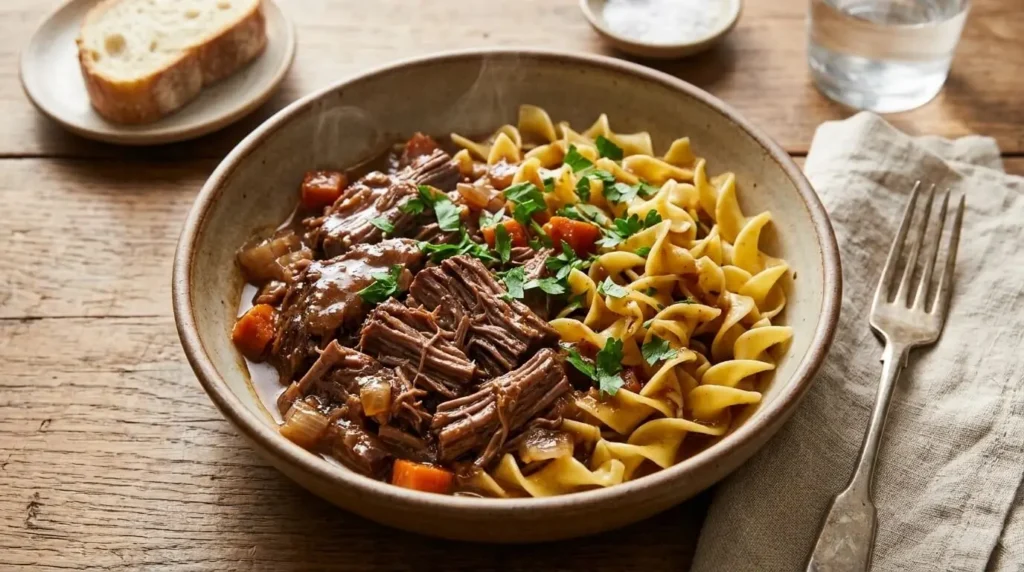
When evening rolls around and you want a meal that feels genuinely comforting without being complicated, Slow Braised Beef and Noodles delivers every time. Tender chunks of beef chuck roast simmer gently until they shred effortlessly, nestled into a rich homemade gravy made with olive oil, diced onions, carrots, garlic, tomato paste, flour, and savory beef broth. Dried thyme and a bay leaf infuse the pot with warm, earthy aromatics, giving the dish a subtle Mediterranean-inspired touch. Served over tender egg noodles that soak up every drop of the flavorful sauce, this Slow Braised Beef and Noodles dinner turns everyday kitchen staples into a deeply satisfying bowl you will want to make on repeat.
Why You’ll Love This Slow Braised Beef and Noodles Recipe
There is a reason slow-cooked comfort food never goes out of style, and this braised beef and noodles recipe brings all the best elements together in one cozy meal:
- Fork-tender beef: Gentle, low-and-slow cooking transforms chuck roast into melt-in-your-mouth, shreddable tender beef and egg noodles pairing.
- Rich homemade gravy: Whisking flour into the browned aromatics, tomato paste, and beef broth builds a velvety beef and noodles with gravy sauce packed with savory depth.
- Simple ingredients: Everyday pantry staples and fresh produce come together for a hearty, crowd-pleasing dinner.
- One-pot braising: Nearly all of the cooking happens in a single heavy-bottomed pot, keeping cleanup straightforward.
- Family-friendly dinner: Ladling the beef chuck roast and noodles over warm noodles makes an inviting, filling meal for busy weeknights or relaxed weekends.
Ingredients You’ll Need
Every ingredient in this recipe plays a clear role in building flavor, texture, and balance:
| Ingredient | Explanation |
| Beef chuck roast (2 lb) | Cut into chunks, chuck roast is ideal for slow-cooked beef because its connective tissue breaks down gradually during long cooking, becoming tender and shreddable. |
| Salt and black pepper | Essential seasoning that brings out the natural richness of the beef and balances the savory gravy. |
| Olive oil (2 tbsp) | Helps brown the beef evenly over medium-high heat and brings a subtle Mediterranean character to the pot. |
| Onion (1) | Diced to create a sweet, savory aromatic foundation for the sauce. |
| Carrots (2) | Diced carrots add gentle natural sweetness and body that complement the rich beef broth. |
| Garlic (2 cloves) | Minced garlic adds warm, savory aroma without overpowering the herbs and beef. |
| Tomato paste (1 tbsp) | Concentrated tomato paste deepens the color, umami, and savory richness of the gravy. |
| Flour (2 tbsp) | Acts as a thickening agent so the cooking liquid turns into a smooth, clingy gravy. |
| Beef broth (3 cups) | Forms the savory braising liquid and sauce base that keeps the meat moist as it simmers. |
| Additional beef broth (½ cup) | Used in place of red wine so you get plenty of rich braising liquid without using wine. |
| Dried thyme (1 tsp) | Contributes an earthy, herbaceous note that pairs naturally with beef and olive oil. |
| Bay leaf (1) | Adds a subtle, aromatic background note as the pot simmers low and slow. |
| Egg noodles (8 oz) | Provide a tender, hearty base that catches and holds the rich beef gravy. |
| Fresh parsley (2 tbsp) | Chopped fresh parsley brightens the finished dish with color and fresh herbal lift right before serving. |
How to Make Slow Braised Beef and Noodles
Taking your time with each stage is what turns simple ingredients into memorable Slow Braised Beef and Noodles. Here is how to make it step by step:
Step 1: Season and sear the beef
Season the 2 lb of beef chuck roast chunks with 1 teaspoon of salt and ½ teaspoon of black pepper. Heat 2 tablespoons of olive oil in a large pot over medium-high heat, then sear the beef on all sides until deeply browned. Remove the browned beef and set it aside on a plate. Searing creates deep caramelization on the surface of the meat, which lays the groundwork for a richer, more complex sauce.
Step 2: Cook the vegetables and aromatics
In the same pot, add 1 diced onion and 2 diced carrots, cooking for about 4 minutes until they begin to soften. Stir in 2 minced cloves of garlic and 1 tablespoon of tomato paste, cooking for 1 more minute until fragrant and slightly darkened. Cooking the vegetables in stages prevents the garlic from burning while letting the tomato paste toast and develop deeper savory flavor.
Step 3: Prepare the braising liquid
Stir 2 tablespoons of flour into the vegetable and tomato paste mixture so it coats evenly. Slowly pour in 3 cups of beef broth along with an additional ½ cup of beef broth, scraping up the browned bits stuck to the bottom of the pot as you stir. Those browned bits are packed with concentrated flavor, and deglazing with broth lifts them right into your gravy.
Step 4: Slowly braise the beef
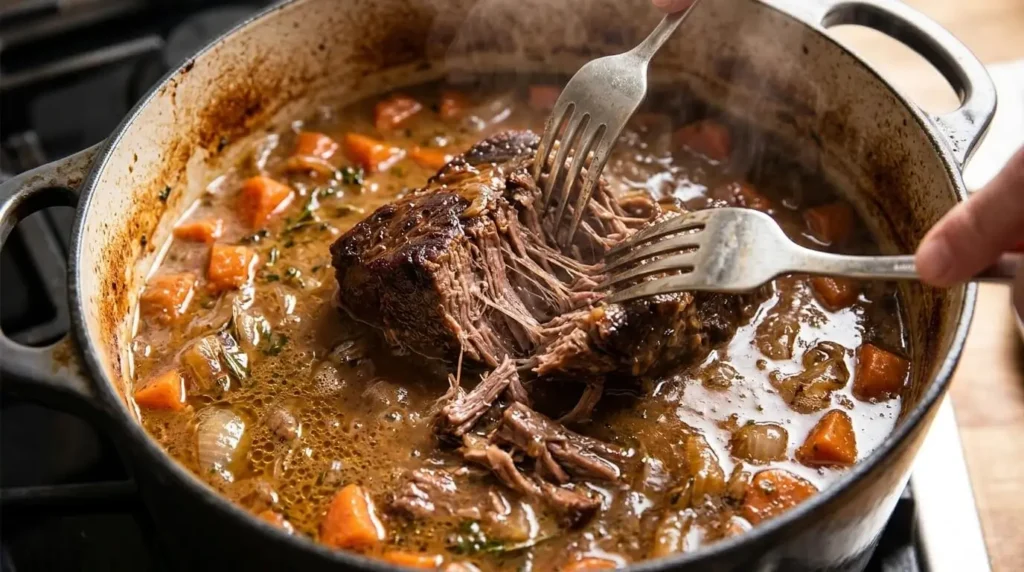
Return the seared beef chunks to the pot, then stir in 1 teaspoon of dried thyme and 1 bay leaf. Bring the liquid to a gentle simmer, then cover the pot and cook on low for 2½ to 3 hours. Slow, gentle heat gives the tough connective tissue in the chuck roast time to soften until the beef is tender and shreds easily with a fork.
Step 5: Cook the egg noodles
While the beef finishes braising—or right before you are ready to plate—cook 8 oz of egg noodles according to the package instructions, then drain them well and set aside. Cooking the egg noodles separately keeps them from turning mushy in the hot braising liquid and prevents excess starch from thinning or clouding the gravy.
Step 6: Shred the beef and serve
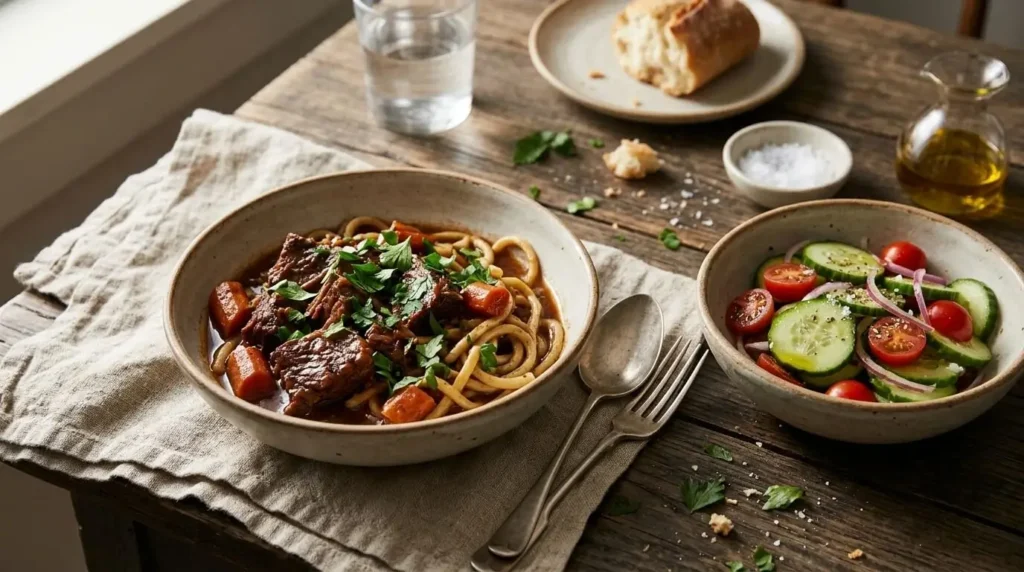
Remove and discard the bay leaf, then shred the tender beef and stir it back into the thickened sauce. Spoon the beef and gravy over the drained egg noodles, garnish with 2 tablespoons of chopped fresh parsley, and serve warm.
Tips for the Best Tender Braised Beef
A few small habits make a noticeable difference when making Dutch oven beef and noodles or cooking in any heavy pot:
- Choose well-marbled beef chuck roast: Visible streaks of fat melt during cooking and keep the meat moist.
- Avoid overcrowding the pot when searing: Sear in batches if needed so the beef browns rather than steams.
- Keep the braising liquid at a gentle simmer: A soft bubble is ideal; a vigorous boil can toughen meat fibers.
- Keep the pot covered during braising: Trapping steam maintains moisture and steady heat throughout the cooking time.
- Allow enough cooking time: Give the connective tissue plenty of time to break down until the beef shreds effortlessly.
- Cook noodles separately: Boiling and draining the noodles on their own preserves their shape and gives you clean control over the sauce.
Best Beef for Slow Braising
Beef chuck roast is the standout choice for this dish because it comes from a hardworking shoulder muscle rich in collagen and intramuscular fat. As it cooks slowly in liquid, that collagen melts into gelatin, giving the beef chuck roast and noodles a silky texture and rich mouthfeel. Beef shoulder or boneless short ribs can be used as alternatives if chuck roast is unavailable, though chuck roast remains our top pick for this recipe. Very lean cuts, by contrast, lack enough fat and connective tissue and can dry out during long cooking.
What to Serve with Beef and Noodles
Because the gravy and shredded beef are rich and savory, fresh, crisp, or lightly acidic sides balance the plate nicely. Consider pairing your meal with a bright Mediterranean cucumber and tomato salad for crunch and freshness, or serve alongside roasted green beans with garlic and olive oil for an easy vegetable side. Roasted zucchini, crusty whole-grain bread for mopping up extra sauce, or a simple green salad dressed with lemon and olive oil also complement the warm herbs and tender noodles without weighing down the meal.
Variations and Substitutions
The core recipe uses the exact ingredients listed above, and no wine or pork is included. If you want to customize a batch later on, these optional variations work well:
- Without wine: This recipe already uses an additional ½ cup of beef broth instead of red wine.
- Different herbs (optional): Fresh rosemary can be added alongside the thyme if you enjoy a piney herbal note.
- Extra vegetables (optional): Sliced mushrooms or diced celery can be stirred in during the vegetable step if you want extra veggies.
- Different noodles (optional): Wide egg noodles are classic, though other pasta shapes can be swapped in if desired.
- Gluten-free option (optional): Use a gluten-free flour blend for thickening and swap in gluten-free noodles.
Storage, Freezing, and Reheating
Leftovers make a great next-day meal when handled with basic food-safety care. Transfer cooled Slow Braised Beef and Noodles into airtight containers and refrigerate promptly; whenever possible, store the cooked egg noodles in a separate container from the beef and gravy so the noodles keep a better texture. To reheat, warm the beef and gravy gently on the stovetop over low to medium-low heat, adding a splash of broth if the sauce has thickened too much. For longer storage, freeze the beef and gravy (ideally without the noodles, or stored separately) in freezer-safe containers, then thaw overnight in the refrigerator before reheating gently on the stove until hot throughout.
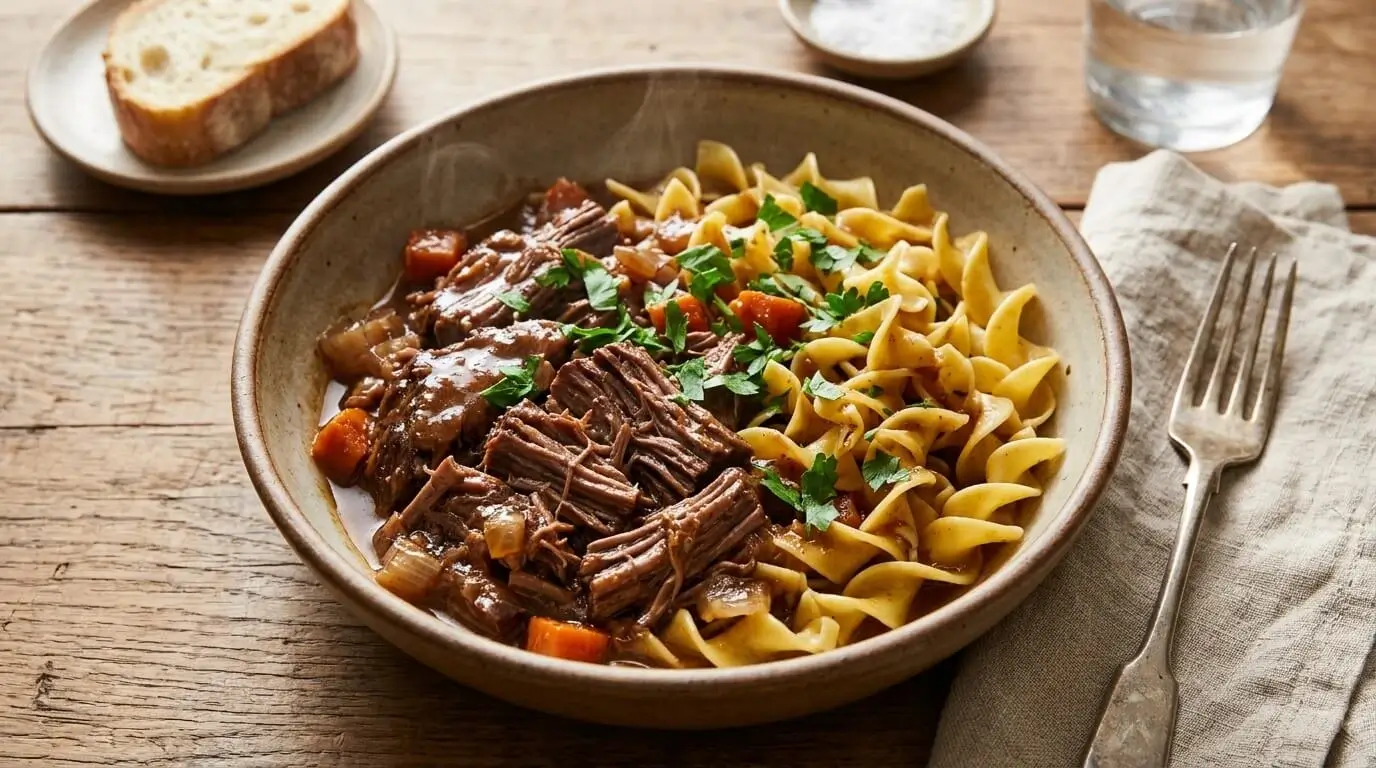
Slow Braised Beef and Noodles
Ingredients
Method
- Season the beef chuck roast chunks with 1 teaspoon salt and 1/2 teaspoon black pepper.
- Heat 2 tablespoons olive oil in a large pot over medium-high heat. Sear the beef chunks on all sides until browned, then remove and set aside.
- Add the diced onion and diced carrots to the pot and cook for 4 minutes. Stir in the minced garlic and tomato paste, and cook for 1 minute.
- Stir in 2 tablespoons flour, then slowly pour in 3 cups beef broth and 1/2 cup additional beef broth while scraping up the browned bits from the bottom of the pot.
- Return the beef to the pot and add 1 teaspoon dried thyme and 1 bay leaf. Bring the liquid to a gentle simmer.
- Cover the pot and cook on low for 2½ to 3 hours until the beef is tender and shreds easily.
- Cook 8 oz egg noodles according to the package instructions, then drain.
- Remove the bay leaf, shred the beef and stir it into the sauce, spoon the beef and gravy over the noodles, and garnish with 2 tablespoons chopped fresh parsley.
Notes
- Choose Marbled Chuck Roast: Look for well-marbled beef chuck roast so the connective tissue melts during the 2½–3 hour braise, giving you tender, shreddable beef.
- Sear Without Crowding: Brown the beef chunks in batches if needed so they caramelize properly rather than steaming.
- Cook Noodles Separately: Boil and drain the egg noodles on their own so they stay tender without absorbing excess gravy or turning mushy.
- Storage & Reheating: Refrigerate cooled leftovers in airtight containers—ideally storing the noodles separately from the beef and gravy. Reheat the beef and sauce gently on the stovetop over low heat, adding a splash of beef broth if the gravy thickens too much.
- Freezing: Freeze the beef and gravy (without the noodles) in a freezer-safe container, then thaw overnight in the refrigerator before reheating gently on the stove.
Frequently Asked Questions
Can I make slow braised beef and noodles ahead of time?
Yes, you can prepare the beef and gravy ahead of time and reheat them gently before serving. Keeping the cooked egg noodles separate until serving time helps preserve their texture.
What is the best cut of beef for braised beef and noodles?
Beef chuck roast is the best choice because its marbling and connective tissue break down during slow cooking, resulting in tender, shreddable meat and rich pan juices.
How long does it take to braise beef until tender?
This recipe calls for 2½ to 3 hours of covered low simmering, though exact timing can vary depending on how large your beef chunks are and your stove’s heat output.
Can I use beef broth instead of red wine?
Yes. This recipe uses an additional ½ cup of beef broth rather than wine, giving you a savory, wine-free braising liquid.
Why is my braised beef still tough?
If the beef feels firm or difficult to shred, it likely needs more time to cook so the connective tissue can fully soften. Continue simmering gently and check for fork-tenderness.
Should I cook egg noodles separately?
Yes. Boiling and draining the egg noodles separately prevents them from overcooking in the pot and stops excess starch from making the gravy overly heavy or starchy.