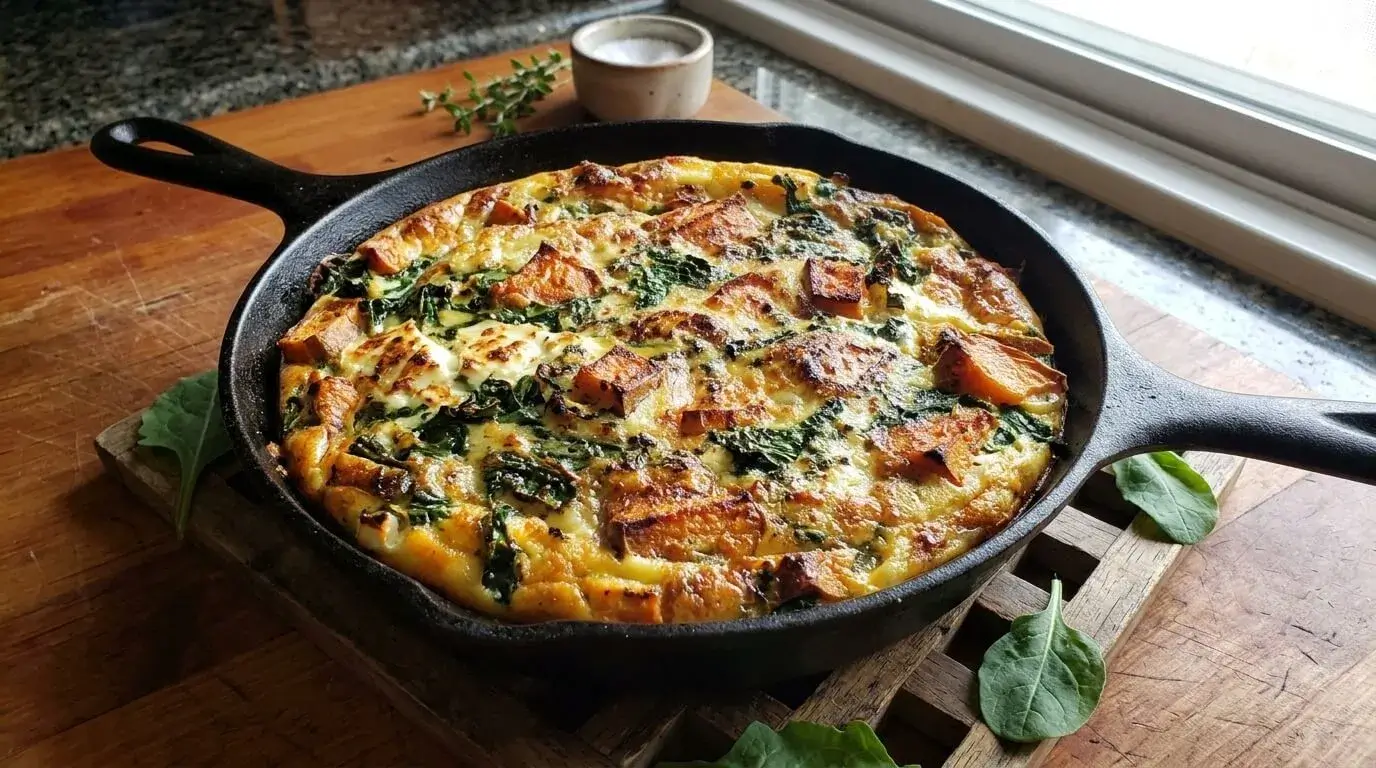
If you are looking for a healthy Mediterranean breakfast recipe that is as beautiful as it is nutritious, look no further than this vibrant Sweet Potato, Kale, and Feta Frittata. Pulling a fresh egg bake out of the oven is one of life’s simple pleasures, especially when it is packed with wholesome, colorful ingredients. This dish features a thick golden slice with deep orange roasted sweet potato cubes, visible creamy feta chunks, and wilted dark green kale ribbons running through a light, fluffy egg base. With its lightly browned top and a custardy but fully set interior, this frittata has a gorgeous, rustic homemade appearance that makes it a perfect centerpiece for a weekend brunch.
Beyond its stunning presentation, this recipe is a masterclass in everyday Mediterranean diet cooking. By using simple, whole-food ingredients like extra virgin olive oil, nutrient-dense leafy greens, and protein-packed pasture-raised eggs, you can create an easy meal prep frittata that keeps you satisfied all morning. Whether you need a high-protein vegetarian breakfast for busy weekdays or an easy vegetarian brunch recipe for entertaining, this versatile dish fits the bill perfectly. Let’s dive into why this recipe works so well and how you can achieve that flawless, picture-perfect texture at home.
Why You’ll Love This Sweet Potato Kale Frittata
Mediterranean Diet Friendly
This recipe perfectly captures the philosophy of Mediterranean eating. It relies on whole, minimally processed ingredients rather than heavy fillers. Heart-healthy extra virgin olive oil forms the cooking base, while a generous amount of leafy greens supplies essential vitamins. Eggs provide a clean protein source, and the inclusion of sweet potatoes adds beneficial fiber and antioxidants. Feta cheese is used deliberately and in moderation to add punchy flavor without overpowering the health benefits of the dish.
Naturally Gluten-Free
Because this is a crustless quiche style of egg bake, it is naturally entirely gluten-free. It provides an excellent alternative to traditional quiche for anyone managing a gluten sensitivity or simply looking for a lighter, less carbohydrate-heavy breakfast option. You get all the rich, custardy satisfaction of a baked tart without dealing with pastry dough.
Excellent for Meal Prep
If you struggle to find time for a nutritious meal on busy mornings, this is the ultimate Mediterranean diet meal prep solution. The frittata holds its structure beautifully and can be stored in the refrigerator for days. It slices cleanly, packs up easily, and reheats wonderfully without losing its delicate texture, giving you an instant, high-protein vegetarian breakfast ready to go in minutes.
Balanced Flavor Profile
The secret to this frittata’s irresistible appeal is its incredible contrast of flavors. The natural, caramelized sweetness of the roasted sweet potatoes cuts through the earthy, slightly bitter notes of the savory kale. This combination is balanced beautifully by the sharp, salty, and tangy pockets of melted feta cheese embedded within the rich, savory whipped eggs.
Beautiful Texture Contrast
Every bite offers an exciting mix of textures. By roasting the sweet potatoes before adding them to the egg mixture, you ensure they develop delightfully crispy roasted potato edges. These firm cubes contrast beautifully against the soft, pillowy, custardy center of the set eggs and the ultra-creaminess of the large cheese pockets.
Beginner-Friendly
There are no complicated culinary techniques required here—no flipping a delicate omelet or worrying about a pastry crust shrinking in the oven. This simple oven-baked method ensures even cooking and an effortless presentation, making it an foolproof recipe even for novice home cooks.
Ingredients You’ll Need
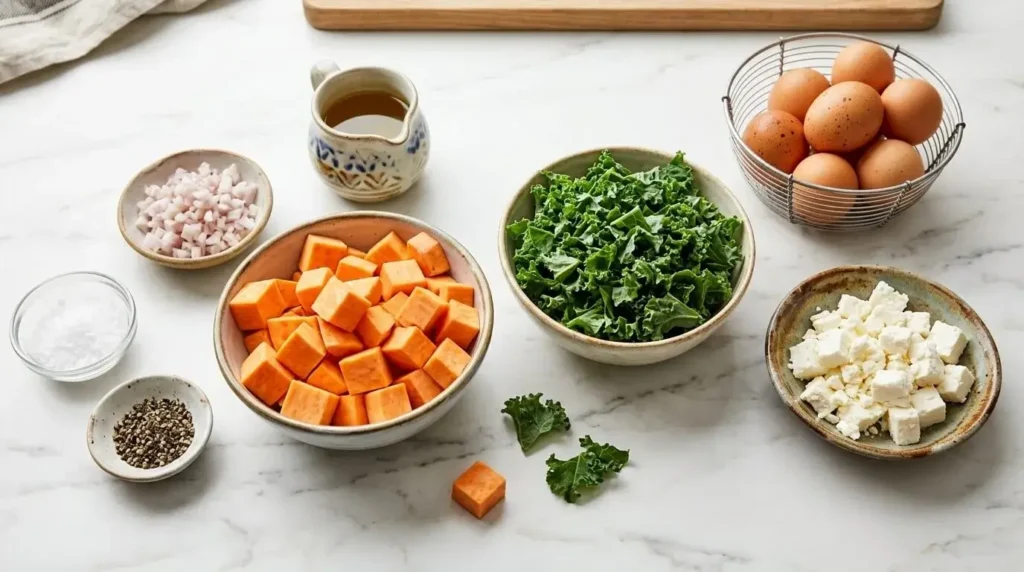
The beauty of this sweet potato breakfast recipe lies in its simple, wholesome, and Mediterranean-inspired ingredient list. Each component brings both nutritional value and intentional structural integrity to the finished dish.
Sweet Potatoes
We use one large sweet potato, peeled and cut evenly into 1/2-inch cubes. The natural sweetness of the potato is essential to balance the salty feta. Roasting these cubes prior to baking is a non-negotiable step because it develops rich caramelization, concentrates the starches, and ensures these healthy breakfast vegetables are perfectly tender throughout the egg bake.
Kale
Two cups of fresh, stemmed, and roughly chopped kale add an earthy depth and a beautiful pop of deep green color. Kale is a quintessential Mediterranean diet staple leafy green, offering a robust structure that holds up exceptionally well to baking. You can use either Tuscan kale (Lacinato) or curly kale for this recipe; both work beautifully as long as the tough stems are completely removed.
Feta Cheese
We use a half-cup of feta cheese, crumbled intentionally into large, distinct chunks. Feta is a traditional Mediterranean ingredient that doesn’t melt away entirely into the batter. Instead, it creates wonderful, distinct pockets of saltiness that accent the sweet potatoes. For the best visual alignment with our rustic style, look for a block of high-quality feta preserved in brine and break it apart by hand.
Eggs and Cream
Eight large eggs form the structural backbone of this healthy egg bake. To create that signature fluffy eggs texture and a luxurious custard-like consistency, we whisk them together with a quarter-cup of heavy cream or whole milk. The fat in the dairy helps emulsify the eggs, ensuring a moist, tender crumb that avoids getting dry or rubbery.
Olive Oil and Aromatics
A single tablespoon of quality extra virgin olive oil enhances the overall Mediterranean flavor profile while preventing sticking. A finely diced small onion or shallot provides an undercurrent of sweetness and savory depth, while garlic powder and a pinch of red pepper flakes provide a gentle, warming spice that elevates the entire dish.
How to Make Sweet Potato, Kale, and Feta Frittata
This easy baked frittata recipe comes together in a few simple, sequential stages. Taking a few extra minutes to prep your vegetables correctly guarantees a professional-grade presentation.
Roast the Sweet Potatoes
Preheat your oven to 400°F (200°C). It is critical to cut your sweet potatoes evenly into precise 1/2-inch cubes so they cook at the same rate. Toss them directly on a baking sheet with a light drizzle of olive oil, sea salt, and black pepper. Spread them out completely; you must avoid overcrowding the pan, or the potatoes will steam rather than roast. Bake for 15–20 minutes. Look for clear visual cues: deep golden-brown caramelized edges and tender centers with a slight outer crispness. Once finished, remove them from the oven and reduce the oven temperature to 375°F (190°C).
Sauté the Kale and Onion
Place a 10-inch oven-safe skillet (cast iron works beautifully here) over medium heat and warm a splash of olive oil. Drop in your finely diced onion or shallot, cooking for 3–4 minutes until translucent and aromatic. Next, toss in your chopped kale. Sauté for another 2–3 minutes, stirring constantly until it wilts down completely.
Chef’s Tip: Ensuring the kale is fully wilted and removing excess moisture at this stage is crucial. It prevents a watery frittata and keeps your egg base light and firm. Turn off the heat once the greens are ready.
Whisk the Egg Mixture
While your skillet cools slightly, prepare your custard base. In a large bowl, crack your eight eggs and add the milk or heavy cream, garlic powder, salt, black pepper, and optional red pepper flakes. Whisk the mixture vigorously for at least a full minute until it is completely smooth and slightly frothy on top. Incorporating this air is essential to achieving a light, creamy frittata texture.
Assemble the Frittata
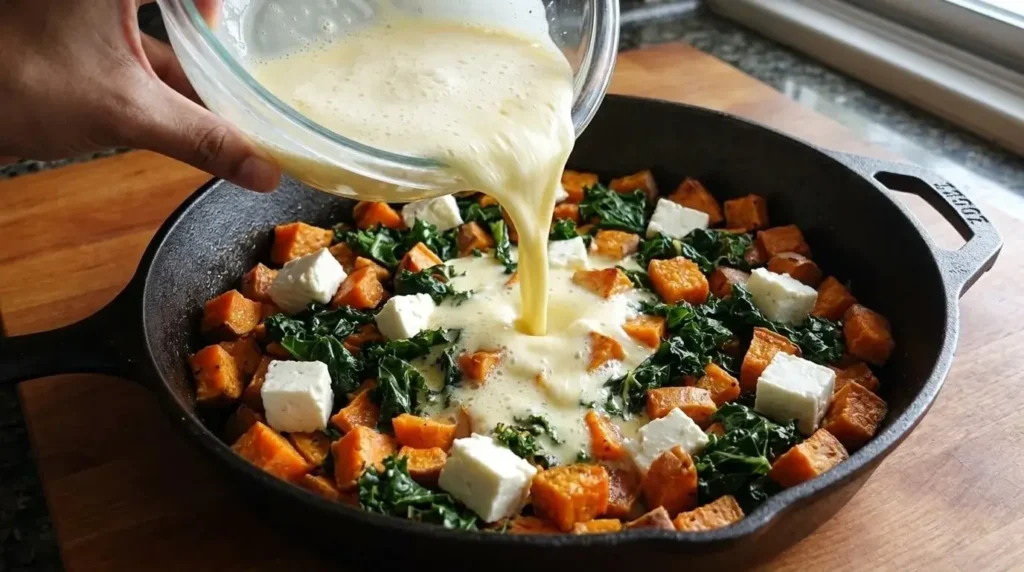
Now, build the layers to match our gorgeous visual reference. Scatter your warm roasted sweet potatoes evenly across the skillet among the sautéed kale and onions. Next, distribute the feta cheese. Be sure to scatter the feta in larger chunks rather than a fine crumble; this ensures you get those stunning, distinct pockets of white cheese visible on the surface. Pour your whisked egg mixture slowly over the top. Give the pan a gentle tap against the counter to help the liquid egg settle evenly into every single gap and crevice.
Bake Until Golden and Set
Slide the skillet into your preheated oven at 375°F (190°C) and bake for 20–25 minutes. Keep an eye on the oven during the last few minutes. You are looking for a perfectly puffy center, a lightly golden top, and a gentle hint of browning around the edges. When you nudge the pan, the center should be completely stable with no loose jiggle. Let the frittata rest and cool in the skillet for 5 minutes before slicing. This resting period allows the custardy interior to set completely, ensuring clean, sharp slices that hold their shape on the plate.
Tips for the Best Frittata
- Roast Vegetables First: Never skip pre-cooking your veggies. Roasting sweet potatoes and sautéing kale removes their natural water content, which prevents excess moisture from pooling inside the eggs while baking.
- Use an Oven-Safe Skillet: A well-seasoned 10-inch cast-iron skillet or a heavy-bottomed stainless steel pan transfers heat beautifully from the stovetop directly into the oven, yielding an evenly baked egg recipe.
- Don’t Overbake: Eggs are highly sensitive to heat and will continue cooking from residual pan heat even after being pulled from the oven. Remove the frittata as soon as the center is set to preserve a moist, delicate interior.
- Leave Some Feta on Top: When assembling, make sure a few substantial chunks of feta sit right on the surface. As it bakes, these sections will brown slightly, creating highly attractive golden spots.
- Cut Ingredients Evenly: Keeping your sweet potato cubes uniform ensures that every single forkful has a balanced distribution of ingredients and a consistent texture.
- Season Properly: Feta cheese is naturally incredibly salty. Adjust your added salt in the egg mixture carefully to complement, rather than overpower, the natural salinity of the cheese.
Mediterranean Diet Benefits of This Recipe
Integrating this vegetarian Mediterranean breakfast into your routine offers fantastic wellness benefits that go far beyond simple calorie counting.
| Nutrient Component | Dietary Source | Health & Wellness Benefit |
| High-Quality Protein | Pasture-raised eggs | Supports muscle recovery, posture development, and sustained morning satiety. |
| Healthy Fats | Extra virgin olive oil & feta | Provides stable energy and helps the body absorb fat-soluble vitamins ($A, D, E, K$). |
| Complex Carbohydrates | Roasted sweet potatoes | Delivers clean, slow-burning fuel with an abundance of dietary fiber. |
| Antioxidants & Micronutrients | Dark leafy kale | Packed with vitamins C and K to support natural anti-inflammatory pathways. |
This complete harmony of macronutrients means you get a clean energy release without the sharp blood sugar spikes or crashes associated with processed, sugary breakfast options. It keeps you full, focused, and energized for hours.
Variations and Substitutions
- Add Fresh Herbs: Elevate the aromatic profile by folding a handful of chopped fresh dill, flat-leaf parsley, basil, or wild oregano into the egg custard before baking.
- Swap the Greens: If you don’t have kale on hand, feel free to substitute baby spinach, Swiss chard, or peppery wild arugula. For a delicious twist, you can explore our Crustless Spinach, Sun-Dried Tomato and Feta Quiche to see how spinach behaves in a similar base.
- Make It Dairy-Free: You can easily adapt this dish by omitting the heavy cream in favor of an unsweetened almond or oat milk and swapping standard cheese for a quality plant-based dairy-free feta alternative.
- Add More Mediterranean Vegetables: Boost the vegetable count by tossing in chopped sun-dried tomatoes, roasted red peppers, or marinated artichoke hearts alongside the sweet potatoes.
- Add Extra Protein: For an even heartier meal, fold in cooked chickpeas or sliced lean turkey sausage.
- Use Goat Cheese Instead: Swap out the feta for soft, crumbled goat cheese (chèvre) if you prefer an even creamier, tangier pocket of cheese inside your vegetable frittata.
What to Serve with Sweet Potato Kale Frittata
While this one-pan breakfast is completely satisfying on its own, you can easily transform it into an elegant brunch layout or a light dinner with a few classic accompaniments.
To keep things light and refreshing, pair your warm slice with a crisp Mediterranean side salad made of diced heirloom tomatoes, cucumbers, kalamata olives, and a bright lemon-herb vinaigrette. If you want something warm and comforting to scoop up alongside your eggs, a side of artisan toasted whole grain bread or a small portion of our seasoned Turkish Potato Salad recipe makes an excellent addition. For an elegant weekend gathering, complement the savory, salty notes of the frittata by serving a bowl of fresh seasonal fruits or a dollop of cold Greek yogurt mixed with extra virgin olive oil and minced fresh herbs.
Sweet Potato, Kale, and Feta Frittata
Ingredients
Method
- Step 1: Preheat your oven to 400°F (200°C). Line a baking sheet with parchment paper. Toss the 1/2-inch sweet potato cubes with a drizzle of extra virgin olive oil, sea salt, and black pepper. Spread them evenly in a single layer. Roast for 15–20 minutes until the centers are tender and crispy caramelized edges form. Remove from oven and reduce the oven temperature to 375°F (190°C).
- Step 2: While the potatoes roast, heat a 10-inch oven-safe skillet over medium heat with a small splash of olive oil. Add the finely diced onion or shallot and cook for 3–4 minutes until soft and translucent. Add the chopped kale to the pan and sauté for an additional 2–3 minutes until the leaves wilt down completely and excess moisture evaporates. Remove the skillet from heat source.
- Step 3: In a large mixing bowl, combine the 8 large eggs, milk or heavy cream, garlic powder, a pinch of salt, black pepper, and optional red pepper flakes. Whisk the mixture vigorously for about 60 seconds until smooth, completely combined, and slightly frothy on top.
- Step 4: Assemble the dish by distributing the warm roasted sweet potato cubes and large crumbled feta chunks evenly across the skillet over the bed of sautéed kale and onions. Gently pour the whisked egg mixture over the ingredients. Tap the side of the skillet slightly to ensure the liquid egg fills all the gaps evenly.
- Step 5: Place the skillet in the oven and bake at 375°F (190°C) for 20–25 minutes. Look for a puffy center, a lightly golden top, and slight browning around the outer edges. Remove from the oven and let it rest and cool for 5 minutes to set before slicing cleanly into wedges.
Notes
- Oven-Safe Cookware: A 10-inch cast-iron skillet or heavy stainless steel skillet works best for this recipe as it transfers seamlessly from the stovetop straight to the oven.
- Avoid Watery Texture: Ensure the kale is thoroughly wilted and the sweet potatoes are fully roasted before mixing them with the egg base to lock out excess steam moisture.
- Make Ahead Advice: This dish holds up beautifully for Mediterranean diet meal prep. Store cooled slices in an airtight container in the refrigerator for up to 4 days, or wrap tightly and freeze for up to 2 months. Reheat gently on a medium setting.
How to Store and Reheat
Refrigerator Storage
Let the leftover frittata cool completely to room temperature. Slice it into individual portions and place them inside a secure, airtight container. It will store beautifully in the refrigerator for up to 4 days, making it an excellent option for a quick grab-and-go breakfast.
Freezer Instructions
Yes, you can freeze this sweet potato frittata! Wrap individual, fully cooled slices tightly in plastic wrap, then place them inside a heavy-duty freezer bag. Store in the freezer for up to 2 months. Thaw overnight in the refrigerator before reheating.
Reheating Methods
- Oven (Recommended): To preserve the crispy sweet potato edges and a firm texture, place your slice on a baking sheet, cover loosely with foil, and warm at 350°F (175°C) for about 8–10 minutes.
- Microwave: For ultimate weekday convenience, place a slice on a microwave-safe plate and heat on medium power for 60–90 seconds. Avoid using high heat, which can cause the eggs to weep and become rubbery.
Common Mistakes to Avoid
- Overbaking the Eggs: Leaving the frittata in the oven too long dries out the custard, resulting in a rubbery, spongy texture. Pull it out when the center is just barely set.
- Skipping the Vegetable Pre-Cook: Tossing raw sweet potatoes or raw, un-wilted greens straight into the eggs will release trapped water during baking, completely ruining the structural integrity of the egg bake.
- Using Too Much Liquid Dairy: Adding too much milk or cream thins out the egg proteins excessively, preventing the dish from setting up firmly enough to slice cleanly. Stick to the specified ratios.
- Not Resting Before Slicing: Cutting into a boiling hot frittata immediately out of the oven causes the delicate steam pockets to collapse, making your neat slices fall apart into a scramble. Give it 5 minutes to set.
- Overcrowding the Pan with Fillings: Balance is key. If your vegetable-to-egg ratio is completely skewed, there won’t be enough egg base to bind the ingredients together seamlessly.
Frequently Asked Questions
Can you put sweet potatoes in a frittata?
Absolutely! Sweet potatoes are a fantastic addition to a frittata. They add a beautiful pop of orange color, great structural substance, and a pleasant natural sweetness that contrasts perfectly with savory ingredients like kale and salty cheeses like feta.
Do you cook vegetables before adding to a frittata?
Yes, you should always pre-cook your vegetables before adding them to a frittata. Roasting or sautéing vegetables cooks out their natural moisture and caramelizes their natural sugars, ensuring your finished egg bake isn’t watery or bland.
What’s the difference between a quiche and a frittata?
The primary difference is the crust and the cooking method. A quiche is typically baked slowly in a pastry crust inside a pie dish, featuring a very high ratio of dairy to eggs. A frittata is a crustless quiche variant that is cooked faster, often started on the stovetop in a skillet and finished in the oven with a higher ratio of eggs to dairy.
Is feta cheese good in a frittata?
Feta cheese is exceptional in a frittata. Because it has a high melting point, it doesn’t dissolve completely into the raw egg mixture. Instead, it maintains its shape, creating wonderful, warm, creamy, and distinctively salty pockets of flavor throughout the slice.
Can this frittata be made ahead?
Yes! This recipe is tailor-made for advanced preparation. You can bake it completely, store it sliced in the fridge, and enjoy it cold or gently reheated all week long for a seamless, high-protein meal prep breakfast.
Can you freeze sweet potato frittata?
Yes, you can freeze it. Ensure the cooked slices are completely cooled to prevent ice crystals from forming, wrap them tightly to prevent freezer burn, and freeze for up to two months. If you enjoy batch cooking, you might also want to compare this process with our larger-format Spinach Feta Breakfast Casserole Recipe for your monthly meal planning.
How do you know when a frittata is done baking?
A properly done frittata will feature a gently puffed center that doesn’t jiggle when you move the pan. The edges will be a light golden brown, and a knife inserted into the absolute center will come out clean without any wet egg clinging to it.
Is this recipe Mediterranean diet friendly?
Yes, it is perfectly aligned with the Mediterranean diet. It highlights clean, whole-food ingredients like heart-healthy olive oil, antioxidant-rich dark leafy greens, fiber-dense sweet potatoes, and unpasteurized eggs while using processed ingredients or cheeses with moderation.
Final Thoughts
This Sweet Potato, Kale, and Feta Frittata is the ultimate expression of how effortless, comforting, and deeply satisfying Mediterranean diet cooking can be. It masterfully balances bold textures and comforting flavors—giving you sweet, caramelized edges, earthy greens, and tangy, creamy cheese pockets all wrapped up in a perfectly set, airy egg base. Simple enough to whip up on a casual Sunday afternoon yet impressive enough to serve as a stunning brunch centerpiece, it stands as proof that eating clean, wholesome food never requires sacrificing flavor. Bring these colorful, nutrient-dense Mediterranean ingredients into your kitchen this week, and enjoy an incredible, high-protein start to your busy days!