


Imagine a chocolate chip cookie – but one that whispers tales of the Mediterranean, a subtle nuttiness replacing the usual peanut butter or plain butter richness. Welcome to the Tahini Cookies recipe, the chewy, sophisticated and impossibly easy dessert method you didn’t know you needed. This recipe transforms a simple and pantry-staple sesame paste into a truly exceptional baked good.
Tahini, a smooth paste of ground sesame seeds, is a cornerstone of Mediterranean and Middle Eastern cuisine, famous in dips like hummus and spreads like halva. But in a cookie? It’s a magic. The sesame fat acts like a secret weapon, creating a rich and profoundly chewy texture that plain butter simply can’t replicate. And the flavor is a beautiful balance: nutty, slightly savory and perfectly complemented by the sweetness of brown sugar and melted pools of dark chocolate.
I have personally tested five different batches (playing with everything from chilling times to tahini consistency) to bring you the perfect and foolproof Mediterranean Tahini Cookie. This recipe is structured not just as a how-to, but a complete guide. We’ll dive into the baking science (why your dough is sticky, why chilling is key), offer simple troubleshooting fixes for common issues, and provide variations to suit any diet, making this the most complete Tahini Cookie recipe on the internet.
Why You’ll Love These Tahini Chocolate Cookies
The following are the reasons why you’ll love these cookies;
- Profound Chewiness: The sesame oil in the tahini keeps the cookies moist and gives them an incredibly satisfying and almost toffee-like chewiness.
- Unique Mediterranean Flavor: They offer a sophisticated and nutty flavor that is a welcome change from standard chocolate chip cookies.
- Easy & Quick: No complicated steps. They come together faster than most classic cookie recipes and can be adapted to be 3-ingredient Mediterranean cookies.
- Naturally Healthier: Tahini is rich in healthy fats, protein and calcium, giving these cookies a minor nutritional edge over their butter-heavy counterparts.
- Freezer-Friendly: The dough is excellent for freezing, meaning you can have fresh-baked cookies in minutes whenever a craving strikes.
- Customizable: Easily adapted to be vegan tahini cookies or gluten-free tahini cookies with simple swaps (see Variations section).
Ingredients for Tahini Cookies
| Ingredient | US Measure | Metric (Grams) | Purpose & Expert Tip |
| Tahini | 1 cup | 240g | Creates chewiness and a nutty flavor. Use a high-quality and runny tahini like Soom or Seed + Mill. Then stir well before measuring. |
| All-Purpose Flour | 1.75 cups | 210g | The main structure for gluten-free tahini cookies, substitute with an all-purpose GF blend. |
| Unsalted Butter | 1/2 cup (1 stick) | 113g | Adds richness and aids in browning. It must be softened to room temperature. |
| Brown Sugar (Packed) | 3/4 cup | 165g | Provides moisture and that classic and deep caramel flavor. This is crucial for chewiness. |
| Granulated Sugar | 1/4 cup | 50g | Controls the spread and helps the cookies crisp slightly on the edges. |
| Egg (Large) | 1 | 50g | The binder. Must be room temperature to emulsify properly with the tahini and butter. |
| Vanilla Extract | 1 tsp | 5g | Essential for rounding out the flavors. |
| Baking Soda | 1 tsp | 5g | The leavening agent that helps the cookies rise and spread slightly. |
| Salt | 1/2 tsp | 3g | Balances the sweetness and enhances the overall flavor profile. |
| Chocolate Chips | 1 cup | 170g | Use dark or semi-sweet. Because good-quality chips or chopped chocolate will melt better. |
Step-by-Step Instructions For Chocolate Chip Tahini Cookies Recipe
- Preheat & Prep: Preheat your oven to 350°F / 175°C. Then line two large baking sheets with parchment paper.
- Combine Dry Ingredients: In a medium bowl, whisk together the flour, baking soda and salt. Then set aside.
- Cream Butter and Sugars: In the bowl of a stand mixer fitted with the paddle attachment (or a large bowl with a hand mixer), beat the softened butter, brown sugar and granulated sugar on medium speed until light and fluffy (about 3 minutes).
- Add Tahini: Scrape down the sides of the bowl and add the tahini and mix on medium-low until just combined.
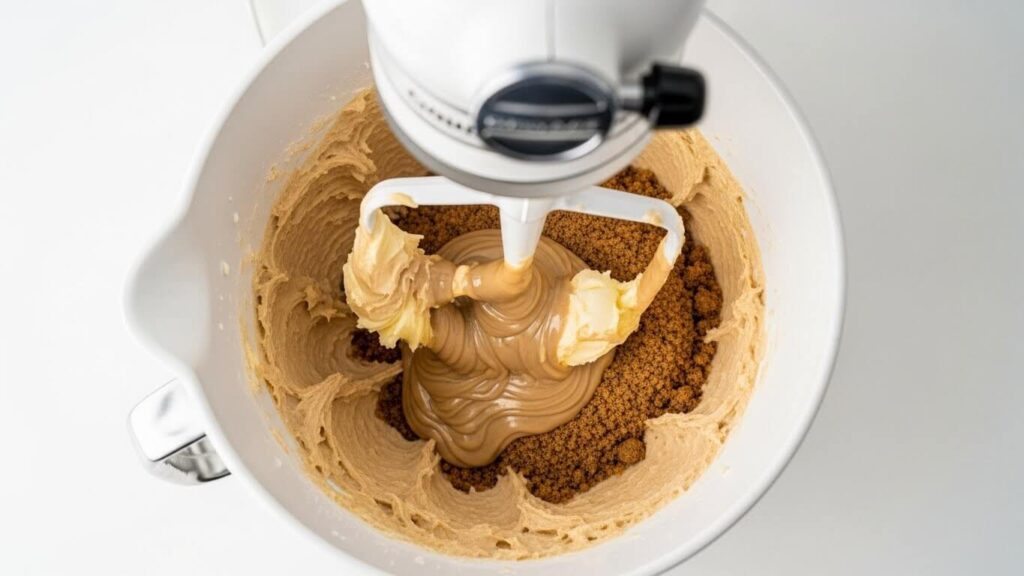
- Incorporate Egg and Vanilla: Beat in the room-temperature egg until just combined, then mix in the vanilla extract.
- Add Dry Mix: Reduce the mixer speed to low. Gradually add the dry ingredient mixture, mixing only until just combined. Ensure not to overmix or your cookies will be tough.
- Fold in Chocolate: Gently fold in the chocolate chips with a spatula.
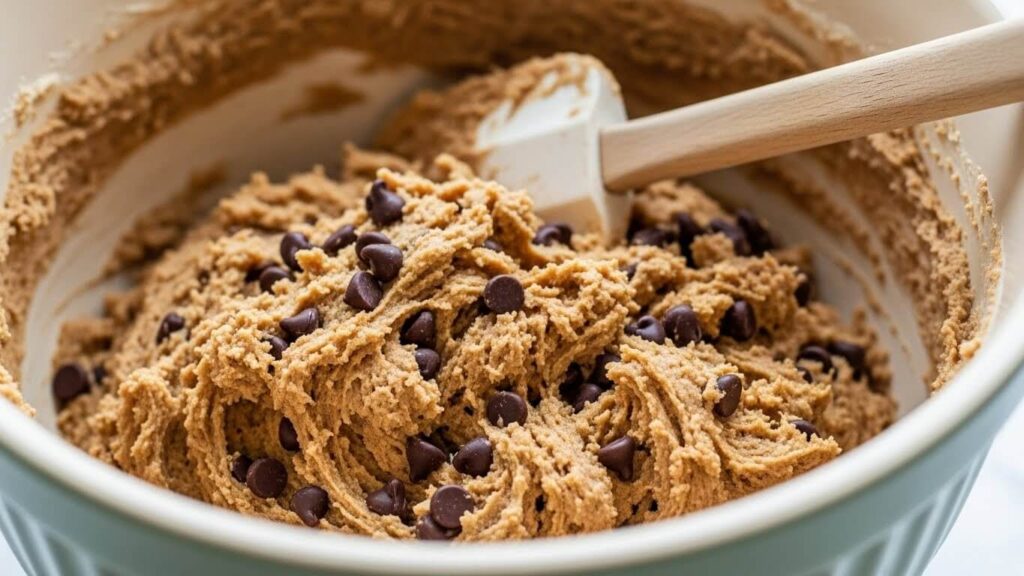
- Scoop the Dough: Use a 2-tablespoon cookie scoop to portion the dough onto the prepared baking sheets, leaving about 2 inches between each ball.
- The Optional Chill: While you can bake immediately, chilling the dough for 30 minutes (or even better> 2 hours) will deepen the flavor and lead to a chewier cookie.
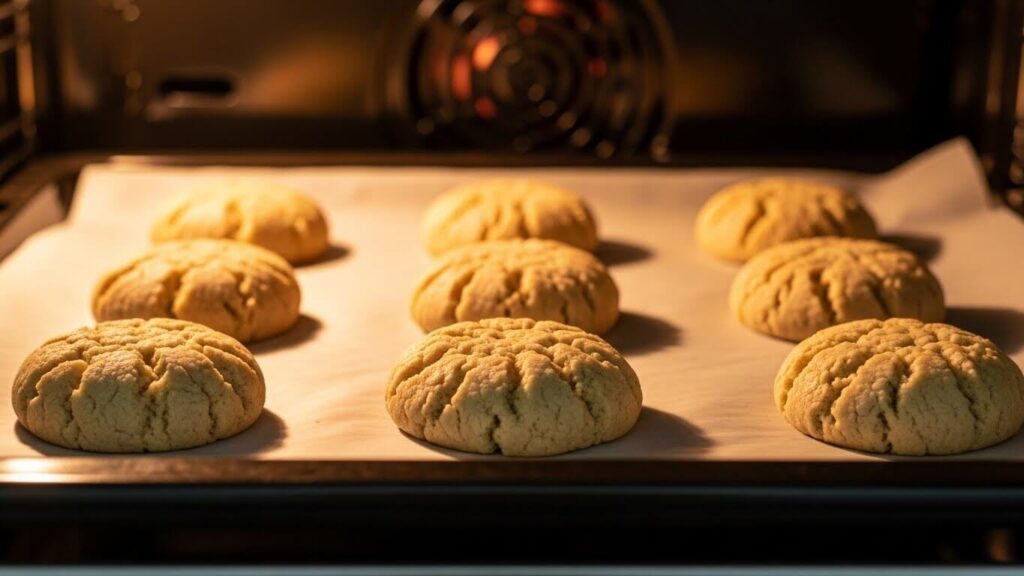
- Bake: Bake for 10 to 12 minutes, rotating the sheets halfway through. The edges should be set and golden, but the centers should still look slightly soft and underdone.
- Cool: Let the cookies cool on the baking sheet for 5 minutes before transferring them to a wire rack to cool completely. This is critical for setting the final chewiness.
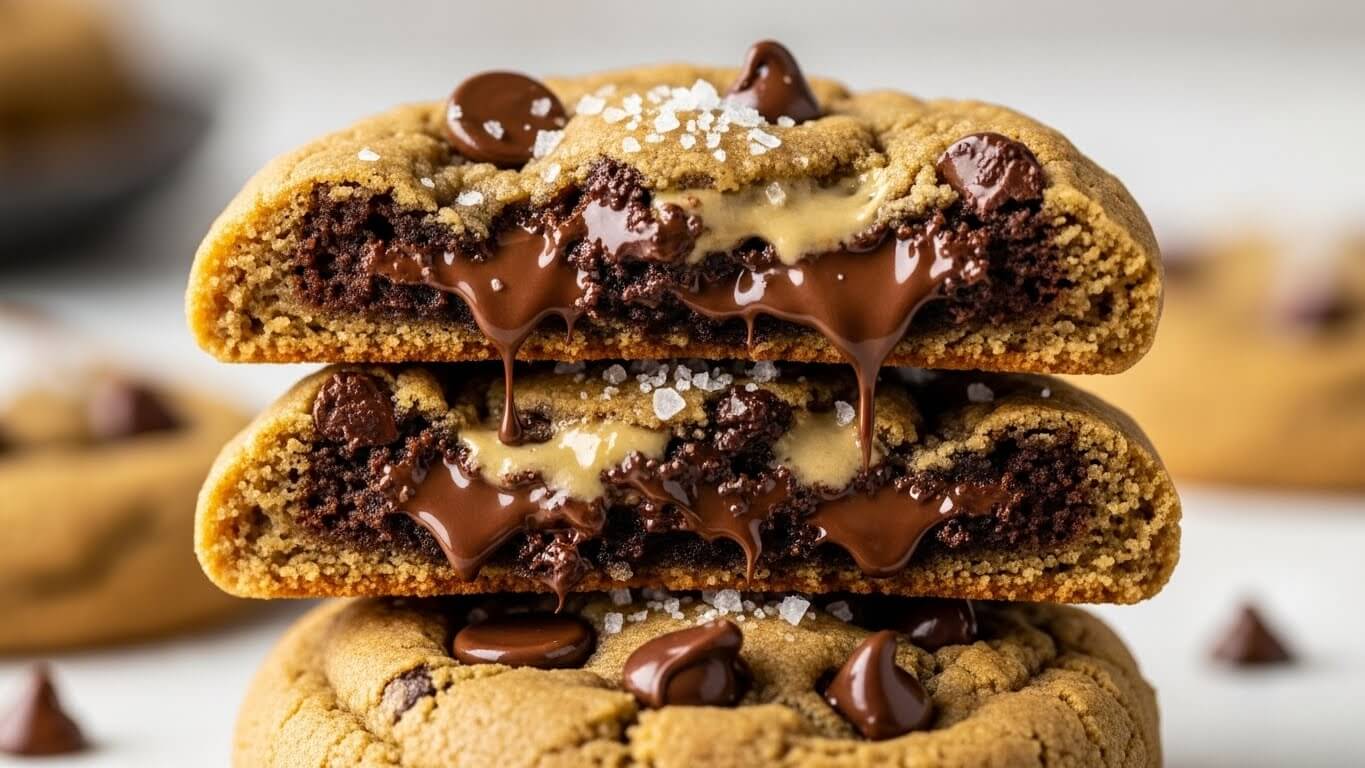
- Garnish (Optional): Sprinkle with a tiny pinch of flaky sea salt while still warm. Enjoy!
Expert Chocolate Chip Tips (Science Behind Tahini Cookies Recipe)
To truly master this recipe, understanding why tahini works is key.
Why Tahini Makes Cookies Chewy
Tahini is almost 50% fat, similar to butter. However, tahini’s fat is mostly unsaturated sesame oil, unlike solid butter, which is primarily saturated fat. This oil has a lower melting point and a different structure. And when it’s baked, the sesame oil contributes to the cookie’s final texture by:
- Coating the gluten: It prevents the formation of too strong gluten, resulting in a tender crumb.
- Moisture Retention: The oil holds onto moisture more effectively than butter, leading to that signature chewy and bendy texture that persists even after cooling.
Why the Tahini Dough Gets Sticky
Many bakers find tahini cookie dough stickier than traditional dough. This is due to the combination of the high oil content (tahini) and brown sugar (molasses). The simple fix:
- Use the Right Tahini: The primary culprit is often overly thick tahini, which contains less free-flowing oil.
- The Best Fix: Chill It! Chilling the dough solidifies the fats (both butter and sesame oil), making the dough far easier to scoop and handle.
Runny vs Thick Tahini Cookies
The quality of your tahini drastically impacts the final cookie.
- Runny (Recommended): Good-quality Middle Eastern tahini (like those from Lebanon or Egypt) is often looser and creamier. This integrates smoothly into the dough and contributes to a beautiful spread.
- Thick/Pastes (Avoid): Thick, pasty tahini can lead to a drier and more crumbly cookie texture and a dough that cracks. So, always stir your jar thoroughly before measuring.
Why Chilling Tahini Dough Matters
Chilling is not just about making the dough less sticky; it’s about flavor and structure.
- Flavor: A 24-hour chill allows the flour to hydrate fully and the flavors (tahini, vanilla and molasses) to meld. This results in a richer and deeper taste.
- Structure: Cold dough spreads more slowly in the oven, leading to thicker and chewier cookies.
If you love this sesame flavor, you must try our guide on Bulgur Wheat 101: How to Choose the Right One for Tabbouleh, which features another key Mediterranean ingredient!
Easy Chocolate Chip Tahini Cookies Recipe
Ingredients
Equipment
Method
- Preheat your oven to 350°F / 175°C. Then line two large baking sheets with parchment paper.
- In a medium bowl, whisk together the flour, baking soda and salt. Then set aside.
- In the bowl of a stand mixer fitted with the paddle attachment (or a large bowl with a hand mixer), beat the softened butter, brown sugar and granulated sugar on medium speed until light and fluffy (about 3 minutes).
- Scrape down the sides of the bowl and add the tahini and mix on medium-low until just combined.
- Beat in the room-temperature egg until just combined, then mix in the vanilla extract.
- Reduce the mixer speed to low. Gradually add the dry ingredient mixture, mixing only until just combined. Ensure not to overmix or your cookies will be tough.
- Gently fold in the chocolate chips with a spatula.
- Use a 2-tablespoon cookie scoop to portion the dough onto the prepared baking sheets, leaving about 2 inches between each ball.
- While you can bake immediately, chilling the dough for 30 minutes (or even better> 2 hours) will deepen the flavor and lead to a chewier cookie.
- Bake for 10 to 12 minutes, rotating the sheets halfway through. The edges should be set and golden, but the centers should still look slightly soft and underdone.
- Let the cookies cool on the baking sheet for 5 minutes before transferring them to a wire rack to cool completely. This is critical for setting the final chewiness.
- Sprinkle with a tiny pinch of flaky sea salt while still warm. Enjoy!
Notes
Tahini Chocolate Chip Cookie Variations & Substitutions
This recipe is incredibly flexible, allowing you to easily adapt it to dietary needs or flavor cravings.
Tahini Cookies Recipe Dietary Swaps
- Vegan Tahini Cookies: Substitute the butter with 1/2 cup (113g) of vegan butter sticks or refined coconut oil. You can replace the egg with 1 flax egg (1 tbsp ground flaxseed mixed with 3 tbsp water and rested for 5 minutes).
- Gluten-Free Tahini Cookies: Use a 1-to-1 gluten-free baking flour blend (e.g Bob’s Red Mill or King Arthur). And follow all other instructions exactly.
- Low Carb/Keto: Substitute the brown and granulated sugar with a blend of granulated and brown erythritol or monk fruit sweetener (use a 1:1 ratio). Note: Texture will be slightly less chewy.
Tahini Chocolate Cookie Flavor Upgrades
- Pistachio & Orange Zest: Omit the chocolate chips and add 1/4 cup finely chopped pistachios and the zest of one orange to the dough. This creates a classic and aromatic Mediterranean flavor profile.
- Middle Eastern Halva Version: Omit the chocolate chips and fold in 1/2 cup crumbled halva (sesame candy) right before scooping.
- Tahini Sesame Cookies: Omit the chocolate chips, then roll the cookie dough balls in sesame seeds before baking for an extra nutty crust.
For another rich and nutty Mediterranean sweet, check out our Baklava Recipe.
Troubleshooting Tahini Cookies Recipe
| Problem | Cause | Quick Fix |
| Dough is Too Sticky | Tahini is too loose/runny; not enough chilling time. | Add 1-2 tbsp of flour and chill for a minimum of 2 hours. |
| Cookies Not Spreading | Too much flour, or the oven is too hot. | If the dough is cold, allow it to sit at room temperature for 15 minutes before baking. Slightly flatten the dough balls with the palm of your hand before baking. |
| Burning Edges | Dark, older cookie sheets; oven runs hot. | Bake on light-colored sheets; lower the temperature by 25°F (15°C) |
| Crumbly Texture | Over-mixing the dough, or not enough moisture (using old/dry tahini). | Ensure you stop mixing the moment the flour disappears. Next time, don’t forget to add 1 tsp of milk to the dough. |
| Bitterness from Tahini | Using a low-quality tahini made from unhulled sesame seeds. | Always use high-quality tahini made from hulled and roasted sesame seeds. If too late, a sprinkle of flaky sea salt on the baked cookies can help cut the bitterness. |
Tahini Cookie Storage & Freezing
Tahini cookies are excellent for make-ahead baking and storage.
- Room Temperature (Baked): Store baked cookies in an airtight container at room temperature for up to 5 days. The chewiness actually improves on the second day!
- Fridge (Baked): Not recommended, as the cold can dry them out faster.
- Freezer (Baked): Freeze cooled cookies in a single layer, then transfer to a freezer bag or container. They will keep for up to 3 months. Thaw at room temperature.
- Freezer (Dough): Scoop the dough balls onto a parchment-lined sheet and freeze until solid (about 1 hour). Transfer the frozen balls to a freezer-safe bag.
- Bake-from-Frozen Instructions: Place frozen dough balls on a baking sheet. Add 2–4 minutes to the normal baking time (12-16 minutes total) and enjoy fresh-baked cookies!
These make a great quick snack alongside our Hummus Recipe – another tahini favorite!
FAQs
Q: What tahini type is best for baking?
A: The best tahini for baking is a runny, high-quality and Middle Eastern-style paste made from hulled sesame seeds. Brands like Soom, Seed + Mill or Al Arz are excellent. Avoid very thick and dense tahinis, which can make the cookies dry.
Q: Can tahini replace peanut butter in a recipe?
A: Yes, tahini can absolutely replace peanut butter! As, they have similar fat and protein content, making them excellent substitutes. Tahini will provide a nutty and slightly more savory and sophisticated sesame flavor, making the final cookie less sweet than a peanut butter version.
Q: Why is my tahini cookie dough sticky?
A: Sticky dough is common due to the high oil content of tahini and the liquid from the brown sugar molasses. To fix this, simply add a tablespoon of flour and more importantly, chill the dough for at least 30 minutes (up to 24 hours).
Q: Can I use maple syrup instead of sugar?
A: You can substitute up to 1/2 of the granulated sugar with maple syrup. However, baking with liquid sweeteners changes the wet-to-dry ratio. For every 1/2 cup of maple syrup added, reduce the flour by 2 tablespoons. And your cookies will spread more and may be slightly less chewy.
Q: Can I make these cookies vegan?
A: Yes, for that simply swap the 1/2 cup of butter for a good quality vegan butter substitute and replace the one egg with one flax egg (1 tbsp ground flaxseed + 3 tbsp water).
Q: What does tahini do in cookies?
A: Tahini serves three main purposes in a cookie: it replaces some of the fat (butter), lending a rich, nutty and sesame flavor; the sesame oil prevents excessive gluten development, guaranteeing a tender crumb; and its high fat content helps retain moisture, making the cookies intensely chewy.
Q: Are tahini cookies a Mediterranean dessert?
A: Yes, Tahini (sesame paste) is a core ingredient in many Middle Eastern, North African and Eastern Mediterranean desserts, such as halva, tahini bread and various shortbreads. And these cookies are a modern take on those traditional flavors.