
There is nothing quite like the aroma of fresh bread baking in the kitchen, especially when it carries the rich, savory notes of extra-virgin olive oil, garlic, and earth-born garden herbs. If you have been searching for a foolproof, bakery-quality bake to add to your culinary repertoire, this Zucchini and Herb Focaccia Bread Recipe is your ultimate destination.
Focaccia is celebrated worldwide for its signature golden, crisp-edged crust and its incredibly pillowy, soft center. This specific variation elevates the classic Italian flatbread into a stunning, Mediterranean-diet-friendly masterpiece. Best of all? It is an entirely no-knead zucchini focaccia. If you have ever been intimidated by bread making, you can set those fears aside.
One common complaint when baking with summer squash is that it releases too much water, leading to a gummy, unappealing texture. Don’t worry—this recipe features our definitive zucchini focaccia soggy fix to ensure your bread stays airy, light, and perfectly crisp every single time.
Why You’ll Love This Recipe
- Effortless No-Knead Method: Forget spending twenty minutes working dough on a floured surface. This recipe utilizes a slow, cold fermentation technique that lets time do all the heavy lifting for you.
- Make-Ahead Convenience: You can mix the dough up to 24 hours in advance, allowing it to develop complex, sourdough-like flavors while you sleep.
- Celebration of Garden Abundance: This garden herb focaccia is the absolute best way to utilize an overabundance of summer zucchini, fresh rosemary, and thyme from your garden or local farmer’s market.
- Mindfully Mediterranean: By focusing on heart-healthy fats like extra-virgin olive oil and substituting heavy cheeses for light, tangy feta, this bread fits beautifully into a balanced Mediterranean lifestyle.
- Unbeatable Crowd-Pleaser: Whether sliced down the middle for gourmet sandwiches or served alongside dips at a dinner party, its bubbly, cheese-crusted visual appeal makes it an instant showstopper.
Ingredient Notes
To achieve the beautiful, bubbly texture shown in our recipe photos, choosing the right ingredients is paramount. Here is what you need to know before hitting the grocery store:
The Dough Base
- Bread Flour: While all-purpose flour works in a pinch, bread flour has a higher protein content. This creates the strong gluten network necessary to trap those magnificent, signature air bubbles. For a rustic, high-fiber twist that aligns perfectly with a Mediterranean focaccia, you can easily swap out $\frac{1}{2}$ cup of bread flour for whole wheat flour.
- Instant Yeast: This ensures a reliable, steady rise. If using active dry yeast instead, make sure to let it sit in the warm water a few minutes longer until it becomes completely frothy.
- Honey: Just a teaspoon feeds the yeast and aids in creating that gorgeous, deeply caramelized exterior crust.
- Extra-Virgin Olive Oil (EVOO): Do not skimp here! Olive oil is not just a cooking medium for focaccia; it is a primary flavor component. Use a high-quality, cold-pressed oil for the best taste.
The Vibrant Toppings
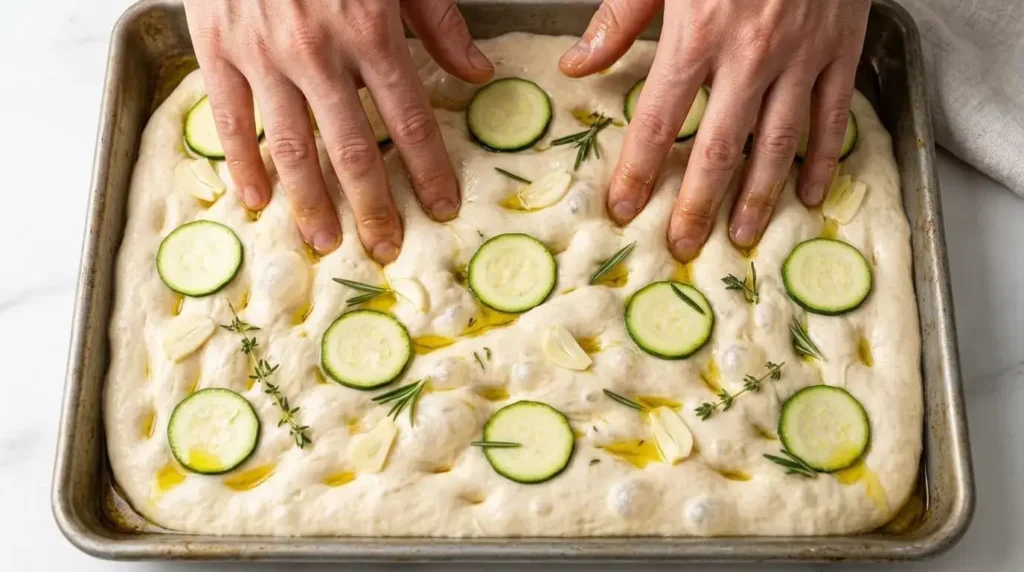
- Zucchini: Choose a medium, firm zucchini. The secret to perfection lies in slicing it thinly and salting it beforehand to draw out excess moisture.
- Fresh vs. Dried Herbs: Fresh rosemary and thyme are essential here. Dried herbs tend to burn under the high heat of the oven, whereas fresh herbs crisp up beautifully into the surface of the dough.
- Crumbled Feta Cheese: Swapping traditional mozzarella for crumbled feta provides a sharp, salty tang that cuts through the richness of the olive oil, elevating the entire flavor profile.
- Cherry Tomatoes: Halved and pressed into the dough, they burst during baking, adding sweet, acidic pockets of flavor.
Step-by-Step Instructions
[Mixing the Dough] -> [Cold Fermentation] -> [Pan Proofing & Dimpling] -> [Baking]
1. Bloom the Yeast
In a large mixing bowl, whisk together the instant yeast, honey, and $1\,\frac{3}{4}$ cups of warm water (ideally around $105^\circ\text{F}$ to $110^\circ\text{F}$ / $40^\circ\text{C}$ to $43^\circ\text{C}$). Let the mixture sit undisturbed for approximately 5 minutes until a light, foamy layer forms on the surface, indicating the yeast is active and alive.
2. Mix into a Shaggy Dough
Add the bread flour (and whole wheat flour, if using) along with the fine sea salt and 2 tablespoons of extra-virgin olive oil into the bowled yeast mixture. Using a sturdy wooden spoon or a silicone spatula, stir the ingredients together until a wet, shaggy, and distinctly sticky dough forms. There is absolutely no need to knead; just ensure no dry pockets of flour remain.
3. The Cold Fermentation (The Flavor Secret)
Drizzle a small amount of olive oil over the top of the dough, cover the bowl tightly with plastic wrap or a damp kitchen towel, and place it directly into the refrigerator for 8 to 24 hours.
Pro-Tip: This extended cold ferment is the ultimate secret that top-tier bakers lean on. It slows down the yeast, giving it time to break down starches into complex sugars, resulting in a profoundly flavorful dough with an incredible open crumb structure.
4. Transfer, Stretch, and Dimple
After its long rest, remove the dough from the fridge; it should be dotted with small bubbles. Generously grease a $9\times13\text{-inch}$ metal baking pan with 2 tablespoons of olive oil. Gently transfer the cold dough into the pan. Using your oiled hands, gently stretch the dough toward the edges of the pan. Don’t worry if it shrinks back slightly at this stage.
5. The Second Rise
Leave the dough uncovered in a warm, draft-free spot in your kitchen to rise for 45 to 60 minutes. During this time, the dough will warm up to room temperature, puff up significantly, and naturally fill out the corners of the baking pan.
6. Infuse and Top the Dough
Preheat your oven to $450^\circ\text{F}$ ($230^\circ\text{C}$). In a small bowl, mix the remaining 2 tablespoons of olive oil with two minced cloves of garlic to create a quick infused oil. Pour this aromatic oil evenly across the puffed dough. Press your fingers firmly down into the dough until you touch the bottom of the pan, creating deep dimples all over the surface. Press your prepared, dry zucchini slices and halved cherry tomatoes directly into these dimples, then scatter the chopped rosemary, thyme, and crumbled feta across the top.
The Zucchini Soggy Fix: Slice your zucchini thinly, sprinkle the slices generously with salt, and let them sit in a colander for 15 minutes. Right before adding them to the dough, thoroughly pat them dry with a clean paper towel. This draws out the vegetation water that otherwise ruins the crispness of the bread!
7. Bake Until Bubbly and Golden
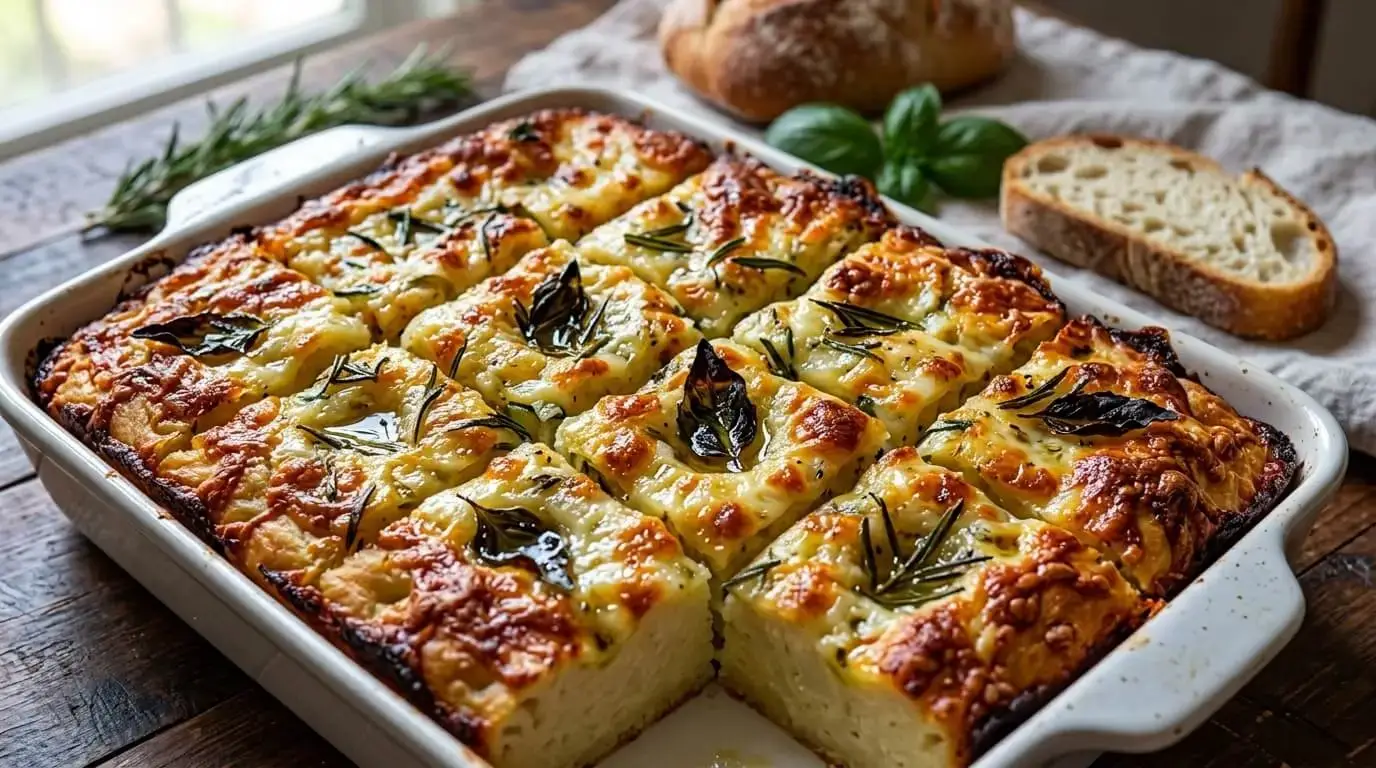
Slide the pan onto the center rack of your preheated oven. Bake for 20 to 25 minutes. Watch as the edges turn a deep golden-brown color and the feta cheese becomes beautifully caramelized and bubbly, matching the rustic style of an authentic artisan bakery.
8. Rest, Garnish, and Serve
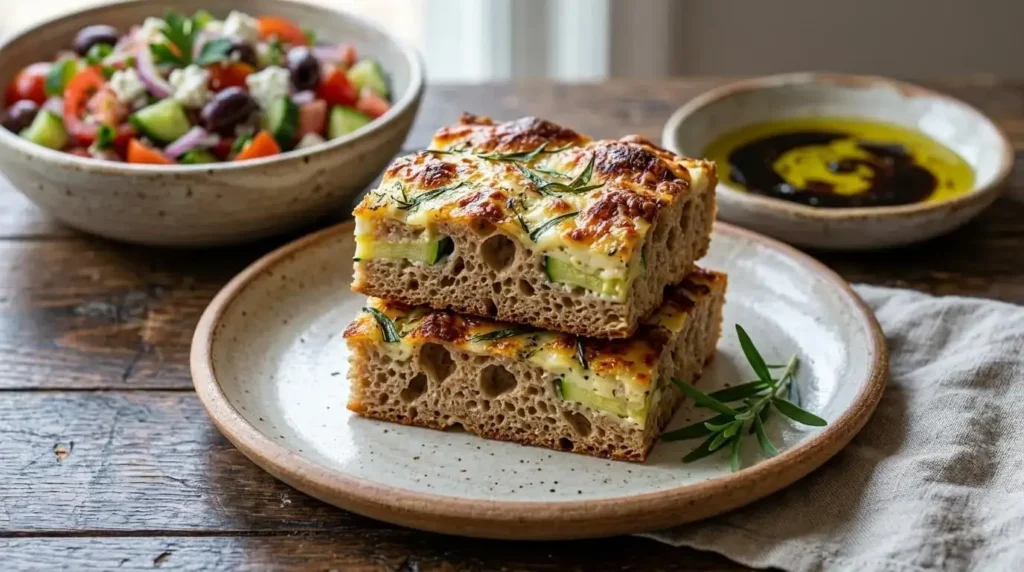
Remove the focaccia from the oven and let it rest in its pan for 10 minutes to allow the structure to set. Carefully transfer the bread onto a wire cooling rack, garnish generously with fresh basil leaves, slice into clean squares, and enjoy warm.
Expert Tips for the Best Focaccia
- Embrace the Olive Oil: Focaccia requires a generous hand with oil. It is what fries the bottom of the dough against the metal pan, creating that irreplaceable, crunchy, golden under-crust.
- Use a Metal Pan if Possible: Dark metal or cast-iron pans conduct heat far more efficiently than glass or ceramic dishes, yielding a noticeably crisper bottom crust.
- Don’t Be Afraid to Dimple Deeply: When dimpling the dough, press all the way down until your fingers hit the metal pan. This prevents the dough from rising up like a standard loaf of bread and keeps your toppings securely nestled in place.
- How to Check for Doneness: The top should be deeply golden, but you can also gently lift an edge with a spatula; the bottom should be solid, crisp, and a beautiful uniform brown.
Zucchini and Herb Focaccia Bread Recipe
Ingredients
Method
- Whisk the instant yeast, honey, and warm water together in a large mixing bowl; let it sit for 5 minutes until frothy.
- Add the flour, fine sea salt, and 2 tablespoons of olive oil into the bowl. Mix until a shaggy, very sticky dough forms. Do not knead.
- Cover the bowl tightly with wrap and place it into the refrigerator for 8 to 24 hours to build magnificent flavor.
- Coat a $9times13text{-inch}$ metal baking pan with 2 tablespoons of olive oil. Transfer the cold dough into the pan and gently stretch it out toward the corners.
- Let the dough rise uncovered at room temperature for 45 to 60 minutes until puffed and bubbly.
- Meanwhile, slice your zucchini, sprinkle with salt, and let sit for 15 minutes. Pat completely dry with a paper towel to eliminate water. Mix 2 tablespoons of olive oil with the minced garlic.
- Preheat oven to $450^circtext{F}$ ($230^circtext{C}$). Pour the garlic-infused oil over the dough. Press your fingers straight down to create deep dimples. Press the zucchini slices and tomatoes into the dimples, then scatter the rosemary, thyme, and crumbled feta.
- Bake for 20 to 25 minutes until the top is deeply golden-brown and bubbly. Let rest for 10 minutes, remove from the pan, garnish with fresh basil, slice, and serve warm.
Notes
- Storage: Store wrapped tightly at room temperature for 2 days or refrigerate for up to 5 days.
- Reheating: Reheat slices at $350^circtext{F}$ ($175^circtext{C}$) in an oven for 5 to 8 minutes to restore the perfect crisp texture. Do not microwave.
- No Wine or Pork: This recipe is entirely vegetarian, free from pork products, and contains no alcohol.
FAQ Section
How do I keep zucchini focaccia from getting soggy?
The ultimate fix is to salt your zucchini slices 15 minutes before baking. Salt draws out the excess moisture via osmosis. Rinsing or patting them completely dry with paper towels ensures you are adding the rich flavor of the vegetable without any of the water content.
Can I use grated zucchini instead of sliced?
While you can use grated zucchini, sliced zucchini is highly recommended for this recipe. Grated zucchini holds onto significantly more water and can easily get lost in the dough, whereas thin slices crisp up beautifully on top of the bread, giving you an exact match to the gorgeous texture seen in professional baking.
What’s the difference between zucchini bread and zucchini focaccia?
Zucchini bread is a sweet, cake-like quick bread made with baking powder or baking soda, sugar, spices, and grated zucchini. Zucchini focaccia, on the other hand, is a savory, yeast-risen Italian flatbread focusing on olive oil, herbs, and garlic.
Can I make the dough ahead of time?
Yes! In fact, it is encouraged. You can let the dough undergo its cold fermentation process in the refrigerator for up to 24 hours. This maximizes the depth of flavor and improves the texture of the finished bread.
Can I freeze zucchini focaccia?
Absolutely. Once the baked focaccia has cooled completely to room temperature, slice it into squares, wrap each piece tightly in plastic wrap, and store them in a freezer-safe bag for up to 3 months.
What herbs work best besides rosemary and thyme?
While rosemary and thyme are the classic inclusions for a garden herb focaccia, you can easily experiment with fresh oregano, marjoram, or savory. Harder herbs hold up best during the bake, while delicate herbs like basil or parsley should always be saved for a fresh garnish after the bread leaves the oven.
Storage & Reheating
- To Store: Keep any leftover focaccia at room temperature wrapped tightly in foil or stored in an airtight container for up to 2 days. For longer storage, keep it in the refrigerator for up to 5 days.
- To Reheat: Avoid using the microwave, as it will make the bread rubbery and soft. Instead, revive those signature crisp edges by placing the slices on a baking sheet and warming them in a $350^\circ\text{F}$ ($175^\circ\text{C}$) oven or toaster oven for 5 to 8 minutes until heated through.
Serving Suggestions
This versatile bread shines alongside a variety of traditional Mediterranean dishes. For an incredible appetizer spread, try serving it warm alongside our rich warm olive-topped hummus for effortless dipping.
If you are looking to assemble a light, wholesome lunch, pair a thick square of this focaccia with a crisp, refreshing Greek Chopped Feta Salad recipe. Alternatively, during the cooler autumn or winter months, it makes the absolute perfect vessel for scooping up the last drops of a comforting bowl of Marry Me Mushroom Soup.
Join the Conversation!
Did you try this Zucchini and Herb Focaccia Bread Recipe at home? We would love to hear how your dough turned out! Did you opt for the whole wheat flour swap, or stick to the classic bread flour? Leave us a comment down below, rate the recipe, and don’t forget to tag us in your beautiful baking photos on social media!