
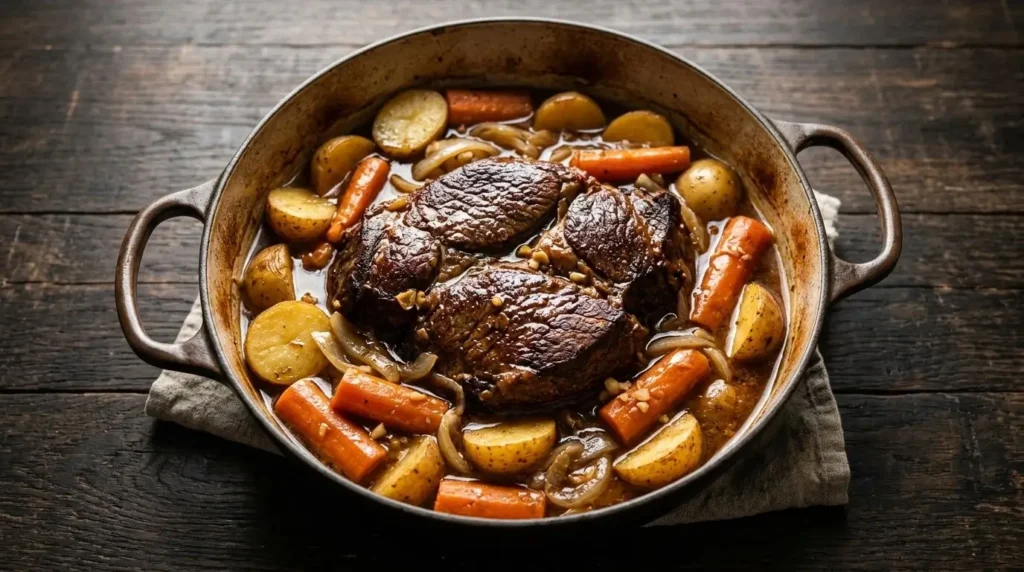
There is something special about a classic pot roast slowly cooking in the oven, filling the kitchen with the comforting aroma of garlic, herbs, and savory beef. This Classic Pot Roast with Potatoes and Carrots features a beautifully browned beef chuck roast surrounded by tender baby potatoes, sweet carrots, and onions in a rich, flavorful homemade gravy.
The secret to a delicious pot roast is giving the beef enough time to braise gently until it becomes fork-tender. Beef broth, tomato paste, Worcestershire sauce, rosemary, and thyme create a deeply savory cooking liquid that becomes even more flavorful as everything cooks together.
This recipe uses extra virgin olive oil and simple Mediterranean-inspired herbs while keeping the familiar flavors of traditional American pot roast. You can prepare it in a Dutch oven or use a separate slow cooker method when you want a more hands-off dinner. It is a wonderful choice for Sunday dinners, family gatherings, or any evening when you want a satisfying one-pot meal.
Why You’ll Love This Classic Pot Roast
- Tender, flavorful beef: Beef chuck roast becomes wonderfully tender through slow, gentle braising.
- Complete one-pot dinner: Potatoes, carrots, and onions cook alongside the beef, absorbing the savory broth.
- Rich homemade gravy: Tomato paste, Worcestershire sauce, and browned beef drippings create a flavorful sauce.
- Simple ingredients: Everything comes from familiar grocery-store ingredients and basic pantry staples.
- Two cooking methods: Choose the traditional Dutch oven method or prepare it in a slow cooker.
Ingredients You’ll Need
This recipe uses straightforward ingredients to create a comforting beef dinner without complicated preparation.
Beef and Vegetables
- 3 to 4 lb beef chuck roast: Chuck roast is ideal for pot roast because its connective tissue gradually softens during slow cooking, producing tender, flavorful beef.
- 1 lb baby potatoes, halved: Baby potatoes hold their shape well during braising and absorb the savory cooking liquid. Choose similarly sized potatoes for even cooking.
- 4 carrots, cut into large pieces: Large carrot pieces retain more texture during the long cooking process and develop a naturally sweet flavor.
- 1 large yellow onion, sliced: Onion adds sweetness and savory depth to the braising liquid.
- 4 cloves garlic, minced: Garlic provides a warm, aromatic foundation that complements the beef and herbs.
Braising Liquid and Flavor
- 2 cups beef broth: This provides the liquid needed to gently braise the roast and creates the foundation for the gravy.
- 1/2 cup additional beef broth: Used instead of red wine, it keeps the cooking liquid savory while providing enough moisture for braising.
- 2 tablespoons tomato paste: Tomato paste adds concentrated savory flavor and gives the gravy a deeper color.
- 2 tablespoons olive oil: Helps brown the chuck roast and adds a subtle Mediterranean touch.
- 2 tablespoons flour: Helps thicken the cooking liquid into a richer gravy.
- 1 tablespoon Worcestershire sauce: Adds savory depth and balances the natural sweetness of the vegetables.
- 1 teaspoon dried thyme: Brings a gentle earthy, herbal flavor.
- 1 teaspoon dried rosemary: Adds a fragrant herbal note that pairs particularly well with beef.
- 1 teaspoon salt: Enhances the overall flavor.
- 1/2 teaspoon black pepper: Adds mild warmth and seasoning.
Why use beef chuck roast?
Chuck roast comes from a hardworking section of the cow, which means it contains connective tissue and marbling. These characteristics make it particularly suitable for slow cooking. As the roast braises, the connective tissue gradually breaks down, creating the tender texture associated with traditional pot roast.
Why use baby potatoes and large carrots?
Baby potatoes are convenient because they require little preparation and work beautifully in a Dutch oven. Halving them allows the centers to cook while the outsides absorb the flavorful broth.
Carrots should be cut into substantial pieces rather than thin slices. Smaller pieces can become overly soft during a long braise, while larger pieces are more likely to retain their shape.
Why is tomato paste important?
Tomato paste contributes concentrated savory flavor without turning the dish into a tomato-based stew. Combined with beef broth, Worcestershire sauce, and browned onions, it helps create a rich, well-rounded gravy.
How to Make Classic Pot Roast with Potatoes and Carrots
The Dutch oven method is ideal when you want the roast and vegetables to cook together in one heavy, oven-safe pot.
Step 1 – Prepare the Beef
Preheat your oven to 325°F (165°C).
Remove the beef chuck roast from its packaging and pat it thoroughly dry with paper towels.
Season all sides with the salt and black pepper.
Drying the beef is important because excess surface moisture prevents proper browning. A dry surface allows the meat to develop a flavorful crust when it touches the hot olive oil.
Step 2 – Sear the Chuck Roast
Place a large Dutch oven over medium-high heat and add the olive oil.
Once the oil is hot, carefully place the seasoned chuck roast into the pot.
Sear the beef on all sides for approximately 4–5 minutes per side, turning as needed until a deep brown crust develops.
Do not rush this step. Browning creates flavorful caramelized bits that will later become part of the homemade gravy.
Remove the browned roast and place it on a plate temporarily.
Step 3 – Cook the Onion and Garlic
Using the same Dutch oven, add the sliced yellow onion and minced garlic.
Cook for approximately 3 minutes, stirring occasionally until the onion begins to soften and the garlic becomes fragrant.
Stir in the tomato paste and flour.
Cook briefly while stirring so the tomato paste coats the onions and the flour is evenly distributed.
This mixture provides the foundation for a thicker, more flavorful braising liquid.
Step 4 – Prepare the Braising Liquid
Slowly pour in the beef broth and the additional 1/2 cup of broth.
Add the Worcestershire sauce and stir everything together.
Bring the mixture to a gentle simmer.
Use a wooden spoon to scrape the bottom of the Dutch oven, loosening the browned bits left behind from searing the beef.
These browned bits contain concentrated flavor and help give the gravy its rich, savory character.
Step 5 – Add Beef and Vegetables
Carefully return the browned chuck roast to the Dutch oven.
Arrange the halved baby potatoes and large carrot pieces around the roast.
Add the dried thyme and rosemary to the cooking liquid.
Position the vegetables around the beef rather than placing them all underneath it. This helps distribute them through the braising liquid and creates the rustic presentation of a traditional pot roast.
The vegetables should be partially surrounded by the liquid, while the roast remains partly above it.
Step 6 – Braise in the Oven
Cover the Dutch oven tightly with its lid.
Transfer it to the preheated 325°F oven.
Cook for approximately 3 to 3.5 hours.
The exact cooking time depends on the roast’s weight, thickness, and shape. A thicker roast may require additional time.
Begin checking tenderness toward the end of the estimated cooking period. Insert a fork into the beef. It should slide in easily, and the meat should pull apart without much resistance.
If the roast still feels firm, cover the pot and continue cooking, checking periodically.
The most important sign of doneness is tenderness, not simply the number of hours on the clock.
Step 7 – Rest and Serve
Carefully remove the Dutch oven from the oven.
Transfer the roast to a cutting board or serving platter and let it rest for approximately 10 minutes.
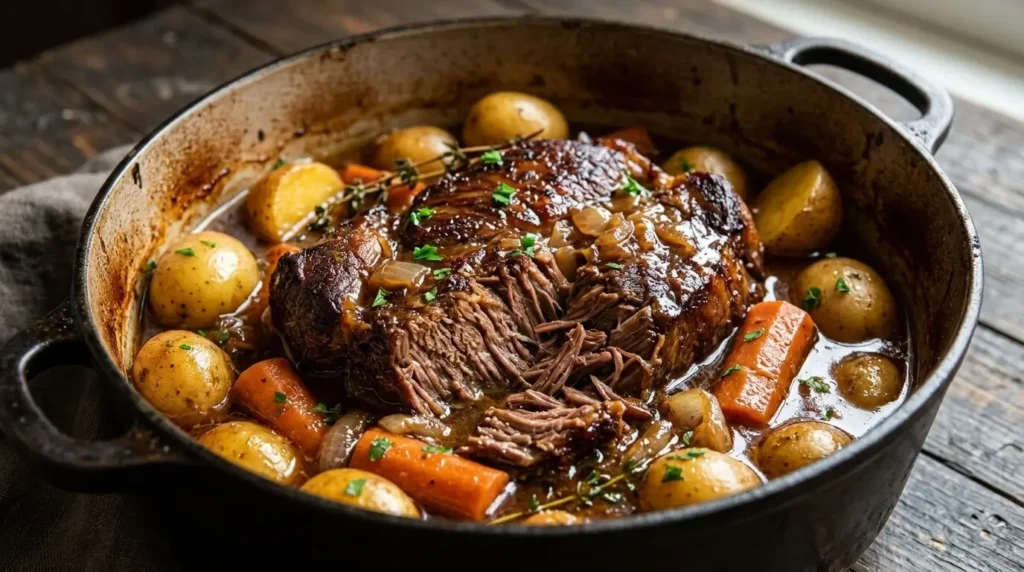
Slice the beef against the grain or gently separate it into large chunks if it is tender enough to fall apart.
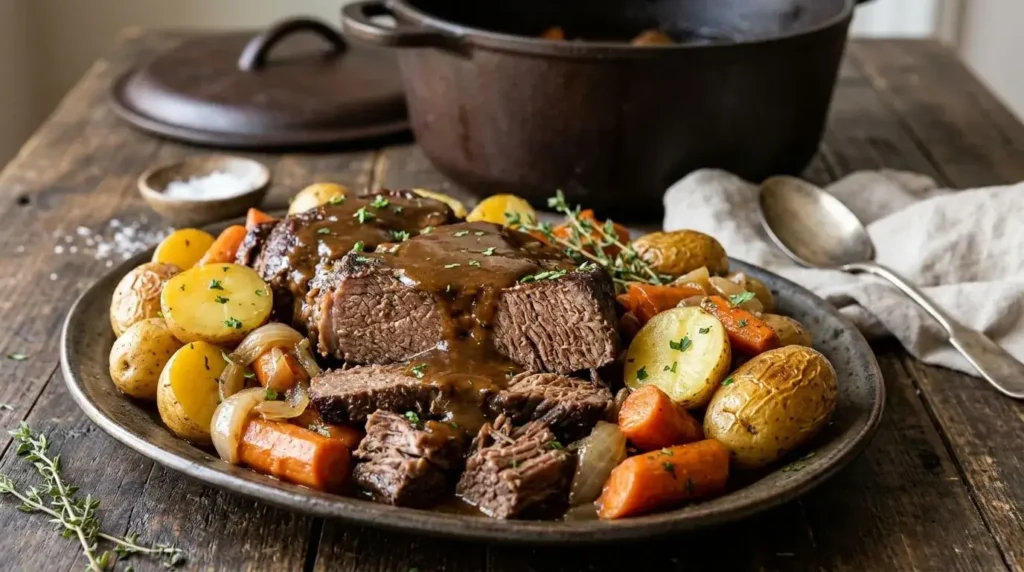
Arrange the potatoes and carrots around the beef.
Spoon the rich onion-infused pan juices over the meat and vegetables before serving.
For a fresh finishing touch, you can optionally garnish with chopped fresh parsley.
How to Make Pot Roast in a Slow Cooker
You can also prepare this Classic Pot Roast with Potatoes and Carrots using a slow cooker.
The slow cooker method requires a separate cooking schedule because it uses a lower, more gradual cooking process than the oven method.
1. Sear the beef first.
Pat the chuck roast dry, season with salt and pepper, and brown it on all sides in olive oil using a skillet or Dutch oven.
Transfer the browned roast to your slow cooker.
2. Prepare the onion mixture.
Cook the sliced onion and minced garlic in the same skillet for approximately 3 minutes.
Stir in the tomato paste and flour, then gradually add the beef broth and additional broth. Add the Worcestershire sauce and scrape up the browned bits.
3. Arrange the ingredients.
Transfer the onion and broth mixture into the slow cooker.
Add the halved baby potatoes and large carrot pieces around the beef.
Sprinkle the dried thyme and rosemary over the ingredients.
4. Cook until tender.
Cover and cook on LOW or HIGH according to your appliance’s instructions and the size of the roast.
As general starting estimates for a 3–4 lb chuck roast, allow approximately 8–10 hours on LOW or 4–6 hours on HIGH. These are estimates rather than tested timings for this specific recipe, and actual cooking time varies by appliance and roast thickness.
Check that the beef is fork-tender before serving. If it remains firm, continue cooking.
5. Rest and serve.
Remove the beef and allow it to rest for approximately 10 minutes before slicing or breaking it into chunks.
Serve with the cooked potatoes, carrots, and plenty of the savory cooking liquid.
For either cooking method, cutting the vegetables into large pieces helps them hold their shape during the extended cooking time.
Tips for Making the Best Pot Roast
A few simple techniques make a noticeable difference in the final texture and flavor.
- Choose a well-marbled chuck roast: The fat and connective tissue contribute to tender, flavorful beef.
- Pat the beef dry: Removing surface moisture helps develop a deep brown crust.
- Do not skip searing: Browning creates the flavorful foundation for the braising liquid.
- Use a heavy Dutch oven: A sturdy oven-safe pot with a tight-fitting lid helps distribute heat evenly.
- Keep the pot covered: The lid retains moisture and prevents the braising liquid from evaporating too quickly.
- Cut vegetables generously: Large carrot pieces and halved baby potatoes are better suited to extended cooking.
- Check tenderness: If the beef is still tough, it usually needs more cooking time rather than a higher temperature.
- Let the beef rest: A short resting period makes the roast easier to slice or pull apart.
- Use broth instead of wine: Additional beef broth works perfectly in this recipe and keeps the flavor rich and savory.
Common Pot Roast Mistakes to Avoid
1. Not searing the beef
Adding an unbrowned roast directly to the braising liquid misses an important opportunity to develop flavor. Always brown the beef on all sides before braising.
2. Cooking at excessively high temperatures
High temperatures can cause the outside of the roast to cook too quickly while the connective tissue remains tough. Keep the oven at the recommended 325°F.
3. Cutting vegetables too small
Small carrot pieces and potato cubes can become mushy during extended braising. Use large pieces to help them maintain their structure.
4. Removing the roast too early
A roast can reach a safe cooking temperature and still be too firm to pull apart. Continue braising until a fork slides into the meat easily.
5. Using too much liquid
Pot roast does not need to be completely submerged. The beef releases additional juices during cooking, so use the specified broth quantities.
6. Leaving the pot uncovered
An uncovered Dutch oven allows moisture to escape, potentially drying the meat and reducing the amount of cooking liquid. Keep the lid securely in place during braising.
How to Make the Pot Roast Gravy Richer and Thicker
The cooking liquid in this recipe already contains flour, tomato paste, onion, and flavorful beef drippings. These ingredients help create a naturally rich gravy.
If you prefer a thicker sauce, you can make a few adjustments.
Use the existing pan juices.
After removing the beef and vegetables, carefully pour the remaining liquid into a saucepan or leave it in the Dutch oven.
Remove excess fat.
If a layer of fat collects on the surface, skim off the excess with a spoon. Leaving some fat helps preserve flavor, but too much can make the gravy greasy.
Simmer to concentrate the flavor.
Bring the liquid to a gentle simmer without the lid. Allow it to reduce slightly until the flavor becomes more concentrated and the consistency thickens.
Add optional additional thickening if necessary.
The recipe already contains 2 tablespoons of flour. If you want an even thicker gravy, mix a small amount of additional flour with cold water to create a smooth slurry.
Gradually whisk it into the simmering liquid and cook until the gravy reaches your preferred consistency.
This additional thickening step is optional and is not part of the original ingredient quantities.
What to Serve with Pot Roast
Although this is a complete one-pot dinner, a few simple sides can make the meal feel even more special.
- Roasted Broccoli: Tender broccoli with roasted edges adds a delicious vegetable side to the rich beef.
- Mediterranean Tabbouleh: A fresh combination of herbs and vegetables provides a refreshing contrast to the savory roast.
- Homemade Peasant Bread: Serve slices of crusty bread for soaking up the delicious homemade gravy.
- Garlic green beans: Their fresh texture and mild garlic flavor complement the tender beef.
- Simple Greek salad: Tomatoes, cucumbers, and fresh herbs bring a refreshing element to the dinner.
- Steamed or roasted vegetables: Additional seasonal vegetables make an easy accompaniment.
Storage, Freezing, and Reheating
This pot roast makes satisfying leftovers, and the beef can be stored with its gravy to help maintain moisture.
Refrigerating: Transfer leftover beef, potatoes, carrots, and some gravy into airtight containers. Refrigerate within 2 hours of cooking or serving. Keep the refrigerator at 40°F or below and use refrigerated leftovers within 3–4 days.
Freezing: Allow the leftovers to cool, then divide them into freezer-safe containers with some of the cooking liquid. Freeze at 0°F for longer storage. For best quality, use within approximately 2–3 months.
Thawing: Transfer frozen portions to the refrigerator and allow them to thaw safely before reheating.
Reheating: Reheat gently in a covered saucepan or oven with some of the gravy to prevent the beef from drying out. Make sure leftovers reach an internal temperature of 165°F.
One thing to keep in mind is that potatoes can change texture after freezing. They may become slightly grainy or softer once thawed, although the beef and gravy generally reheat well.
For food safety, avoid leaving cooked pot roast at room temperature for more than 2 hours.
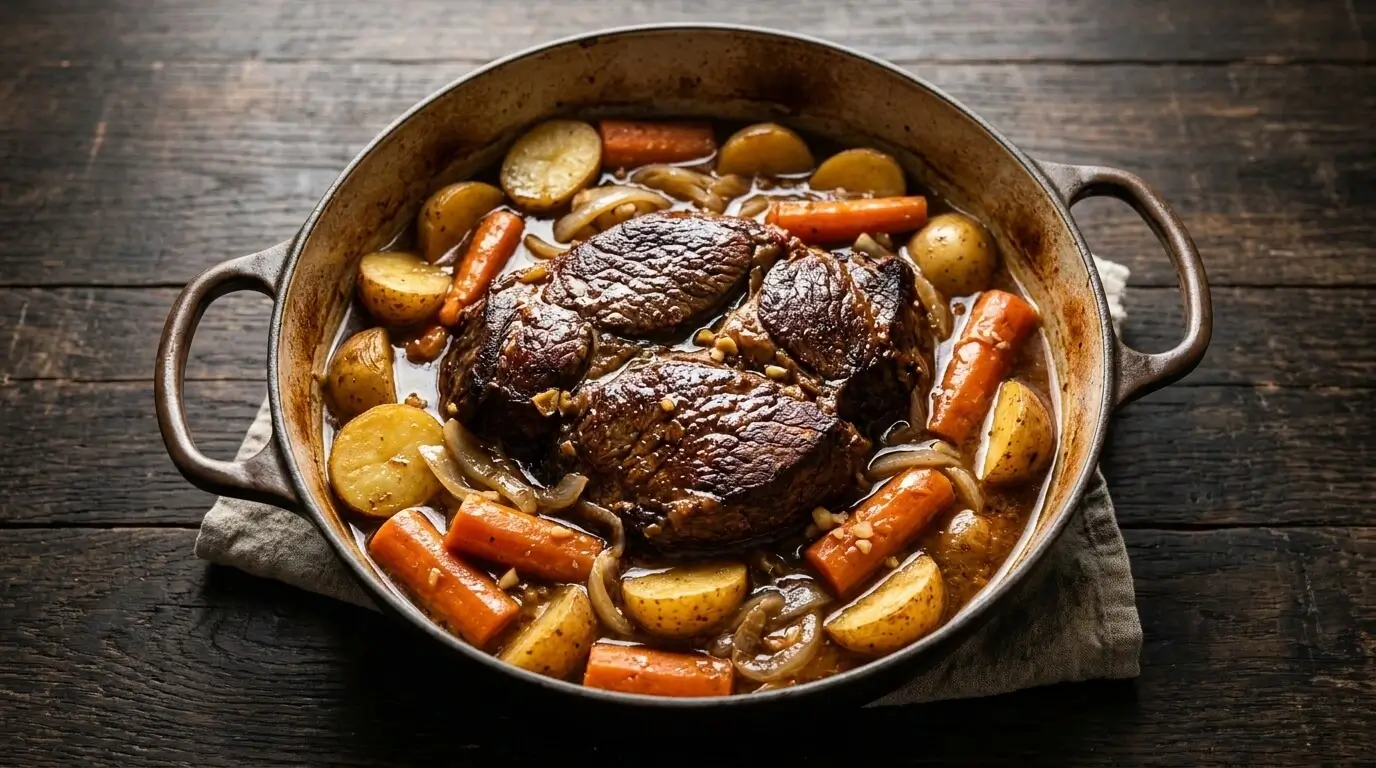
Classic Pot Roast with Potatoes and Carrots
Ingredients
Equipment
Method
- Preheat oven to 325°F (165°C). Pat the beef chuck roast dry with paper towels and season all sides with salt and black pepper.
- Heat olive oil in a large Dutch oven over medium-high heat. Sear the roast for approximately 4–5 minutes per side until deeply browned. Remove and set aside.
- Add sliced onion and minced garlic to the Dutch oven. Cook for approximately 3 minutes. Stir in tomato paste and flour.
- Pour in beef broth, additional beef broth, and Worcestershire sauce. Bring to a gentle simmer, scraping the browned bits from the bottom.
- Return the beef to the Dutch oven. Arrange baby potatoes and carrots around the roast. Add dried thyme and rosemary.
- Cover the Dutch oven and transfer to the oven. Cook at 325°F for approximately 3–3.5 hours, until the beef is fork-tender and vegetables are soft.
- Remove the roast and rest for approximately 10 minutes. Slice or break into chunks and serve with potatoes, carrots, and homemade pan gravy.
Notes
-
Use extra beef broth instead of red wine.
-
Choose a well-marbled chuck roast for the best braising results.
-
Cut carrots and potatoes into large pieces to help them retain their shape.
-
Keep the Dutch oven covered throughout cooking.
-
Cooking time varies according to the thickness and size of the roast.
-
If the beef is tough, continue cooking until fork-tender.
-
Slow cooker timing is separate from the oven method.
-
Optional: Garnish with fresh parsley before serving.
- Storage Refrigerate leftovers within 2 hours in airtight containers with some gravy. Use within 3–4 days. Freeze in suitable containers for longer storage. Thaw in the refrigerator and reheat to 165°F.
Frequently Asked Questions
1. What is the best cut of beef for pot roast?
Beef chuck roast is one of the best choices because its marbling and connective tissue gradually soften during slow cooking. It produces tender, flavorful beef that works beautifully with potatoes, carrots, and homemade gravy.
2. How long does pot roast take in the oven at 325°F?
A 3–4 lb chuck roast generally takes approximately 3–3.5 hours at 325°F. Cooking time depends on thickness and the individual roast. Always check tenderness before removing it from the oven.
3. Should pot roast be covered while cooking?
Yes. A tight-fitting lid helps trap moisture and creates the humid environment needed for braising. Keep the Dutch oven covered throughout the cooking process.
4. When should you add potatoes and carrots to pot roast?
For this recipe, add the potatoes and carrots around the roast before placing the Dutch oven in the oven. Cutting them into large pieces helps prevent them from becoming overly soft during braising.
5. Why is my pot roast tough?
The most common reason is insufficient cooking time. Chuck roast contains connective tissue that needs time to soften. If the beef is still tough, cover it and continue cooking until it becomes fork-tender.
6. Can I make pot roast without red wine?
Absolutely. This recipe uses an additional 1/2 cup of beef broth instead of red wine. It provides the necessary liquid while maintaining a rich, savory beef flavor.
7. Can I make this recipe in a slow cooker?
Yes. Sear the beef first, prepare the onion and broth mixture, and transfer everything to your slow cooker. Cook on LOW or HIGH until the beef becomes fork-tender. Cooking time will vary depending on the appliance and roast size.
8. How do I make pot roast gravy thicker?
Start by using the cooking liquid already in the Dutch oven. Simmer it uncovered to reduce and concentrate the flavor. If necessary, whisk in a small amount of optional flour slurry.
9. What temperature should pot roast reach to become tender?
There is no single internal temperature that guarantees a fork-tender chuck roast. Although 145°F is the USDA minimum safe temperature for whole beef roasts with a three-minute rest, pot roast generally needs substantially more cooking for its connective tissue to soften. Tenderness is the best practical indicator for this braised recipe.
10. Can I prepare pot roast ahead of time?
Yes. You can prepare the pot roast a day ahead, refrigerate it promptly, and reheat it gently with its gravy before serving. The flavors also have time to blend during refrigeration.
Final Thoughts
This Classic Pot Roast with Potatoes and Carrots is a wonderful example of how simple ingredients and gentle cooking can create a satisfying family dinner. Tender beef chuck roast, soft potatoes, sweet carrots, and rich homemade gravy come together in one comforting dish.
Whether you choose the Dutch oven method or the slow cooker, the key is allowing the beef enough time to become fork-tender.
Serve it straight from the Dutch oven for a beautiful, rustic presentation, spoon plenty of savory gravy over each portion, and enjoy a timeless comfort food dinner with family and friends.