There is something universally comforting about a bubbling pot of soup simmering on the stove, filling the entire house with an earthy, savory aroma. Why homemade vegetable soup never goes out of style comes down to its simplicity and pure, nostalgic comfort. Unlike store-bought canned versions that are often stripped of flavor and loaded with sodium, a scratch-made version celebrates the true essence of fresh ingredients.
This Hearty Homemade Veggie Soup is perfect for busy weeknights and meal prep because it requires minimal hands-on effort and tastes even better the next day. Packed with colorful vegetables and Mediterranean-inspired ingredients like rich extra virgin olive oil, garlic, and aromatic herbs, it delivers an authentic taste of coastal European comfort. It is naturally wholesome, filling, and budget-friendly, making it a staple recipe you will return to time and time again when you want to nourish your body without spending hours in the kitchen.
Why You’ll Love This Hearty Homemade Veggie Soup
- Nutritious and satisfying: This soup is loaded with essential vitamins, minerals, and plant-based fiber that keep you feeling full and energized.
- One-pot recipe: Cleanup is an absolute breeze since everything cooks beautifully together in a single large Dutch oven or stockpot.
- Great for meal prep: The flavors deepen and develop as the soup sits in the refrigerator, making your mid-week lunches something to look forward to.
- Family-friendly: Its mild, naturally sweet savory broth is highly approachable for kids and picky eaters alike.
- Freezer-friendly: You can easily whip up a double batch and freeze half for a quick, comforting hands-off dinner on a rainy day.
- Easily customizable: This recipe serves as a blank canvas, allowing you to use up whatever wilted produce or pantry staples you happen to have on hand.
Ingredients You’ll Need
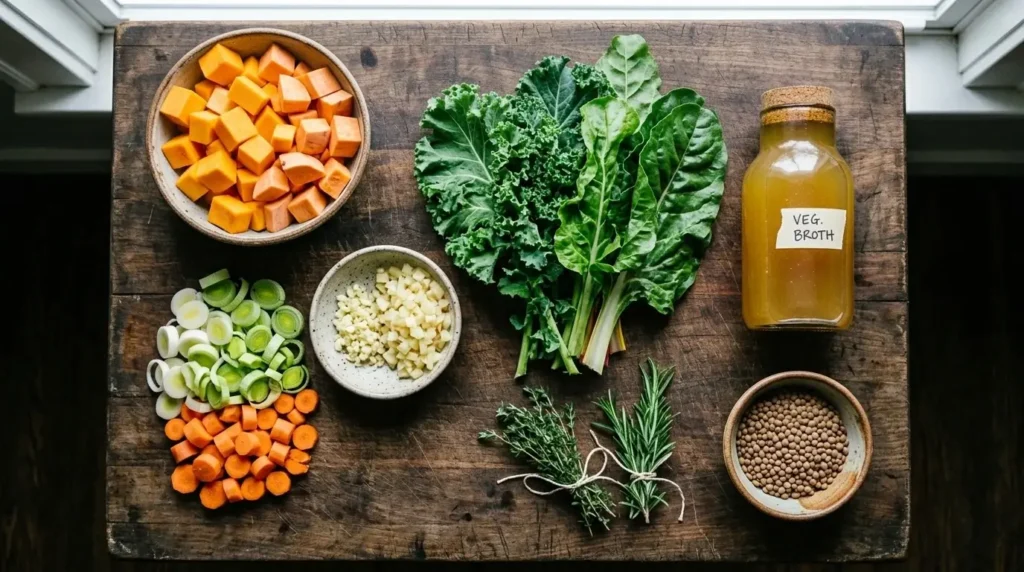
Fresh Vegetables
- Carrots: Rolled or diced to provide a foundational natural sweetness and beautiful color.
- Celery: Adds an essential earthy, aromatic crunch to the base of the soup.
- Onion: One medium yellow or white onion, finely diced.
- Garlic: Four cloves of minced fresh garlic for that undeniable Mediterranean warmth.
- Zucchini: Diced into thick half-moons to hold their shape during simmering.
- Green beans: Trimmed and cut into bite-sized one-inch pieces.
- Tomatoes: One can of diced or crushed tomatoes to give the broth body and a rich, tangy depth.
- Spinach or kale: Sturdy, vibrant ribbons added at the very end for a pop of color and iron.
Pantry Staples
- Vegetable broth: Opt for a high-quality low-sodium broth so you can control the salt level.
- Olive oil: Extra virgin olive oil is preferred for authentic Mediterranean sautéing.
- Italian herbs: A dried blend of oregano, basil, rosemary, and thyme.
- Bay leaves: Two dried bay leaves to infuse the liquid with a subtle woodsy note.
- Salt and pepper: To taste, added in layers throughout the cooking process.
Optional Add-ins
- Chickpeas: For a buttery texture and extra plant-based protein.
- White beans: Cannellini or Great Northern beans work beautifully to add a creamy component.
- Lentils: Brown or green lentils can be simmered directly in the broth for an ultra-hearty variation.
- Quinoa: A fantastic gluten-free grain option to increase density.
- Pasta: Ditalini, small shells, or orzo add a comforting, classic Italian-style element.
Best Vegetables for Homemade Soup
When mastering a Hearty Homemade Veggie Soup, choosing the right combination of vegetables determines both the final texture and flavor profile.
- Seasonal vegetables: Utilizing in-season produce ensures peak sweetness and nutritional density. Think summer squash in July or sweet root crops in November.
- Root vegetables: Potatoes, carrots, parsnips, and turnips provide the structural integrity of the soup. They soften beautifully without completely disintegrating into the liquid.
- Leafy greens: Greens like spinach, Swiss chard, or curly kale should always be treated as a finishing touch to preserve their vibrant green color and delicate texture.
- Frozen vs fresh: Do not hesitate to use frozen vegetables! Frozen peas, corn, or green beans are flash-frozen at peak ripeness and can be tossed directly into the pot without thawing.
- Mediterranean favorites: To give your soup an authentic regional flair, lean heavily into garlic, tomatoes, zucchini, and artichoke hearts.
How to Make Hearty Homemade Veggie Soup
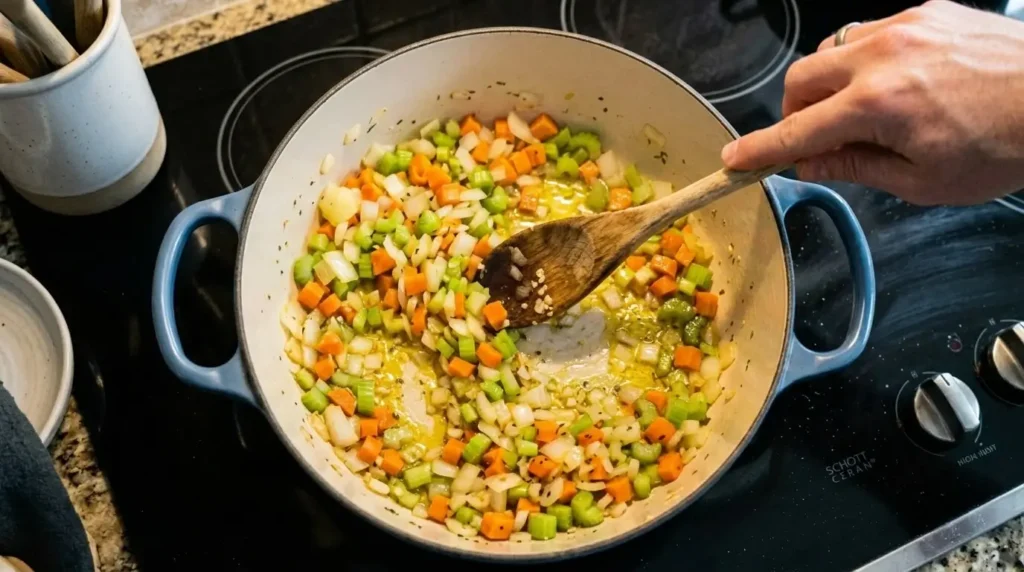
Step 1: Sauté onions, garlic, carrots, and celery
Heat two tablespoons of extra virgin olive oil in a large stockpot over medium heat. Add your diced onion, carrots, and celery (the classic aromatic trio known as mirepoix). Sauté for 6 to 8 minutes until the vegetables soften slightly. Stir in the minced garlic and cook for another 60 seconds until highly fragrant.
Step 2: Add remaining vegetables and seasonings
Toss in your diced zucchini, chopped green beans, and the canned tomatoes with their juices. Season generously with the dried Italian herbs, salt, and freshly cracked black pepper, ensuring the vegetables are completely coated in the herbs and oil.
Step 3: Pour in broth and simmer
Pour in the vegetable broth and drop in the two bay leaves. Bring the mixture to a rolling boil over high heat, then immediately reduce the heat to low. Cover the pot with a lid and let it simmer gently for 20 to 25 minutes, or until the root vegetables are completely fork-tender.
Step 4: Add leafy greens and optional beans
Remove the lid and stir in your choice of cooked white beans or chickpeas, along with the fresh spinach or kale ribbons. Simmer uncovered for an additional 3 to 5 minutes just until the greens are wilted and the beans are warmed through.
Step 5: Taste and adjust seasoning
Turn off the heat. Remove and discard the bay leaves. Ladle out a small spoonful of broth, let it cool slightly, and taste it. Adjust the flavor by adding another pinch of salt, pepper, or dried herbs if needed.
Step 6: Serve with olive oil and herbs
Ladle the hot soup into wide bowls. Finish each serving with a light drizzle of raw extra virgin olive oil and a sprinkle of chopped fresh flat-leaf parsley or basil.
Tips for the Best Flavor
- Brown vegetables first: Let your aromatics get a little bit of color in the pot before adding liquids; those browned bits at the bottom (fond) translate directly into deep flavor.
- Use quality broth: Since the liquid is the literal foundation of the dish, use a rich, full-bodied vegetable stock or a homemade bone broth if you are not keeping it strictly vegan.
- Add herbs in layers: Sauté dried herbs early on with the vegetables to bloom their oils, and finish with fresh herbs right before serving for brightness.
- Finish with lemon juice: A squeeze of fresh lemon juice right before serving adds an acidic lift that cuts through the starch and wakes up all the subterranean flavors.
- Use extra virgin olive oil before serving: A final drizzle of high-quality, cold-pressed olive oil over the hot bowl adds a luxurious, velvety mouthfeel and raw, peppery notes.
Mediterranean Diet Benefits
This Hearty Homemade Veggie Soup perfectly embodies the foundational pillars of Mediterranean eating.
- High fiber: Packed with legumes and whole vegetables, it naturally supports healthy digestion and stable blood sugar levels.
- Rich in antioxidants: Lycopene from the cooked tomatoes, beta-carotene from the carrots, and vitamins A and C from the leafy greens combat oxidative stress.
- Plant-forward nutrition: It relies on wholesome, unrefined land produce rather than processed substitutes to create a deeply filling meal.
- Heart-healthy fats: By utilizing extra virgin olive oil as the primary cooking medium, you infuse the dish with monounsaturated fatty acids that support healthy cholesterol levels.
- Low in saturated fat: Naturally devoid of butter, heavy creams, or fatty meats, it keeps your cardiovascular system running cleanly.
Variations and Add-Ins
- Vegan Version: This recipe is naturally vegan! Simply ensure your vegetable broth is certified plant-based and omit any optional cheese garnishes.
- Protein-Packed Version: Add beans or lentils. Stirring in a can of rinsed cannellini beans or adding half a cup of red lentils directly into the simmering broth dramatically boosts the protein content. If you want a complete meal on a cold evening, pair it with our protein-rich Tzatziki Chickpea Salad.
- Low-Carb Version: Skip potatoes or pasta. Instead, lean into low-glycemic options like riced cauliflower, extra zucchini, mushrooms, and celery.
- Italian-Inspired Version: Add a clean Parmesan cheese rind to the pot while the broth simmers to extract a deep, umami-rich saltiness. Top with fresh basil.
- Greek-Inspired Version: Finish the soup with an abundance of dried Greek oregano, fresh dill, and a heavy hand of fresh lemon juice right before serving.
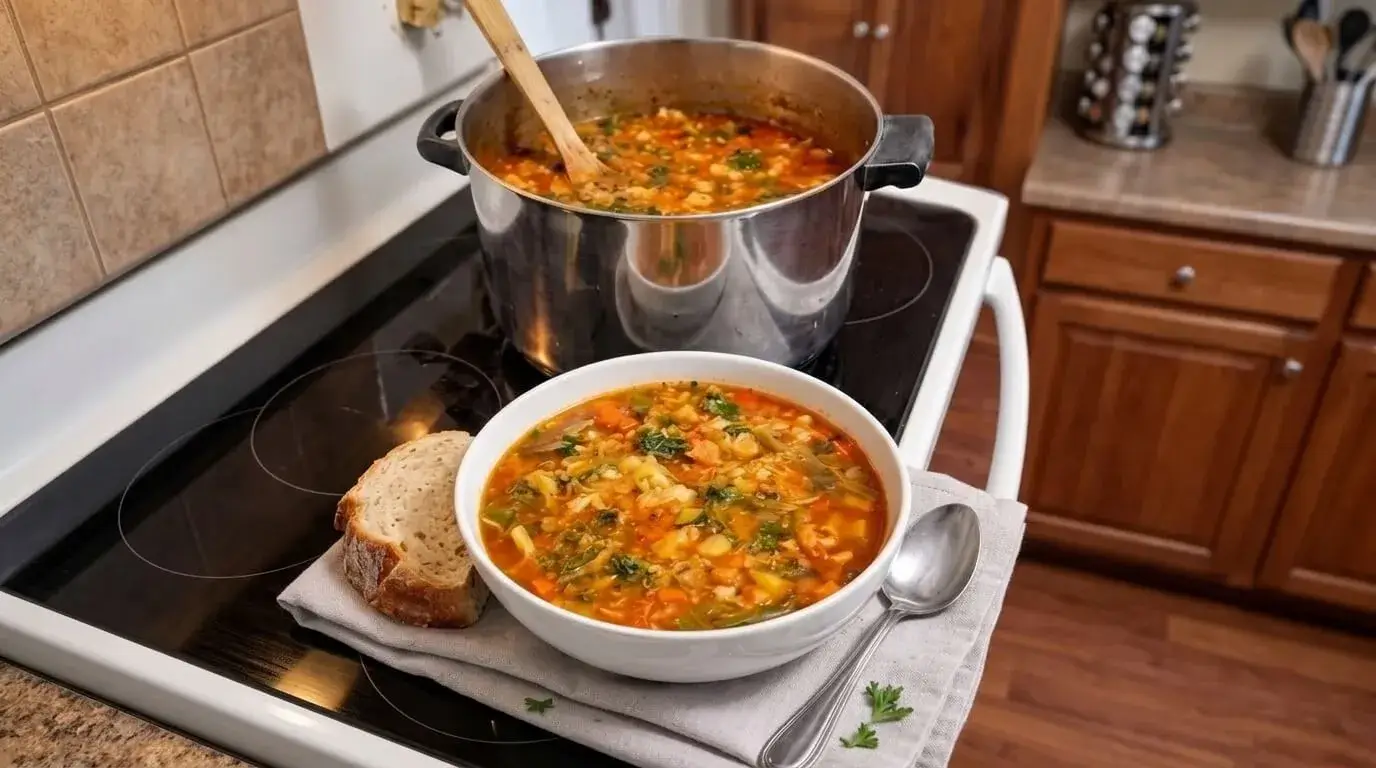
Hearty Homemade Veggie Soup
Ingredients
Method
- Heat the extra virgin olive oil in a large Dutch oven or heavy-bottomed stockpot over medium heat.
- Add the diced onion, carrots, and celery. Sauté for 6 to 8 minutes, stirring occasionally, until the vegetables begin to soften.
- Stir in the minced garlic and cook for 1 minute until fragrant, being careful not to let it burn.
- Add the zucchini, green beans, canned diced tomatoes with their juices, dried Italian herbs, salt, and pepper. Stir well to combine all elements with the aromatics.
- Pour in the vegetable broth and drop in the two bay leaves. Bring the soup to a boil over high heat.
- Once boiling, reduce the heat to low, cover with a tight-fitting lid, and let it simmer gently for 20 to 25 minutes until the carrots and potatoes are completely fork-tender.
- Remove the lid and stir in the optional rinsed white beans (or chickpeas) along with the chopped spinach or kale ribbons. Let it cook uncovered for 3 to 5 minutes until the greens are wilted.
- Turn off the heat and remove the bay leaves. Stir in the optional fresh lemon juice, taste, and adjust salt and pepper if desired.
- Ladle warm into bowls, drizzle with a touch of raw olive oil, and garnish with fresh parsley.
Notes
– Freezing: Freeze without pasta or heavy greens for up to 3 months. Thaw overnight in the fridge before reheating on the stove.
– Customization: Feel free to swap zucchini for butternut squash or yellow squash depending on seasonal availability.
How to Store and Reheat
- Refrigeration: Allow the leftover soup to come completely to room temperature before transferring it into airtight glass storage containers. It will keep beautifully in the fridge for up to 4 to 5 days.
- Freezing: If you plan on freezing the soup, consider leaving out pasta or delicate greens, as they can get mushy upon thawing. Add those fresh when reheating.
- Best containers: Heavy-duty, BPA-free glass jars or silicone freezing bags work best. Leave about an inch of headspace at the top of jars, as liquids expand when frozen.
- Reheating tips: Pour the leftovers into a saucepan over medium-low heat, stirring occasionally, until steaming hot. You may need to splash in a little extra water or broth, as the starch from the vegetables will naturally thicken the liquid overnight.
Can You Freeze Vegetable Soup?
Yes, absolutely! Freezing is a fantastic way to extend the shelf life of your batch cooking. You can safely freeze this soup for up to 3 months without losing its nutritional value or structural flavors. The absolute golden rule is to cool it completely first; trapping steam inside a warm container creates condensation, leading to dreaded freezer burn. Portion the soup out into single-serving containers or freezer bags so you only have to thaw exactly what you need for a quick lunch.
What to Serve With Veggie Soup
While a bowl of this soup is wonderfully self-sufficient, pairing it with complementary sides elevates it into a memorable Mediterranean feast.
- Crusty bread: A thick slice of artisanal sourdough or rustic country bread is non-negotiable for sweeping up every last drop of savory broth.
- Greek salad: A crisp, refreshing side salad provides a beautiful texture contrast to the warm, cooked soup. Try serving it alongside our vibrant Greek Chopped Feta Salad recipe for an authentic taverna experience.
- Garlic toast: Rub a split clove of raw garlic over toasted bread, drizzle with olive oil, and sprinkle with sea salt.
- Grilled cheese: A classic comfort duo—try it with a Mediterranean twist using sliced fontina or halloumi cheese.
- Mediterranean chickpea salad: Adds a wonderful, zesty protein element to your lunch table.
- Roasted vegetables: If you want a double dose of garden goodness, round out your dinner table with a side of caramel-edged, oven-baked greens like our popular roasted-asparagus-and-carrots-recipe.
Common Mistakes to Avoid
- Overcooking vegetables: Adding all the vegetables at the exact same time results in mushy zucchini and crunchy carrots. Stagger them based on density.
- Under-seasoning: Vegetables absorb an enormous amount of salt. Do not be afraid to season your aromatics at the start and adjust again at the finish line.
- Adding greens too early: Tossing spinach into a boiling pot 30 minutes before it finishes turns the leaves brown and slimy. Keep them for the final 3 minutes.
- Using bland broth: A cheap, watery powder bouillon will yield a flat soup. Invest in high-quality stock or build a deep base with extra tomato paste.
- Not tasting before serving: Always, always taste your broth right before ladling it out to ensure the acid, salt, and herb balance is perfectly aligned.
Frequently Asked Questions
Can I make vegetable soup ahead of time?
Yes! In fact, it is highly recommended. The vegetables continue to marinate and release their natural sugars into the seasoned broth over time, making day-two and day-three leftovers taste significantly deeper and more cohesive than a freshly boiled pot.
What vegetables should not go into soup?
While most vegetables are welcome, avoid things like Brussels sprouts, broccoli, or cabbage if you plan to keep the soup for several days, as they belong to the brassica family and can develop a very strong, sulfurous odor and bitter taste when sitting overlong in hot liquid.
Can I freeze homemade veggie soup?
Yes, it freezes beautifully for up to 3 months. For optimal results, ensure it cools to room temperature before packing it into airtight, freezer-safe containers or silicone zip-top bags.
Is vegetable soup healthy for weight loss?
Extremely so. This soup features a high water and fiber content paired with low calorie and low fat density. It volumizes your meals, expanding your stomach walls safely to trigger satiety hormones without delivering empty calories.
How long does homemade vegetable soup last?
Stored correctly in an airtight container within a properly chilled refrigerator, it will maintain premium freshness and safety for up to 4 to 5 days.
Can I use frozen vegetables?
Yes. Frozen green beans, peas, corn, and carrots can be thrown directly into the pot during the last 10 minutes of simmering. They do not require any prior thawing.
What protein can I add to vegetable soup?
To keep it Mediterranean and plant-based, white cannellini beans, chickpeas, brown lentils, or green peas are perfect. If you prefer animal protein, shredded leftover roasted chicken or turkey works wonderfully.
How do I make vegetable soup thicker?
You can easily thicken the broth by taking a ladleful of the cooked beans and root vegetables, blending them into a smooth purée in a separate bowl, and stirring that smooth mixture right back into the main pot.
Final Thoughts
This Hearty Homemade Veggie Soup is the ultimate testament to how simple, affordable ingredients can transform into a deeply comforting and nutritious meal. It is inherently wholesome, incredibly flexible, and perfectly mirrors the soul of Mediterranean-style cooking by elevating fresh garden produce with heart-healthy olive oils and fragrant herbs. Whether you stick strictly to the recipe or customize it with whatever seasonal vegetables are currently calling your name, this pot of comfort is bound to become a regular resident on your kitchen menu.